Ecole Rodolphe Cledassou 2025

Corentin Ravoux
LPCA, CNRS/IN2P3, Clermont-Ferrand
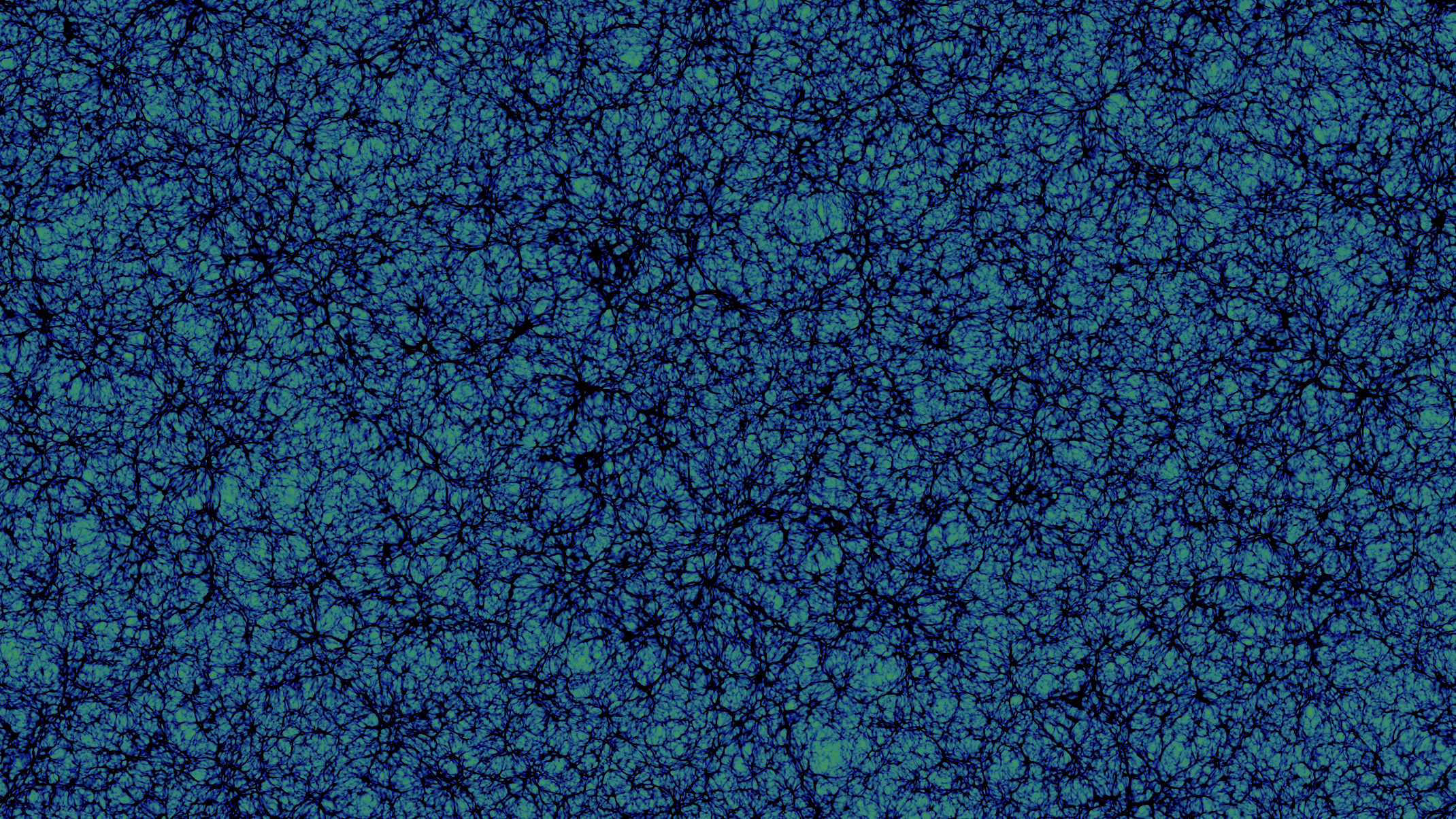

ACCEL² simulation
Le clustering des galaxies observation 4/4: The Lyman-α forest
Cosmological context
How did the Universe evolve to its current state?
What are the fundamental constituents of our Universe?
How is matter distributed in the Universe?
Ecole Rodolphe Cledassou 2025 - galaxy clustering: observation 4/4
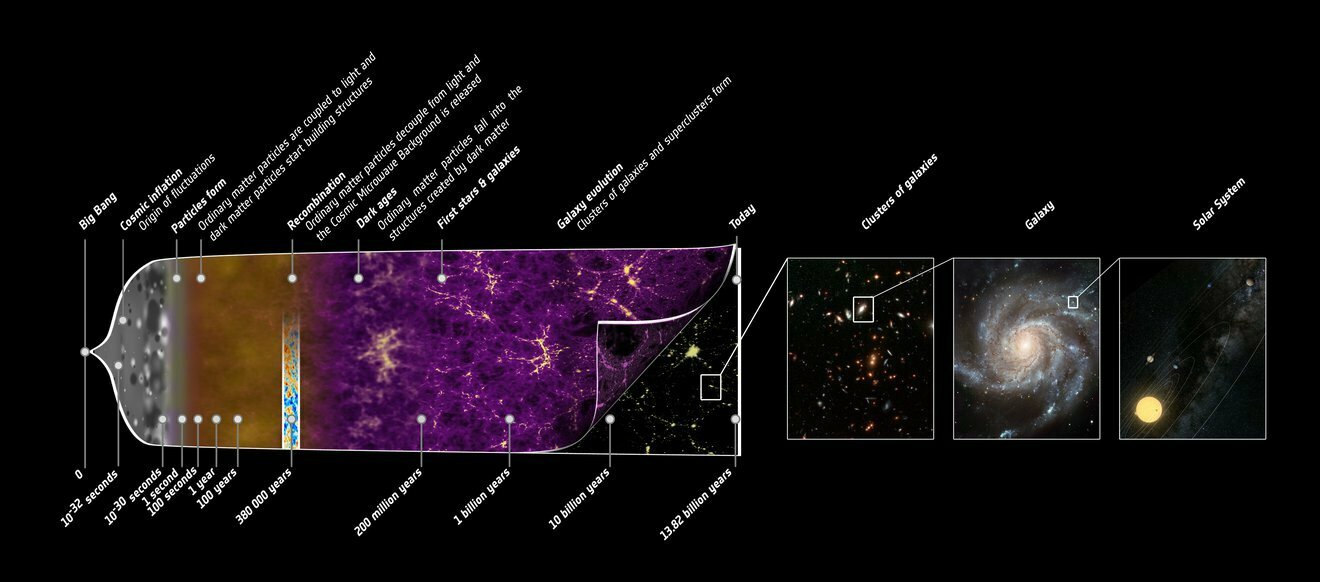
You are here
The Story of Our Universe - NASA
Ecole Rodolphe Cledassou 2025 - galaxy clustering: observation 4/4
Universe expansion/composition
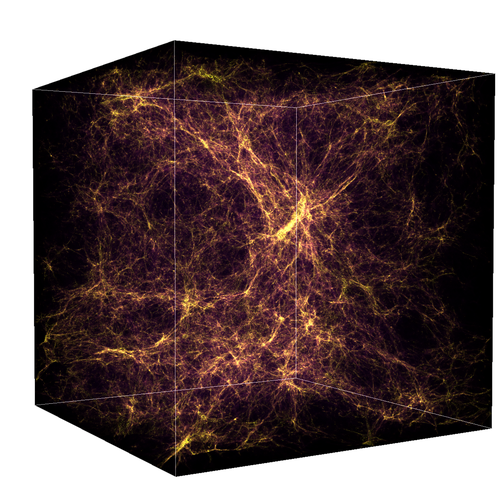
Large scale structures
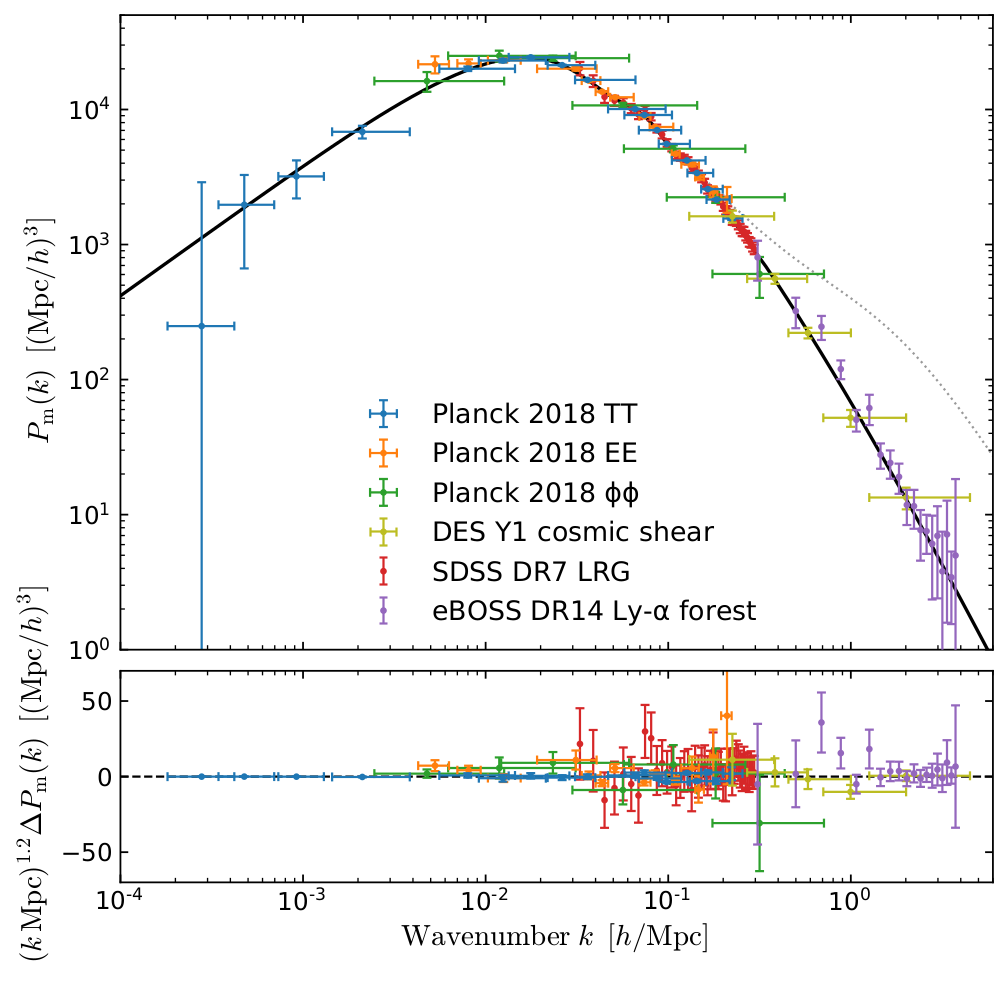
Chabanier et al. 2019
Walther et al. 2021
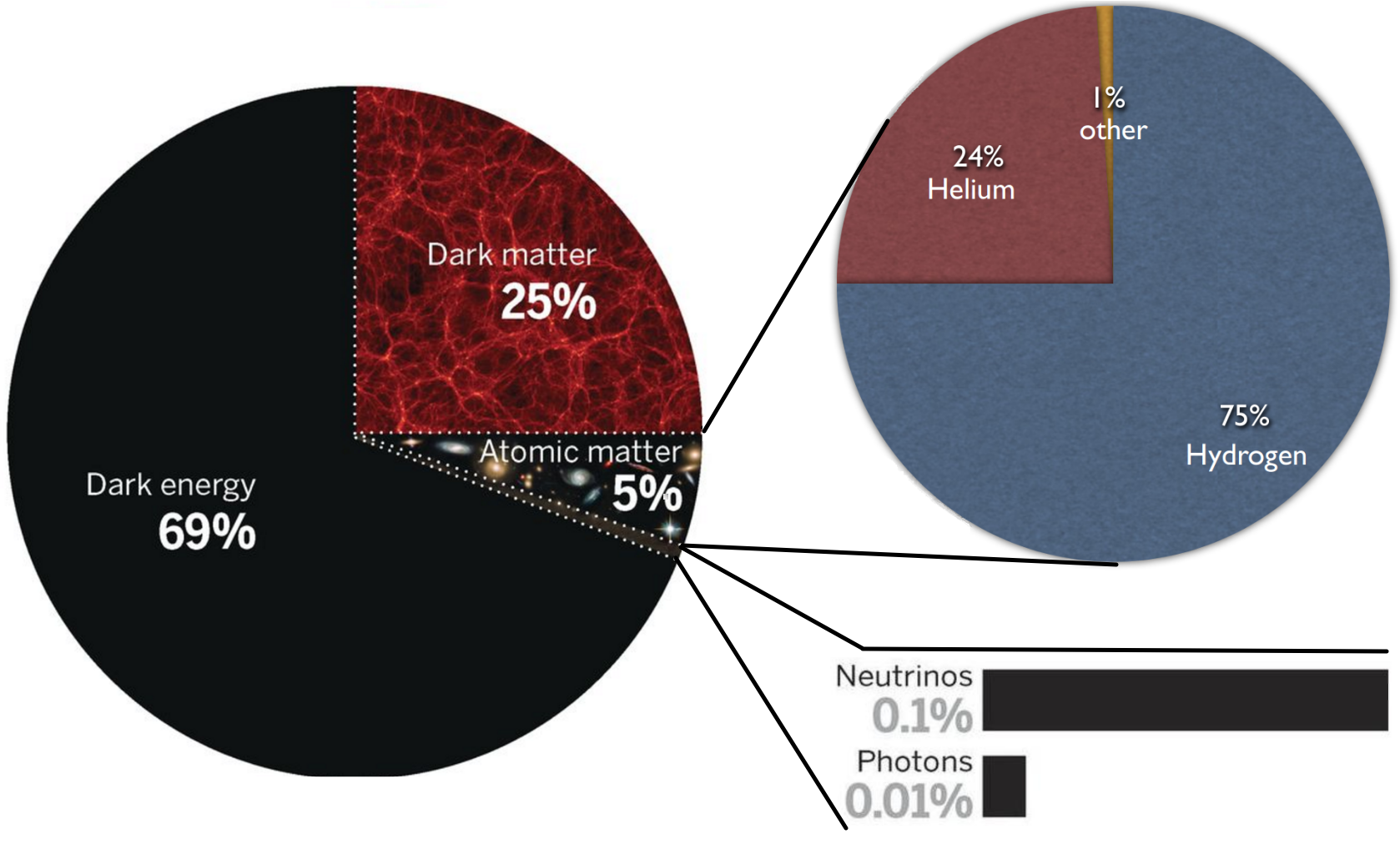
Adapted from Dijkstra 2017
- Initial density perturbations grows to form the cosmic web
- Distribution of matter characterized by matter power spectrum
- Components of the Universe (dark energy, dark matter, baryons, neutrinos, photons) modify the Universe expansion (Only 5% known)
Cosmological probes
You are here
Ecole Rodolphe Cledassou 2025 - galaxy clustering: observation 4/4
CMB, BBN
21cm, high-z galaxies/QSO, CMB lensing
Galaxies clustering (BAO, RSD, AP), Lyman-α forest, voids, WL, SL, clusters, high-z SN, SZ, ISW, CIB
SN, peculiar velocities (TF, FP, SN), cosmography, clusters, local structures
+ GW, GRB, PTA, Astroparticles...
+ Emerging cosmic probes (arxiv:2201.07241)
The Story of Our Universe - NASA
Outline
1. Lyman-α forest physics
2. Observations
3. Clustering with Lyman-α forest
a. 3D correlation function
b. 1D power spectrum
c. Lyman-α tomography
Ecole Rodolphe Cledassou 2025 - galaxy clustering: observation 4/4
Outline
1. Lyman-α forest physics
2. Observations
3. Clustering with Lyman-α forest
a. 3D correlation function
b. 1D power spectrum
c. Lyman-α tomography
Ecole Rodolphe Cledassou 2025 - galaxy clustering: observation 4/4
1. Lyman-α forest physics
Quasars as back light sources
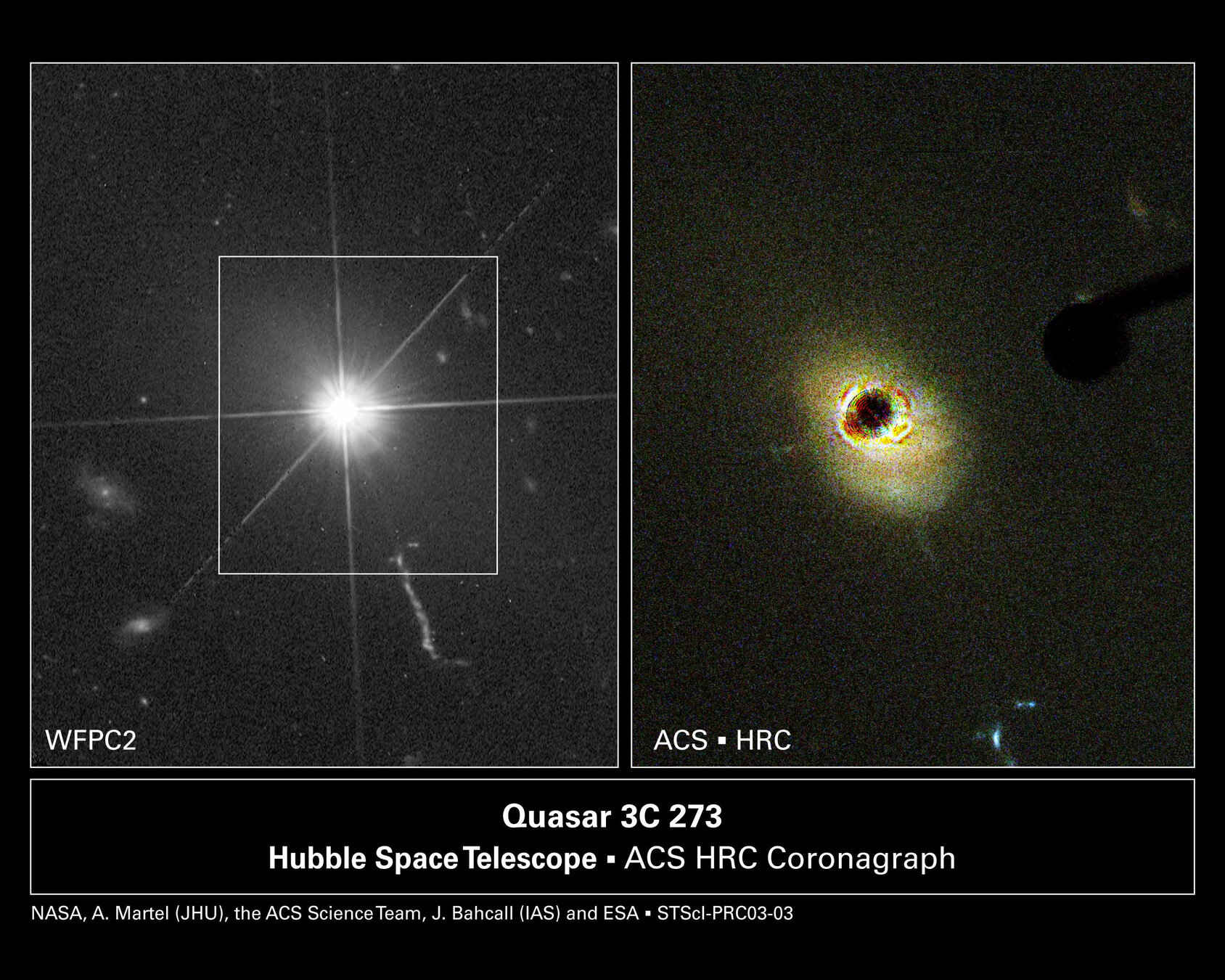
- Detected in 1963 at z=0.158, very bright point source
- Quasar = supermassive black hole + accretion disk
- Brightest objects in the Universe (up to 1000 x Milky Way)
- Variable (month/year)
- Radio loud/quiet
- Observed up to z~7
Ecole Rodolphe Cledassou 2025 - galaxy clustering: observation 4/4
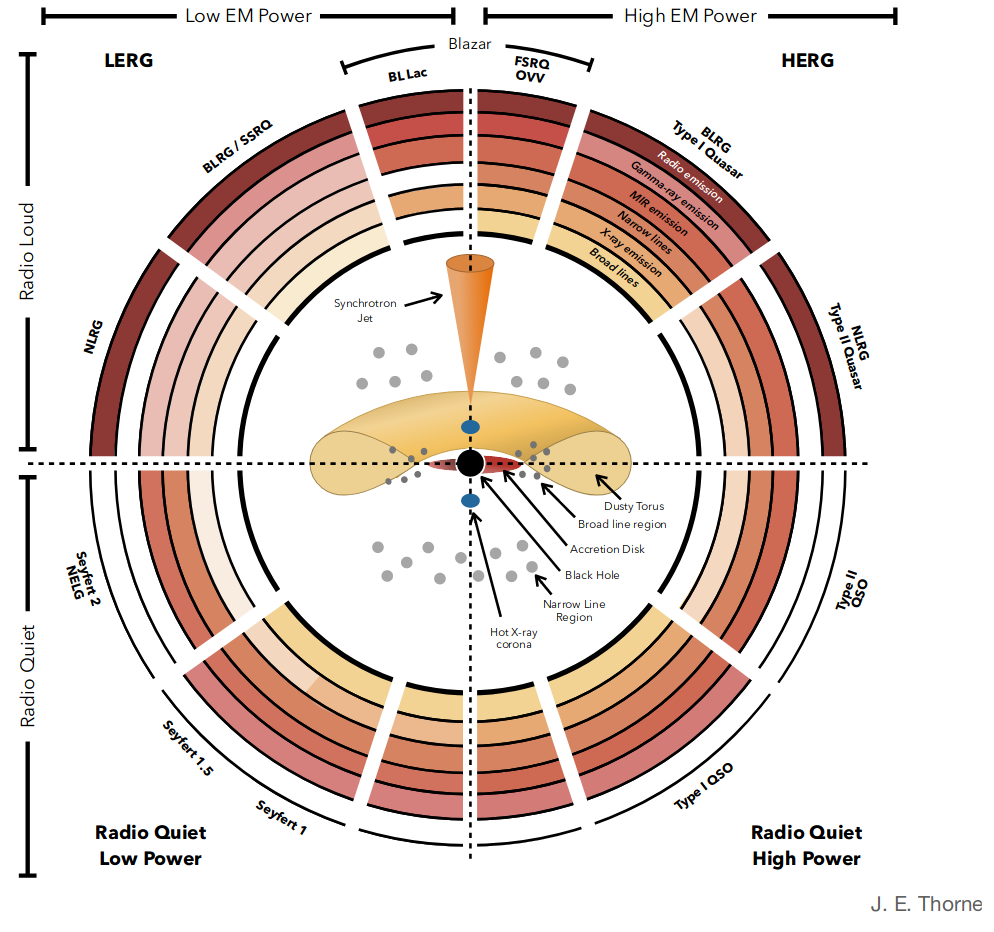
- 1990-2000: Global classification of Active Galaxy Nucleus (AGN)
- Seyfert galaxies, quasars, liners, blazars, radio galaxies...
- High gravitational energy in the SMBH
- Accretion disk, heating of matter by collisions
Quasars as back light sources
Ecole Rodolphe Cledassou 2025 - galaxy clustering: observation 4/4
The Lyman-α forest
Wavelength [Angstrom]
Flux
-
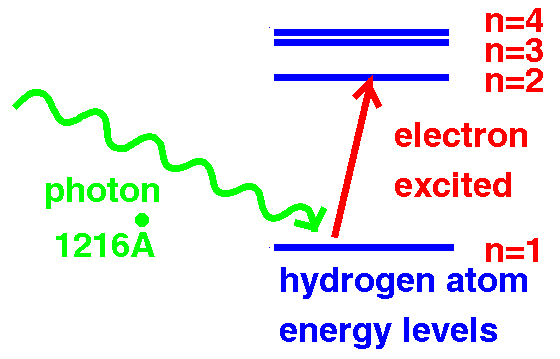
Lyman-α: transition of neutral Hydrogen to first excited state
-
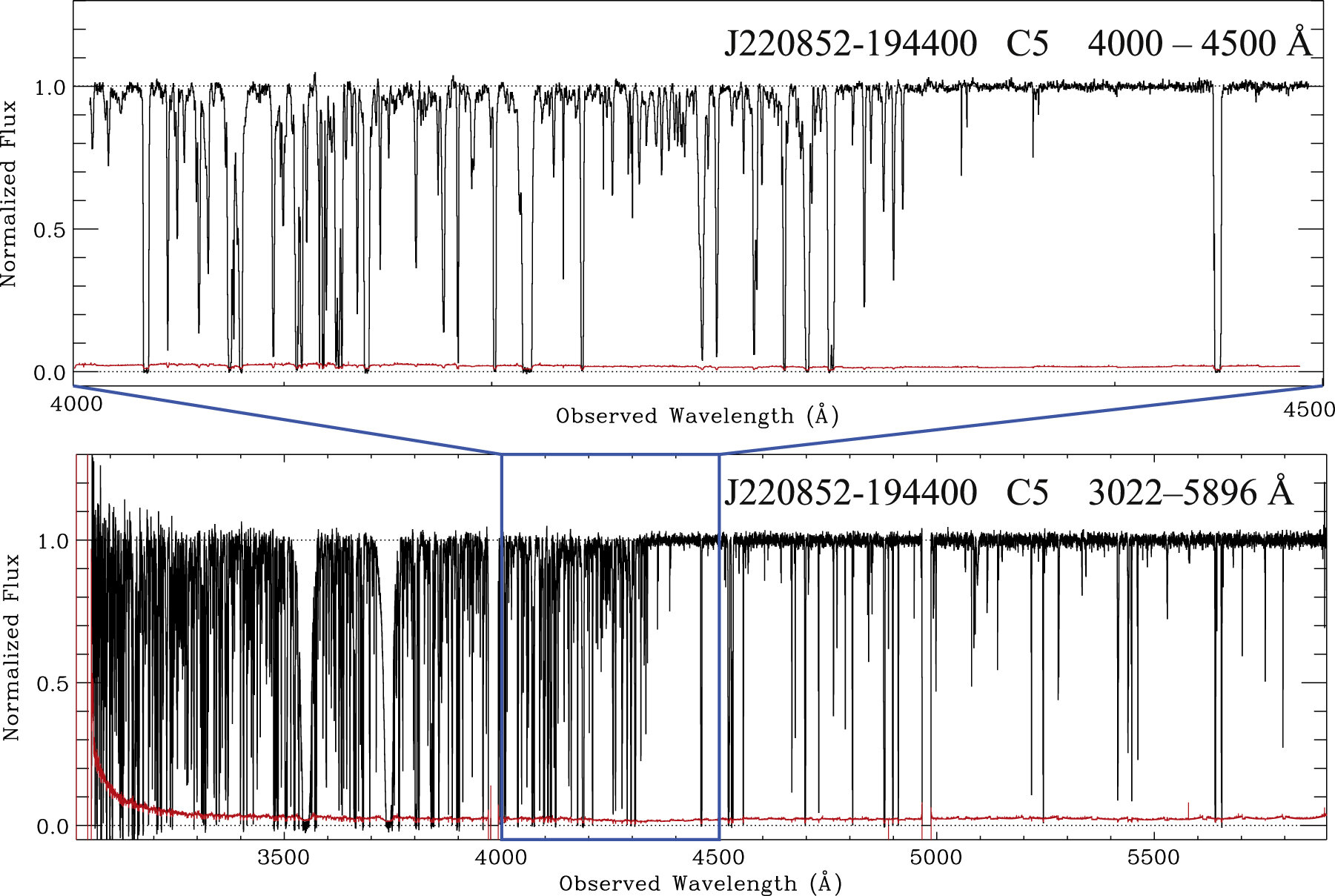
Lines in quasar spectra at caused by absorbers in the intergalactic medium (IGM) at
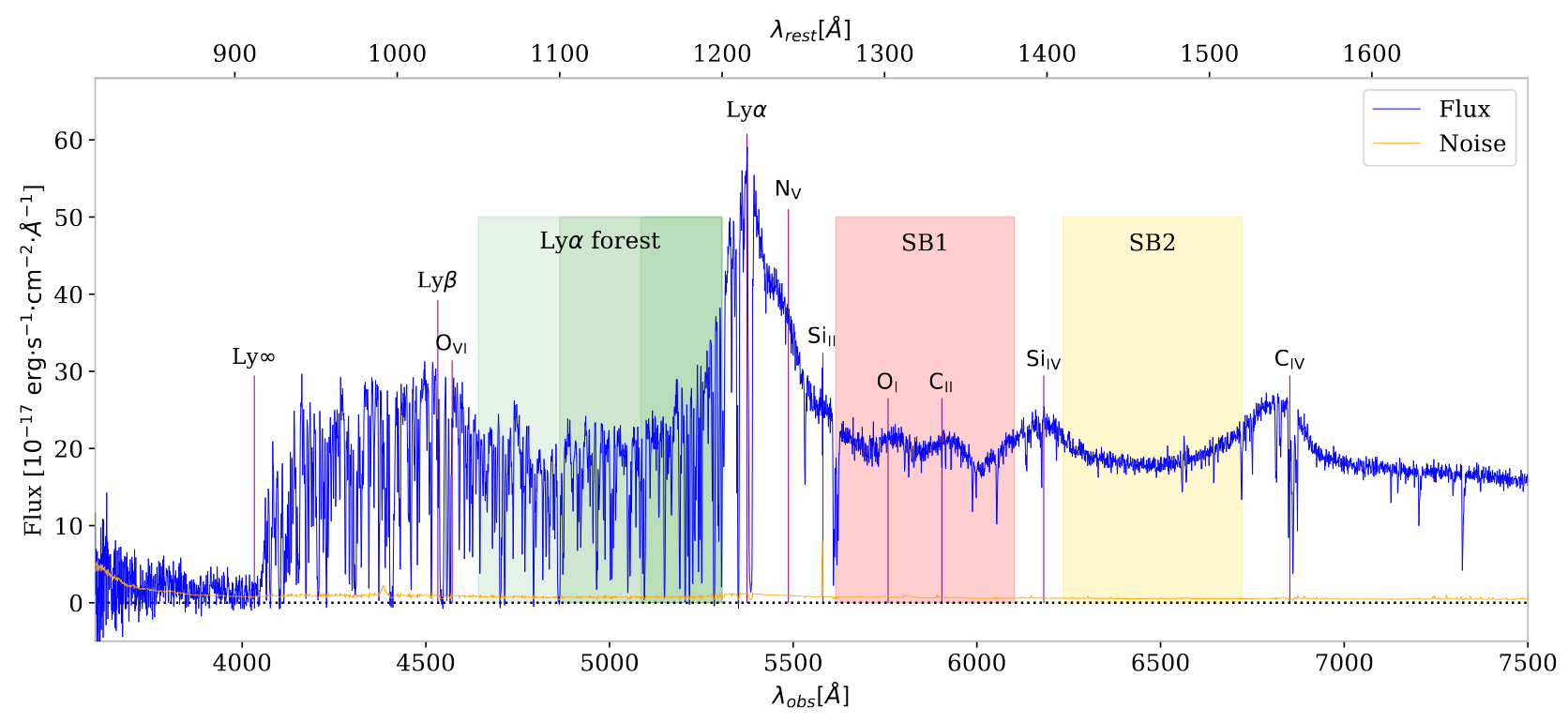
DESI quasar at z =3.42
Ecole Rodolphe Cledassou 2025 - galaxy clustering: observation 4/4
Ravoux et al. 2023
Not only one redshift ! info on the full spectrum
Ecole Rodolphe Cledassou 2025 - galaxy clustering: observation 4/4
Lyman-α physics
- Lyman-α absorption optical depth (degree of transparency of the IGM):
Density of neutral hydrogen
Cross section of Lyman-α transition
- Fraction of transmitted flux:
F
Ecole Rodolphe Cledassou 2025 - galaxy clustering: observation 4/4
Quasar continuum
Gunn-Peterson effect
- Universe is expanding: Hubble velocity flow
- The matter has peculiar velocity
Velocity space:
- Complete calculation gives:
Ecole Rodolphe Cledassou 2025 - galaxy clustering: observation 4/4
Density of neutral hydrogen/baryon
Doppler parameter (depends on temperature)
Universe expansion
IGM peculiar velocity
Fluctuating Gunn-Peterson approximation
- IGM thermal equilibrium + highly photoionized + optically thin approximation + larges scales (> 2 Mpc):
Density of neutral hydrogen/baryon
Peculiar velocities
Universe expansion
Universe temperature
Lyman-α forest = non-linear tracer of neutral hydrogen in the IGM
- At high redshift (z >2), fraction of neutral hydrogen
Lyman-α forest observable from the ground
Ecole Rodolphe Cledassou 2025 - galaxy clustering: observation 4/4
-
Near the quasar:
- Unknown continuum
- Broad absorption line quasars (BAL)
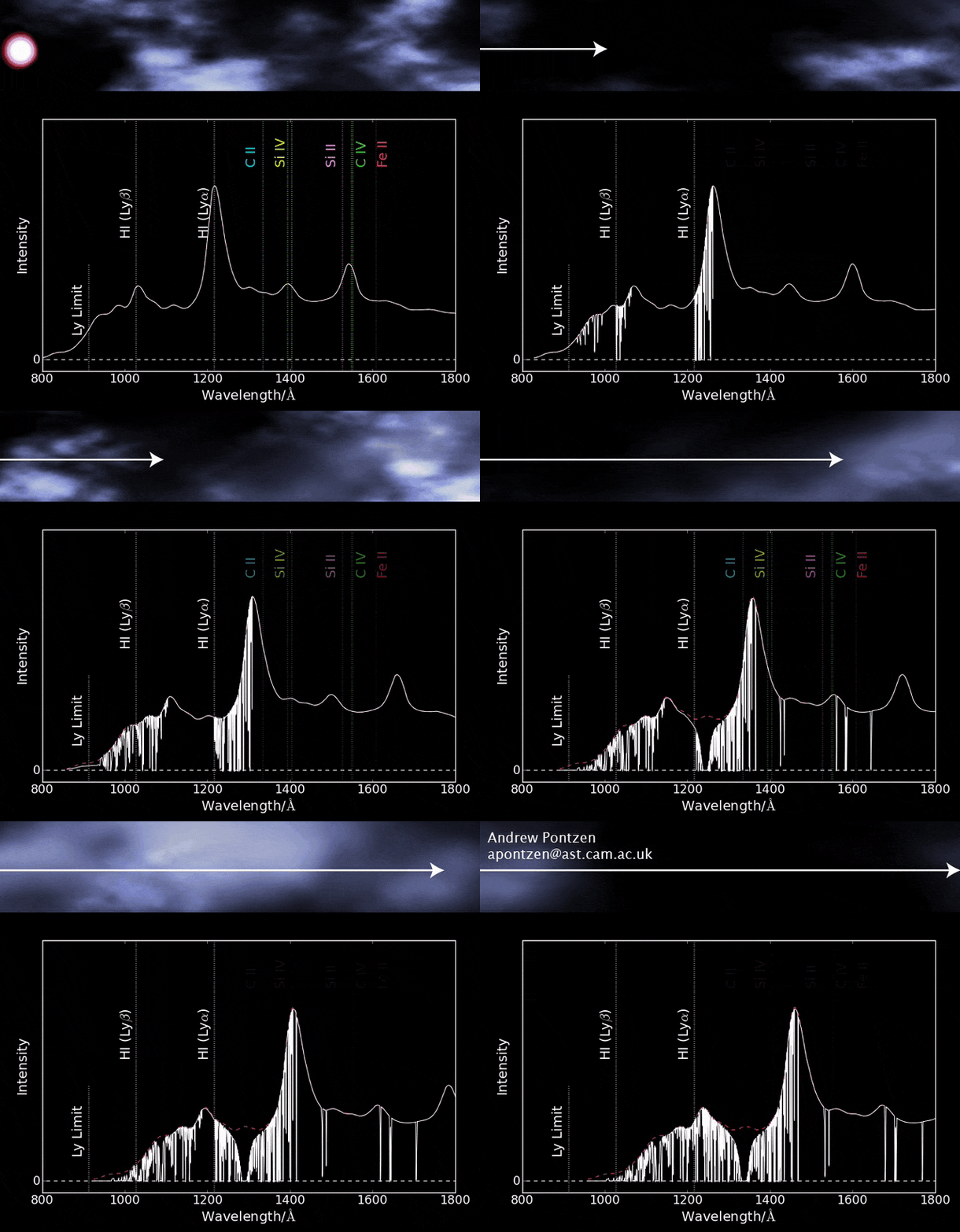
Contaminants
-
Along the line-of-sight:
- Metal absorptions in the IGM
- Damped Lyman-α systems (DLA)
-
Near the telescope:
- Atmospheric absorption and emission
- Instrument noise
- Spectrograph resolution
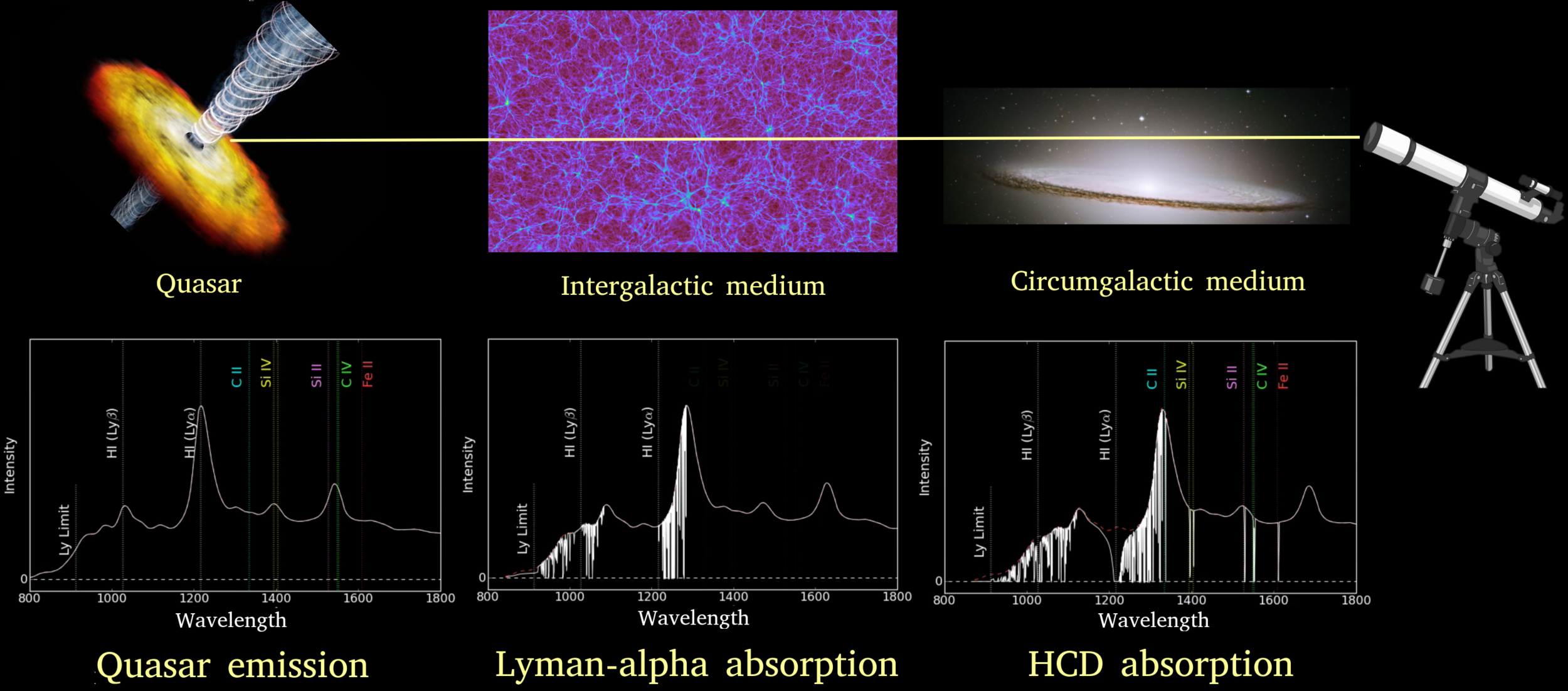
Adapted from A. Pontzen video
Ecole Rodolphe Cledassou 2025 - galaxy clustering: observation 4/4
Contaminants: Broad absorption line quasars
Adapted from A. Pontzen video
Ecole Rodolphe Cledassou 2025 - galaxy clustering: observation 4/4
- BAL quasars: Absorptions occuring inside the quasar (non-IGM = contaminant)
- High velocity outflows from the quasar torus
- Absorption from one or several clouds of gas
- ~15 % of quasars
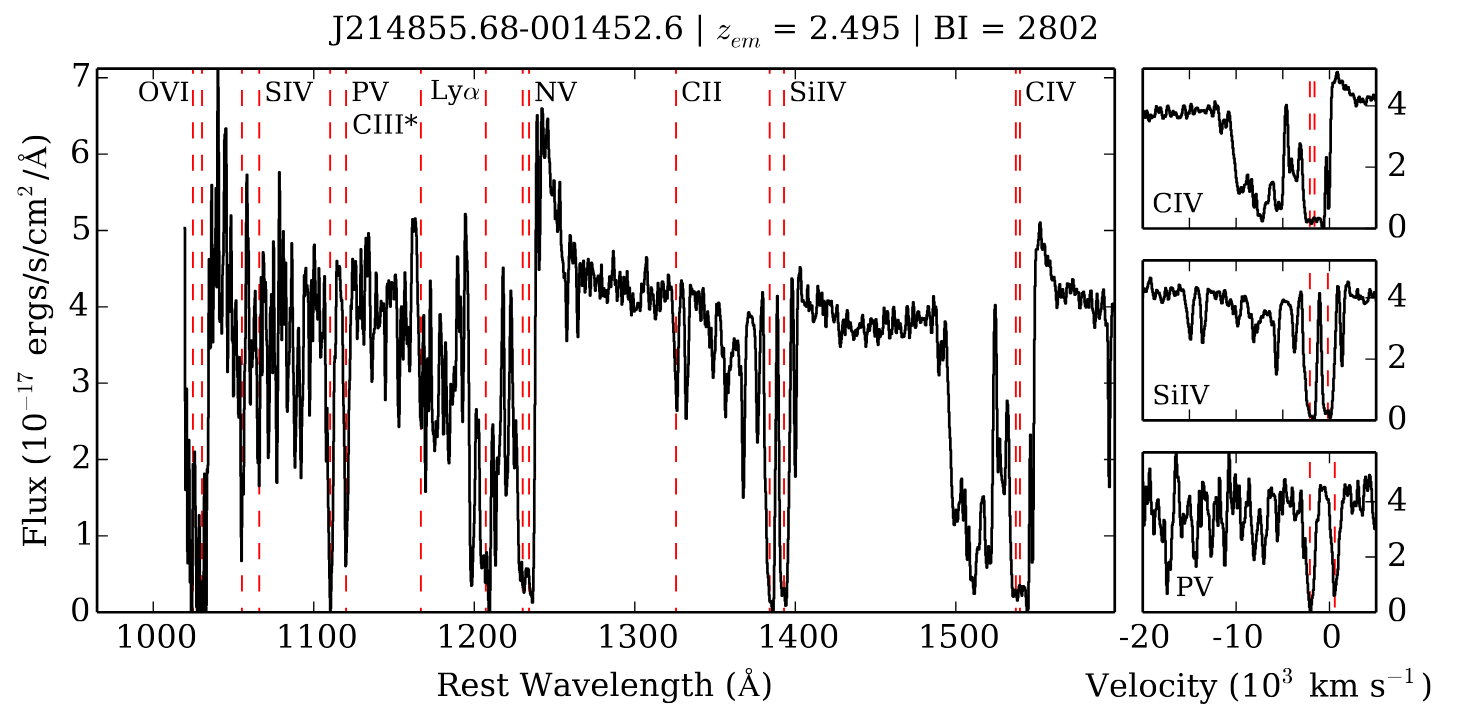
Capellupo et al. 2017
Contaminants: Damped Lyman-α systems
Ecole Rodolphe Cledassou 2025 - galaxy clustering: observation 4/4
- DLA: passing of the QSO light in the circum-galactic medium
- Oversaturated absorption impacts a large spectra portion = clustering contaminant
- Present on 30-40% of the quasars
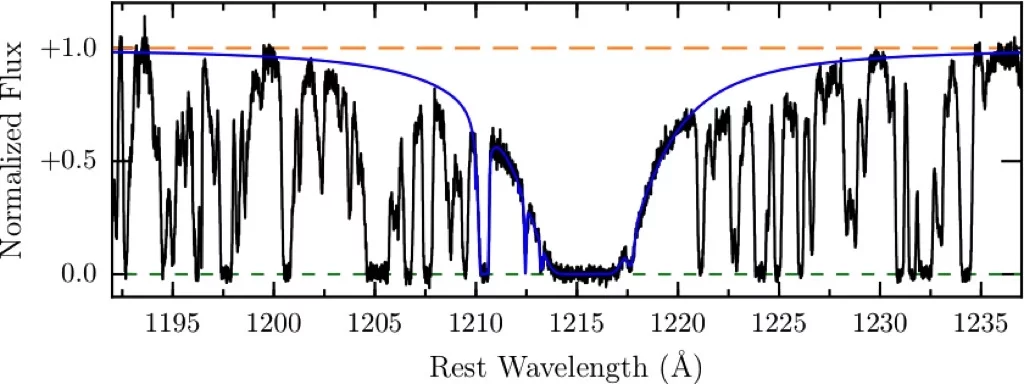
Cooke et al. 2017
Contaminants: Metal absorptions
Adapted from A. Pontzen video
Ecole Rodolphe Cledassou 2025 - galaxy clustering: observation 4/4
- Metals: Other elements present in the IGM (Si, C, N, O...)
- Like hydrogen, every element has a forest associated to each line
- Depends a lot on the IGM proportion of each elements
Contaminants: Instrument
Adapted from A. Pontzen video
Ecole Rodolphe Cledassou 2025 - galaxy clustering: observation 4/4
-
Atmosphere:
- Absorptions reduces the signal in the UV
- Emission lines bias the clustering
-
Noise:
- Very various sources (Poisson, electronic, calibration images...)
- Hard to model
-
Spectral resolution:
- Ability to distinguish two consecutive lines
- Smooth the thinnest lines in the signal
Resolution power
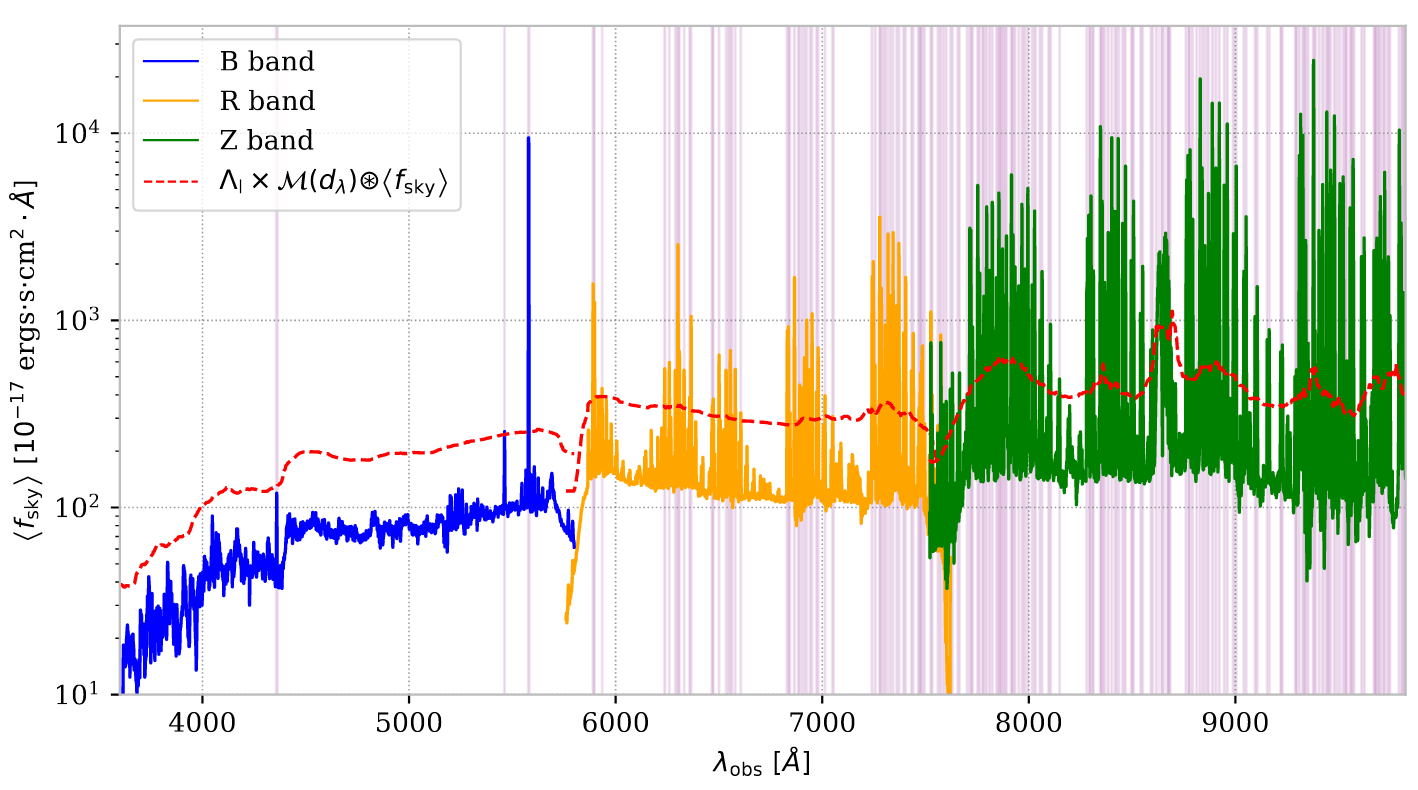
Ravoux et al. 2023
Lyman-α forest examples
Ecole Rodolphe Cledassou 2025 - galaxy clustering: observation 4/4
?
?
Outline
1. Lyman-α forest physics
2. Observations
3. Clustering with Lyman-α forest
a. 3D correlation function
b. 1D power spectrum
c. Lyman-α tomography
Ecole Rodolphe Cledassou 2025 - galaxy clustering: observation 4/4
2. Observations
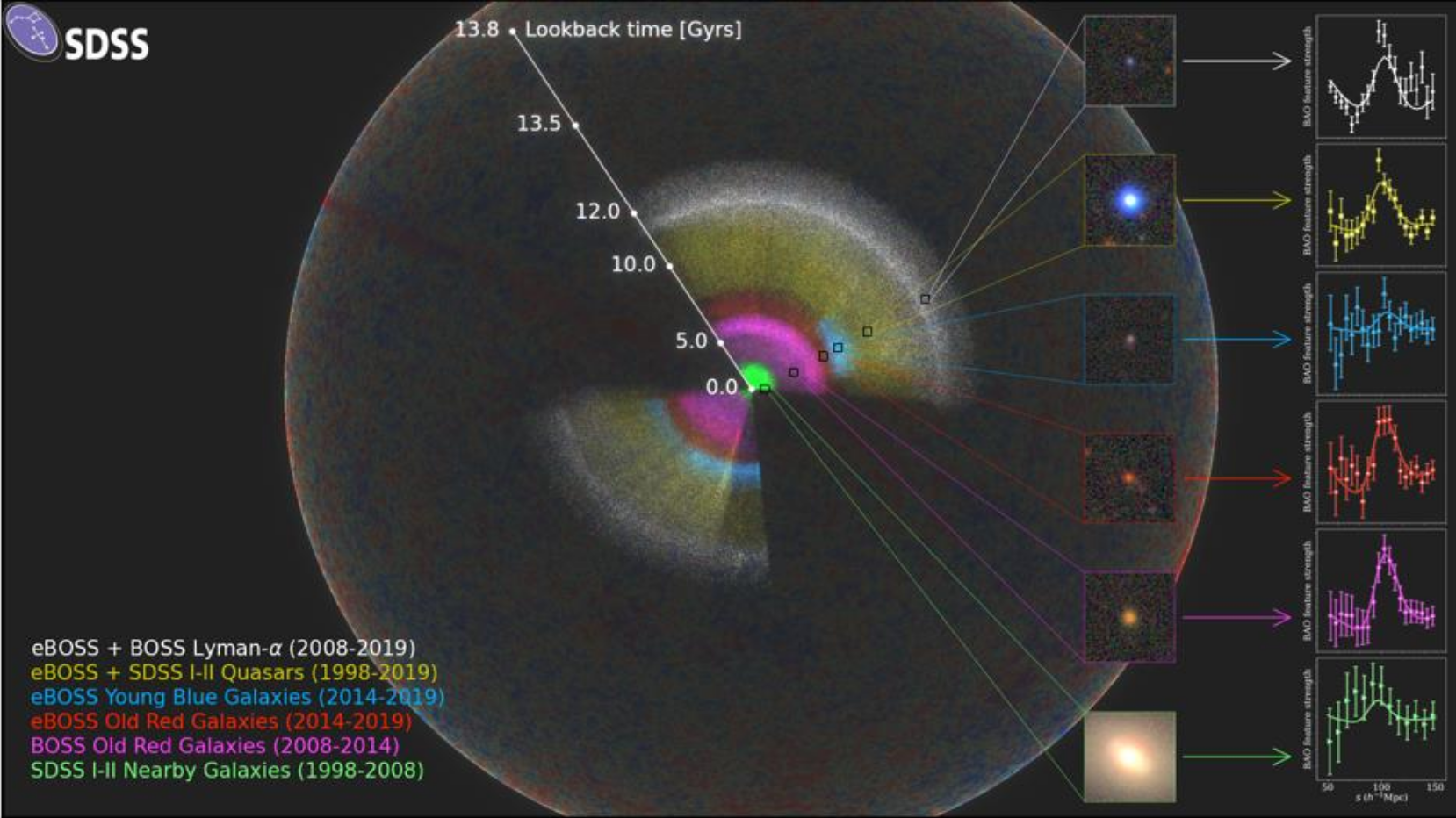
Intermediate resolution: eBOSS (2014 - 2019)
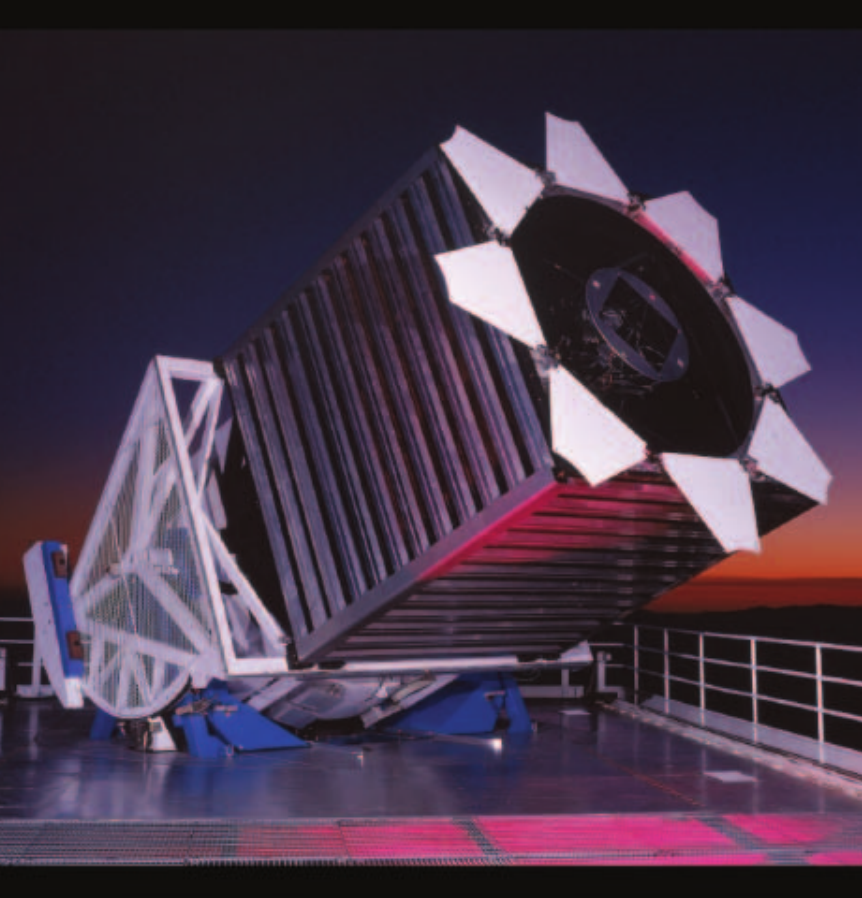
- Multi-object spectrograph
- 2.5 m telescope at Apache Point Observatory
- 210 000 Lyman-α forests

Ecole Rodolphe Cledassou 2025 - galaxy clustering: observation 4/4
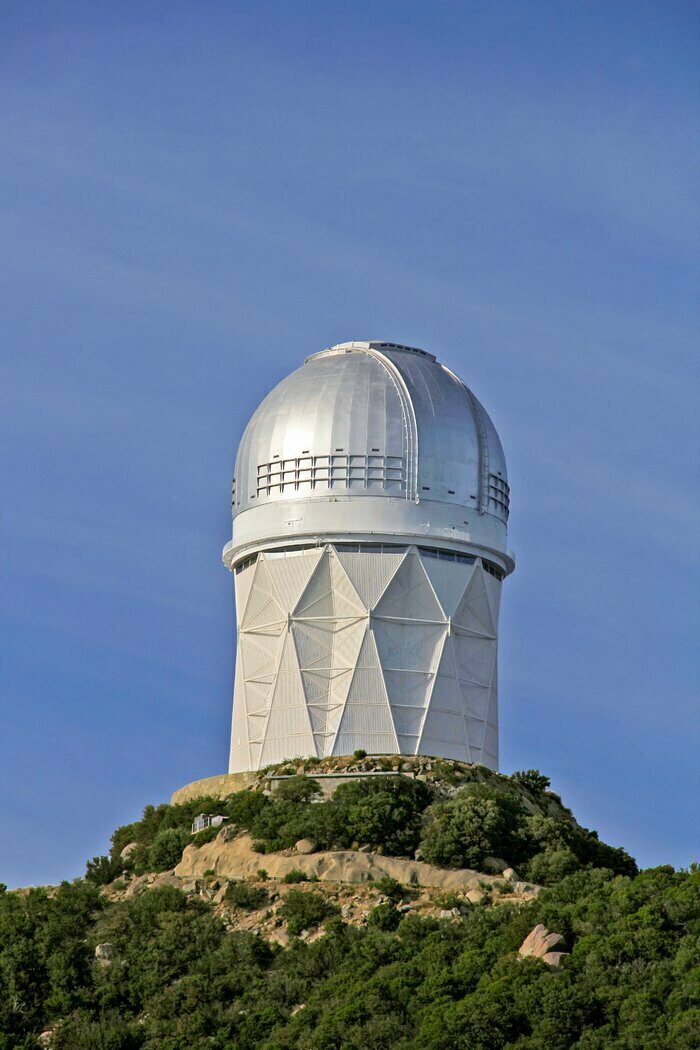
DESI (2021 - 2028)
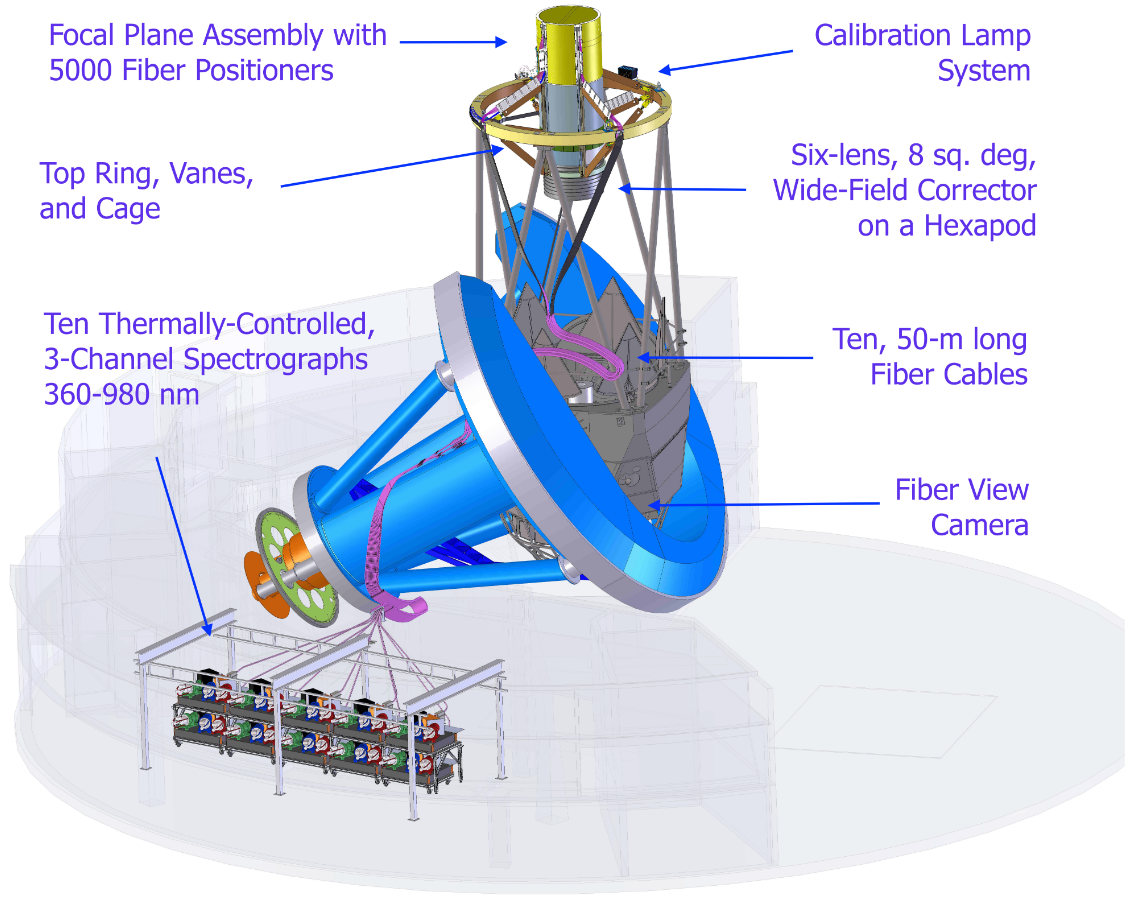
- Multi-object spectrograph
- 4 m telescope at Kitt Peak Observatory
- more than 1 million Lyman-α forests expected
Ecole Rodolphe Cledassou 2025 - galaxy clustering: observation 4/4
Intermediate resolution: DESI focal plane
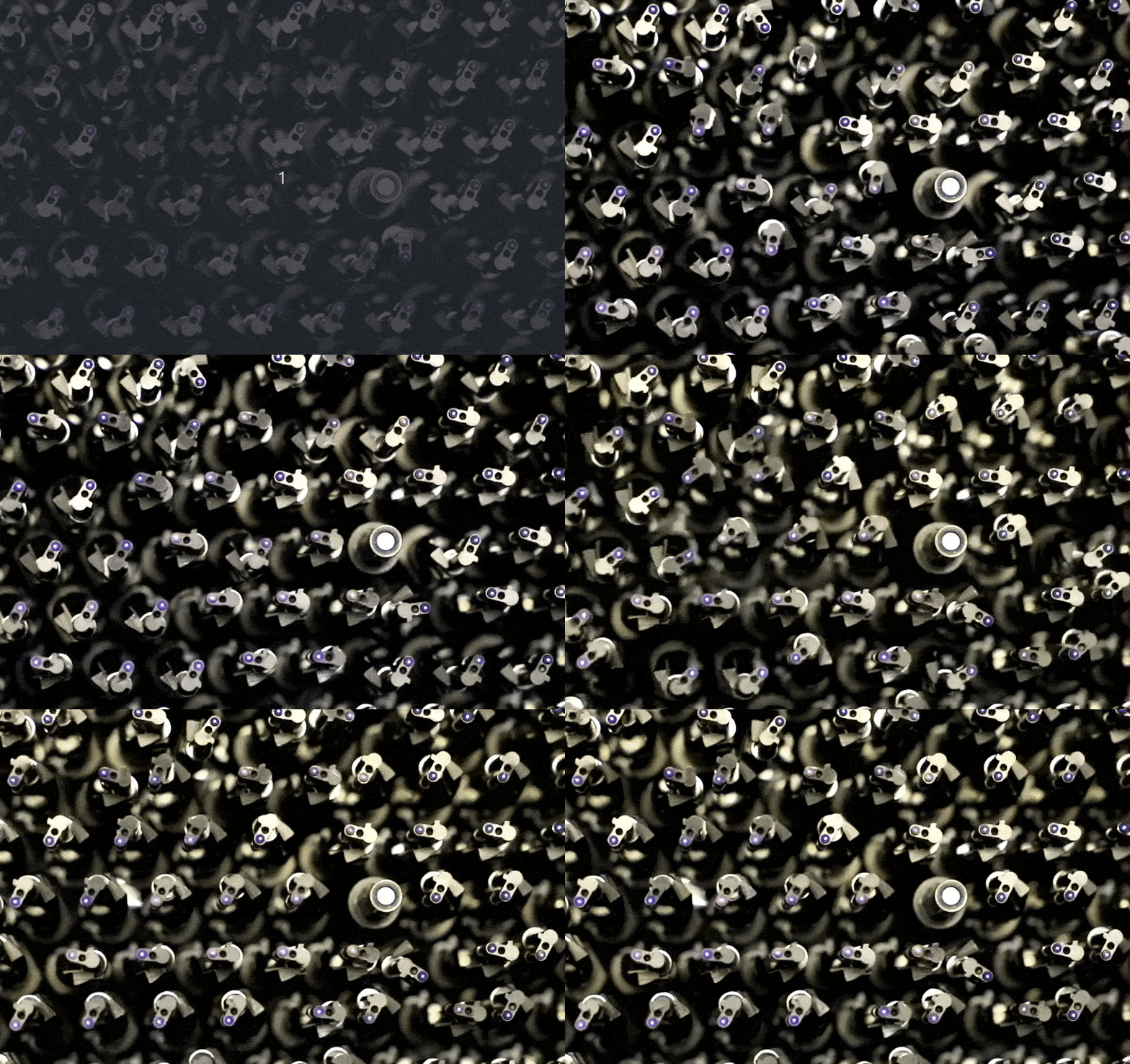
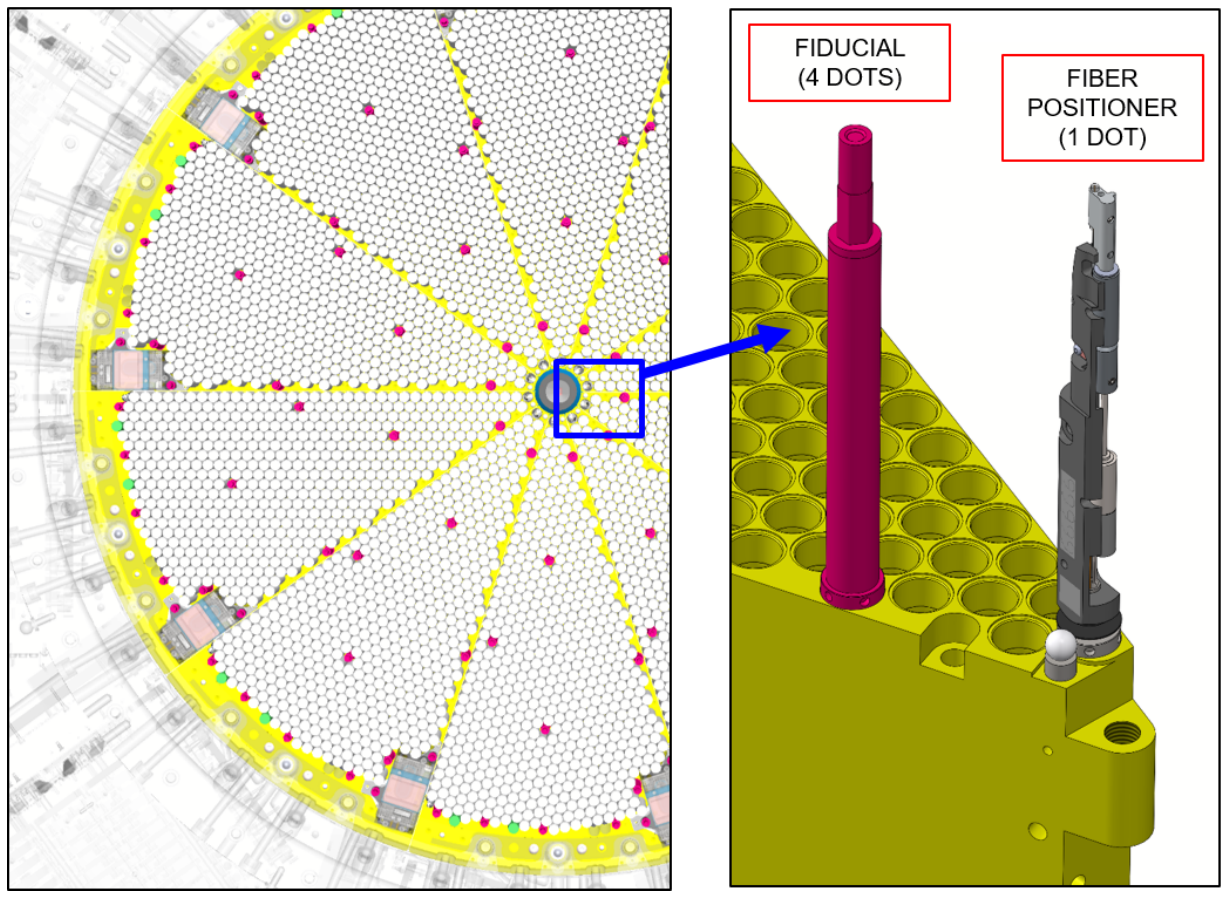
- 5 μm positioning in few sec. for 5000 targets
- All fibers connected to 10 spectrographs
Ecole Rodolphe Cledassou 2025 - galaxy clustering: observation 4/4
Comparison of spectral resolution
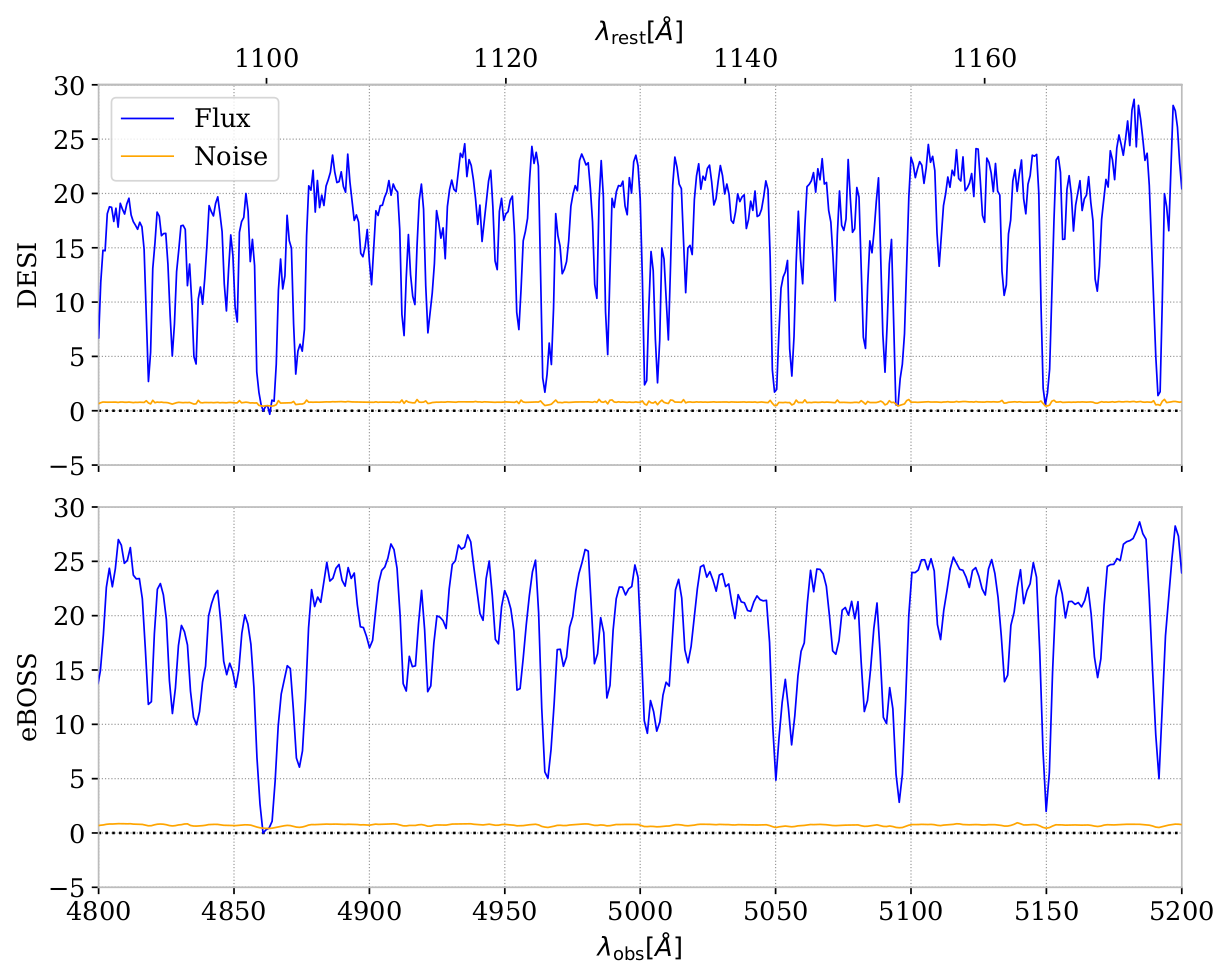
- DESI:
- eBOSS:
Ecole Rodolphe Cledassou 2025 - galaxy clustering: observation 4/4
- KODIAQ (High res):
c.f. Y. Copin "La spectrométrie IR"
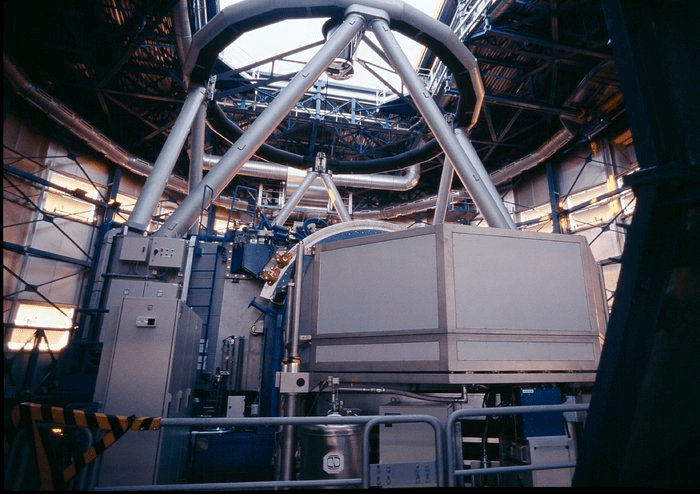
High resolution: VLT
Ecole Rodolphe Cledassou 2025 - galaxy clustering: observation 4/4
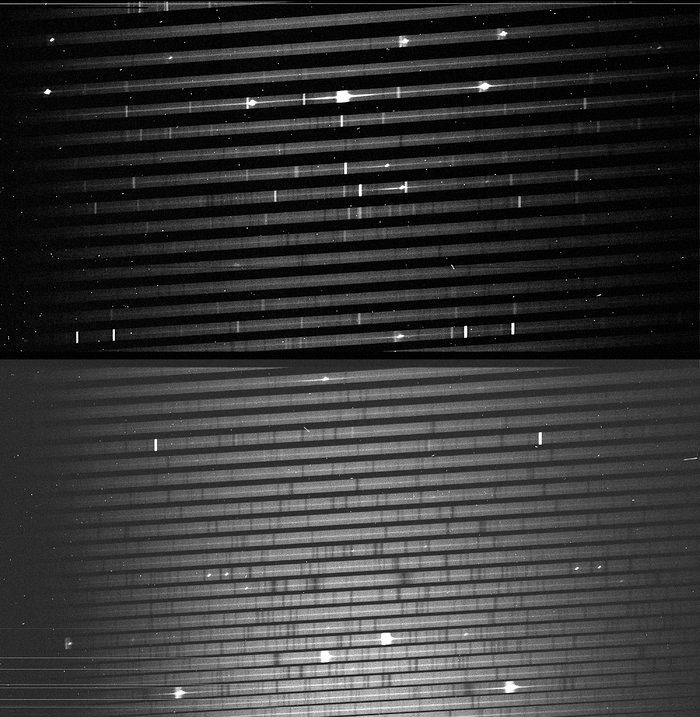
- Cross-dispersed echelle spectrograph: part of the spectra spreaded into diffraction order and separatated
- UVES on VLT:
for one object
for 8 fibers
- Very detailed spectra on few quasars
- Science cases: Astrophysics, quasar properties, deuterium abundance, fine structure constant
- Examples: UVES, XSHOOTER (VLT), HIRES (Keck)
Outline
1. Lyman-α forest physics
2. Observations
3. Clustering with Lyman-α forest
a. 3D correlation function
b. 1D power spectrum
c. Lyman-α tomography
Ecole Rodolphe Cledassou 2025 - galaxy clustering: observation 4/4
3. Clustering with Lyman-α forest
Quasar continuum
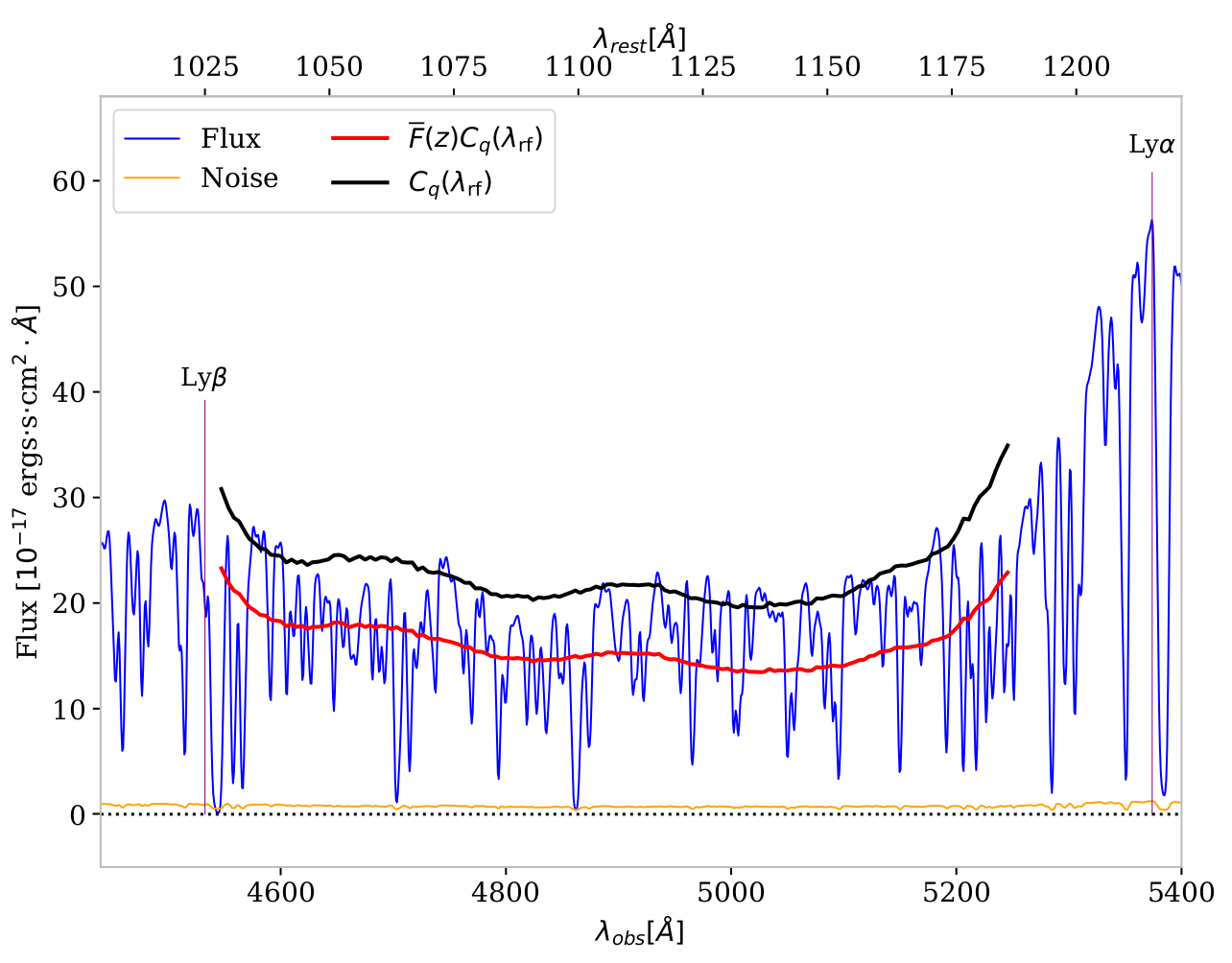
- Quasar continuum: unknown and different for each quasar
- Flux contrast (normalization):
Wavelength [Angstrom]
Flux
Ecole Rodolphe Cledassou 2025 - galaxy clustering: observation 4/4
Quasar continuum fit
Ecole Rodolphe Cledassou 2025 - galaxy clustering: observation 4/4
-
Several methods:
- Using very high resolution quasar spectra/stack of spectra
- Principal Component Analysis template decomposition
- Measuring on hydro simulation
- Brute force: Likelihood minimization of a common model
picca python package
Common continuum model
Flux noise renormalized
Definition of observational statistics
Configuration space
Fourier space
- 3D auto-correlation:
- 3D power spectrum:
- 1D power spectrum:
- 3D cross-correlation:
- 1D auto-correlation (not very used)
X = quasar, void
Ecole Rodolphe Cledassou 2025 - galaxy clustering: observation 4/4
Lyman-α clustering

Observer
Ecole Rodolphe Cledassou 2025 - galaxy clustering: observation 4/4
Quasar
Lyman-α forest



Lyman-α clustering
Correlation
1D power spectrum (P1D)
Quasar
Lyman-α forest
1D auto correlation
Fourier space
Configuration space
Ecole Rodolphe Cledassou 2025 - galaxy clustering: observation 4/4
Correlation
Lyman-α clustering
Ecole Rodolphe Cledassou 2025 - galaxy clustering: observation 4/4
Correlation
Quasar
Lyman-α forest
3D power spectrum (P3D)
3D auto correlation
Fourier space
Configuration space
Correlation
Lyman-α clustering
Configuration space
3D cross correlation with quasars
Ecole Rodolphe Cledassou 2025 - galaxy clustering: observation 4/4
Correlation
Quasar
Lyman-α forest
Lyman-α clustering
Configuration space
Ecole Rodolphe Cledassou 2025 - galaxy clustering: observation 4/4
Quasar
Lyman-α forest
Interpolation
Interpolation
Lyman-α tomography
Interpolation algorithm to construct a 3D map
Outline
1. Lyman-α forest physics
2. Observations
3. Clustering with Lyman-α forest
a. 3D correlation function
b. 1D power spectrum
c. Lyman-α tomography
Ecole Rodolphe Cledassou 2025 - galaxy clustering: observation 4/4
a. 3D correlation function
Baryon acoustic oscillations
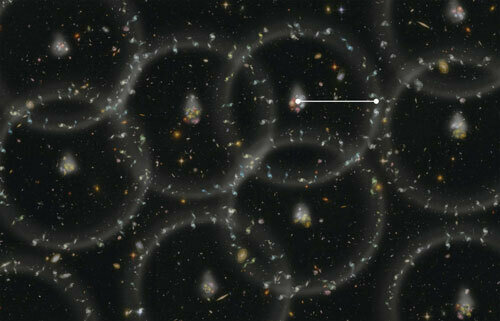
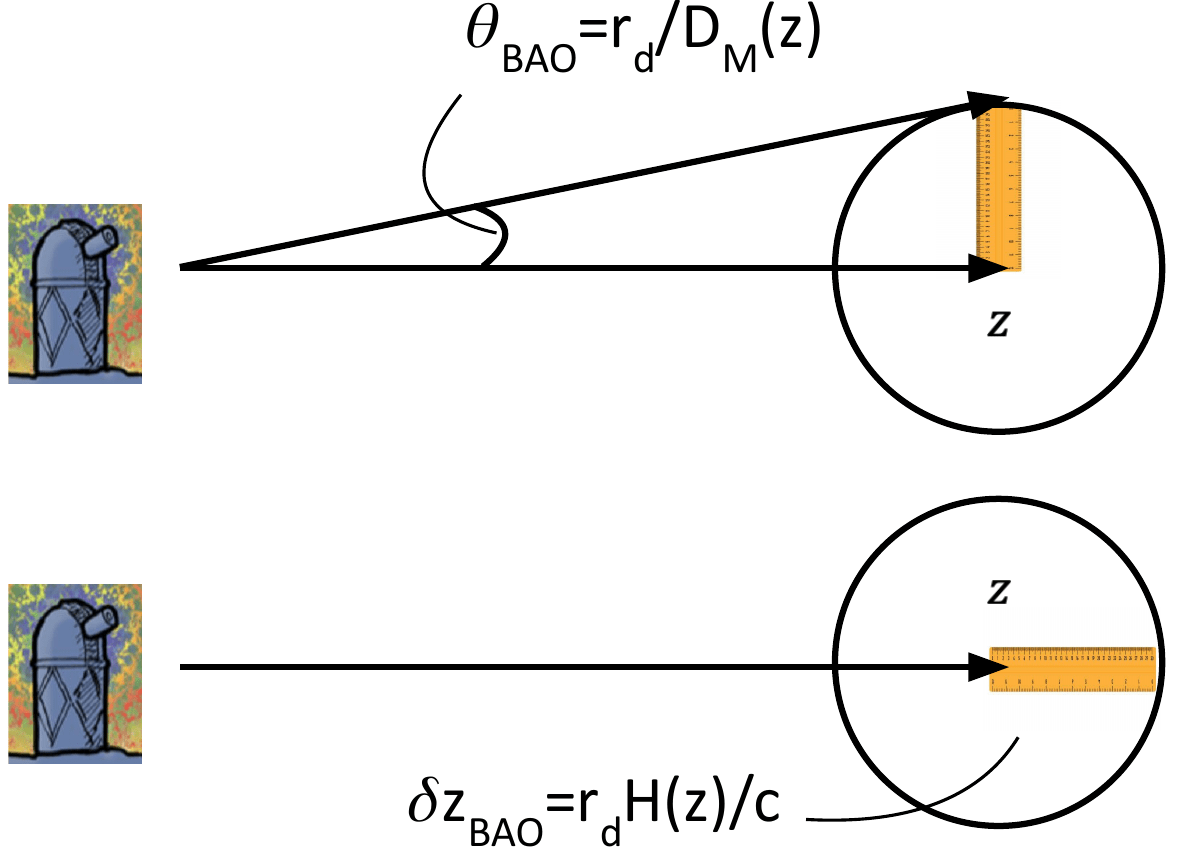
- BAO: Sound waves in the primordial Universe imprint a characteristic scale in the density distribution
- Standard ruler in cosmology to measure distances
- Observed reduced variables:
- = Sound horizon at the drag epoch (baryon/photon decouple)
Ecole Rodolphe Cledassou 2025 - galaxy clustering: observation 4/4
Correlation estimator
- Need to discretize the statistic:
Ecole Rodolphe Cledassou 2025 - galaxy clustering: observation 4/4
Bin A
- Estimator for auto-correlation:
- Run over Lyman-alpha forest quasars, can be computationally expensive
- Similar estimator with point-like contrast for quasar, voids, galaxies...
= pixel weights from continuum fitting
BAO with auto-correlation
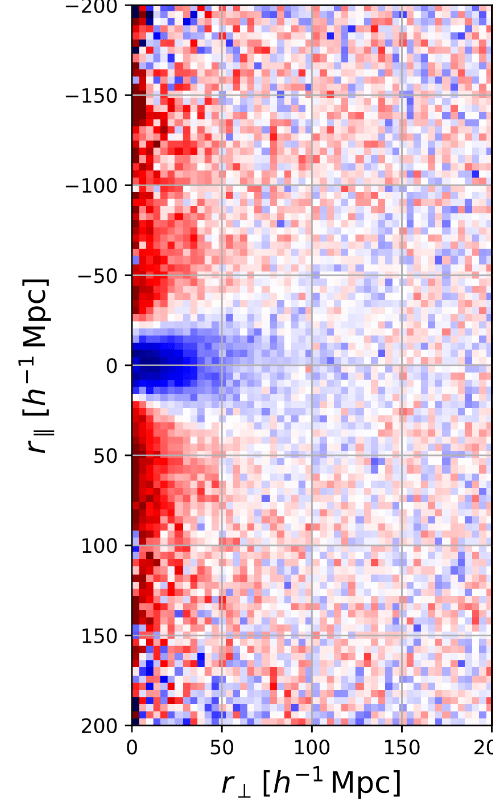
3D auto correlation
- Measurement of α parameters with the BAO scale
Ecole Rodolphe Cledassou 2025 - galaxy clustering: observation 4/4
DESI DR2 2025
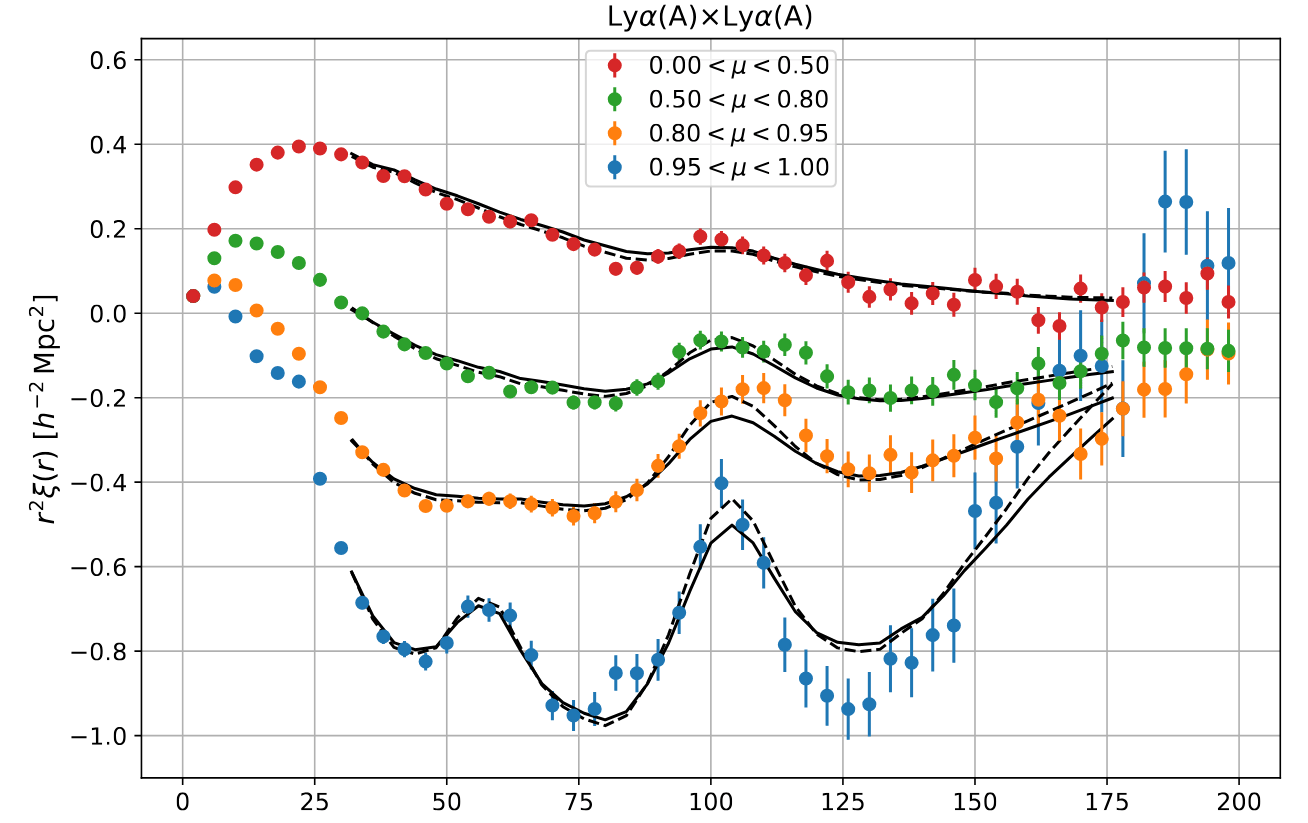

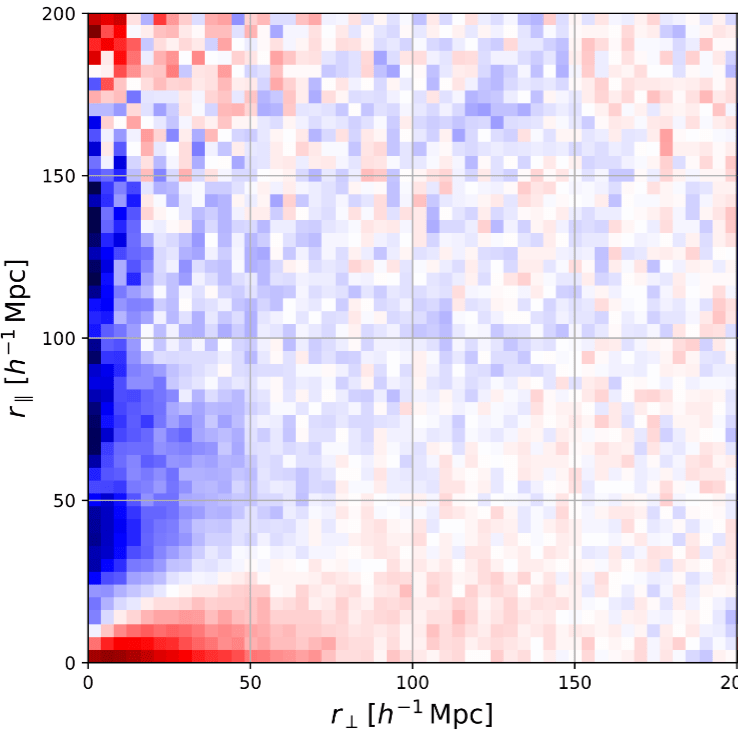
du Mas des Bourboux et al. 2020
BAO with auto-correlation
BAO scale
3D auto correlation
- Measurement of α parameters with the BAO scale
Ecole Rodolphe Cledassou 2025 - galaxy clustering: observation 4/4
DESI DR2 2025
du Mas des Bourboux et al. 2020
BAO with auto-correlation
3D auto correlation
- Contaminants: Continuum fitting error, DLA, BAL, metals
Ecole Rodolphe Cledassou 2025 - galaxy clustering: observation 4/4
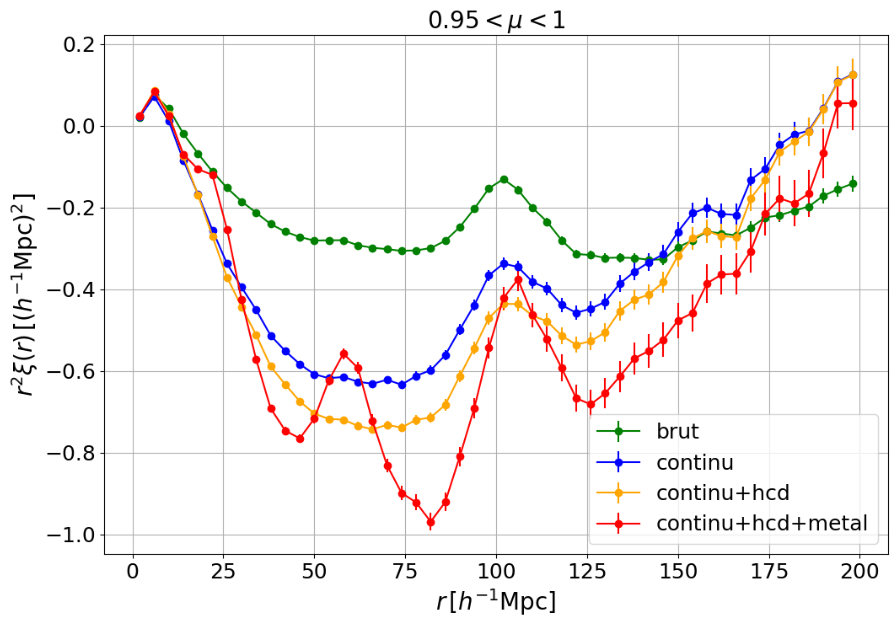
?
BAO with auto-correlation
3D auto correlation
- Contaminants: Continuum fitting error, DLA, BAL, metals
Ecole Rodolphe Cledassou 2025 - galaxy clustering: observation 4/4
SiII doublet
SiIII singulet
BAO with quasar cross-correlation
3D cross correlation with quasars
- Other measurement with additional information
BAO scale
Ecole Rodolphe Cledassou 2025 - galaxy clustering: observation 4/4
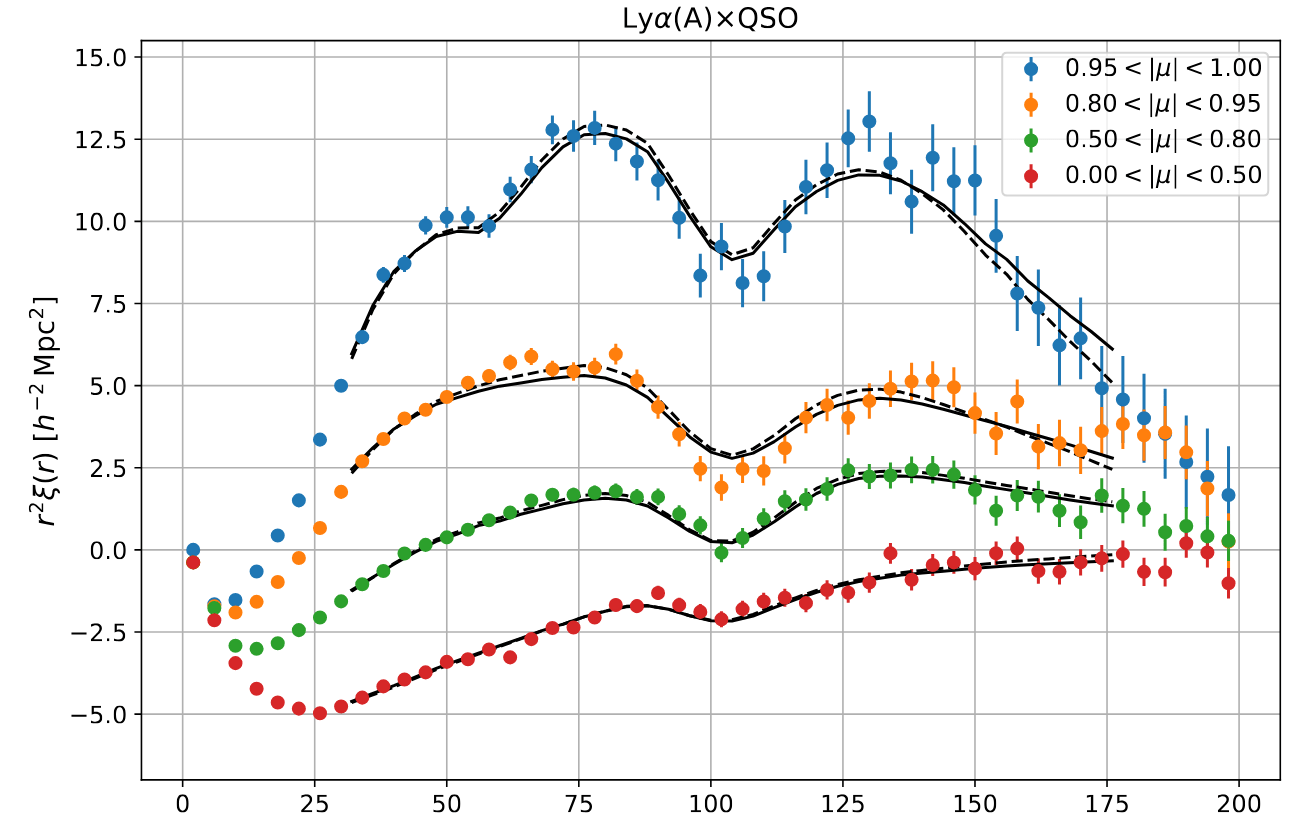

DESI DR2 2025
Modeling: theoretical model
Ecole Rodolphe Cledassou 2025 - galaxy clustering: observation 4/4
- Model for correlation between tracer X and Y:
Linear perturbation theory (Kaiser)
Tracer biases
RSD parameters
Linear power spectrum
Modeling: theoretical model
Ecole Rodolphe Cledassou 2025 - galaxy clustering: observation 4/4
- Model for correlation between tracer X and Y:
Power spectrum modified
Modeling: theoretical model
Ecole Rodolphe Cledassou 2025 - galaxy clustering: observation 4/4
- Model for correlation between tracer X and Y:
Power spectrum modified
Smooth component (no BAO)
BAO damping due to non-linear clustering
BAO component (wiggles)
- Parameters introduced by rescaling:
Modeling: theoretical model
Ecole Rodolphe Cledassou 2025 - galaxy clustering: observation 4/4
- Model for correlation between tracer X and Y:
Correction for binning
Non-linear Lyman-α clustering correction
Modeling: theoretical model
Ecole Rodolphe Cledassou 2025 - galaxy clustering: observation 4/4
- Model for correlation between tracer X and Y:
Correction for binning
Non-linear Lyman-α clustering correction
Non-linear power spectrum correction
Jeans smoothing (isotrop)
Thermal broadening (directional)
Modeling: theoretical model
Ecole Rodolphe Cledassou 2025 - galaxy clustering: observation 4/4
- Model for correlation between tracer X and Y:
+ Full modeling of each contaminants (metals, DLA, BAL...)
FFT
Templates for fit
BAO fit results
Ecole Rodolphe Cledassou 2025 - galaxy clustering: observation 4/4
- Auto-correlation and cross-correlation with quasars
-
Covariance matrix estimation for the fit:
- Subsampling
- Jackknife
- Estimator on data
- Theoretical
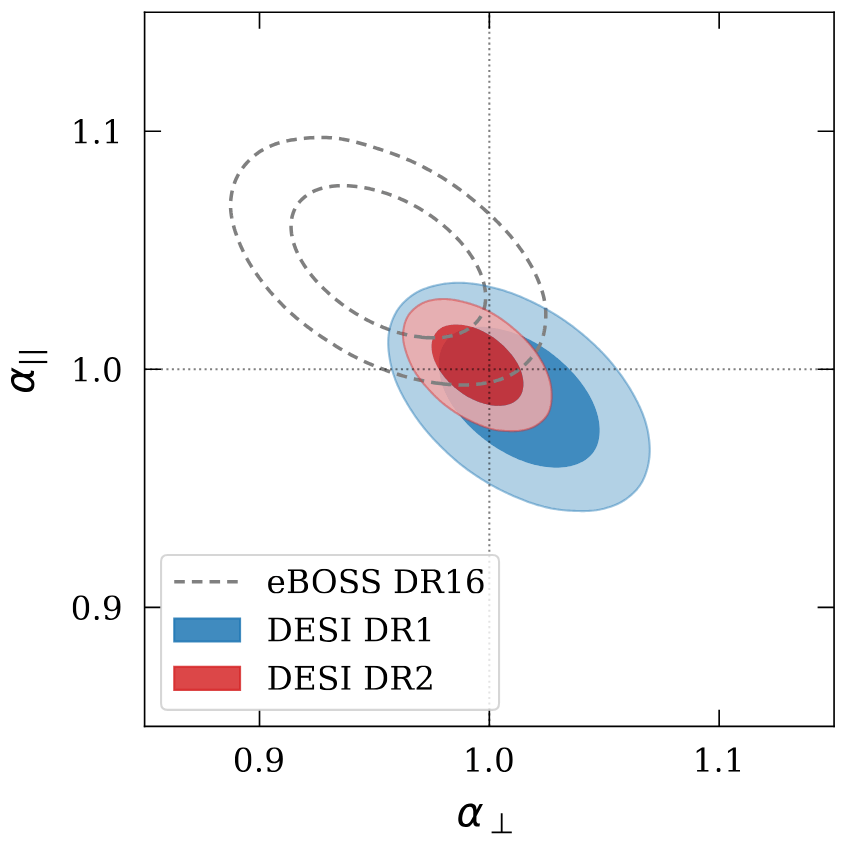
DESI DR2 2025
Used as a high-redshift BAO point for constraints on Hubble constant, neutrino mass, dark energy
Ecole Rodolphe Cledassou 2025 - galaxy clustering: observation 4/4
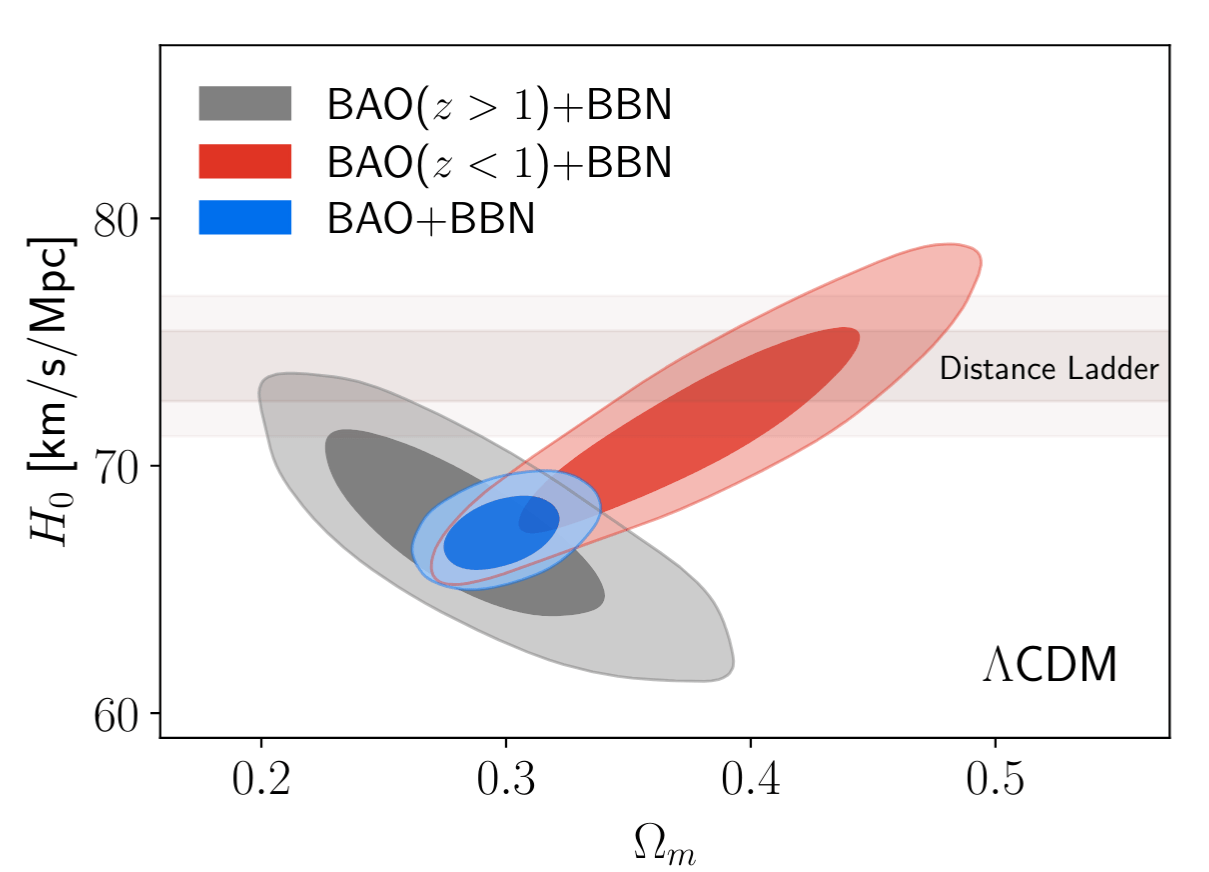
BAO fit results
High complementarity with "low-z" galaxy clustering measurements
eBOSS DR16 2021
Ecole Rodolphe Cledassou 2025 - galaxy clustering: observation 4/4
Next steps in 3D clustering
Full shape
EFT modeling
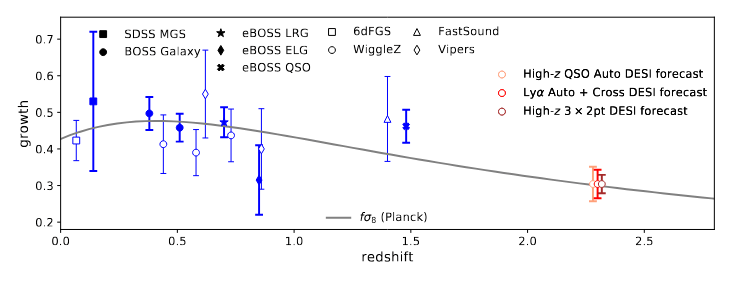
- High-z full-shape measurement with growth rate constraints
Cuceu et al. 2021
- New EFT models for exact treatment of non-linear clustering corrections

Ivanov 2024
Outline
1. Lyman-α forest physics
2. Observations
3. Clustering with Lyman-α forest
a. 3D correlation function
b. 1D power spectrum
c. Lyman-α tomography
Ecole Rodolphe Cledassou 2025 - galaxy clustering: observation 4/4
b. 1D power spectrum
Small scales
Large scales
1D power spectrum (P1D)
Ecole Rodolphe Cledassou 2025 - galaxy clustering: observation 4/4
-
Correlations along individual lines-of-sight
-
Sensitive to small-scale matter clustering and IGM thermal state
- Probe the small-scale matter power spectrum
Amplitude and slope at
Chabanier et al. 2019
P1D range
Wavenumber k [Mpc^-1]
Matter power spectrum
One-dimensional power spectrum
Neutrino masses
P1D range
CMB range
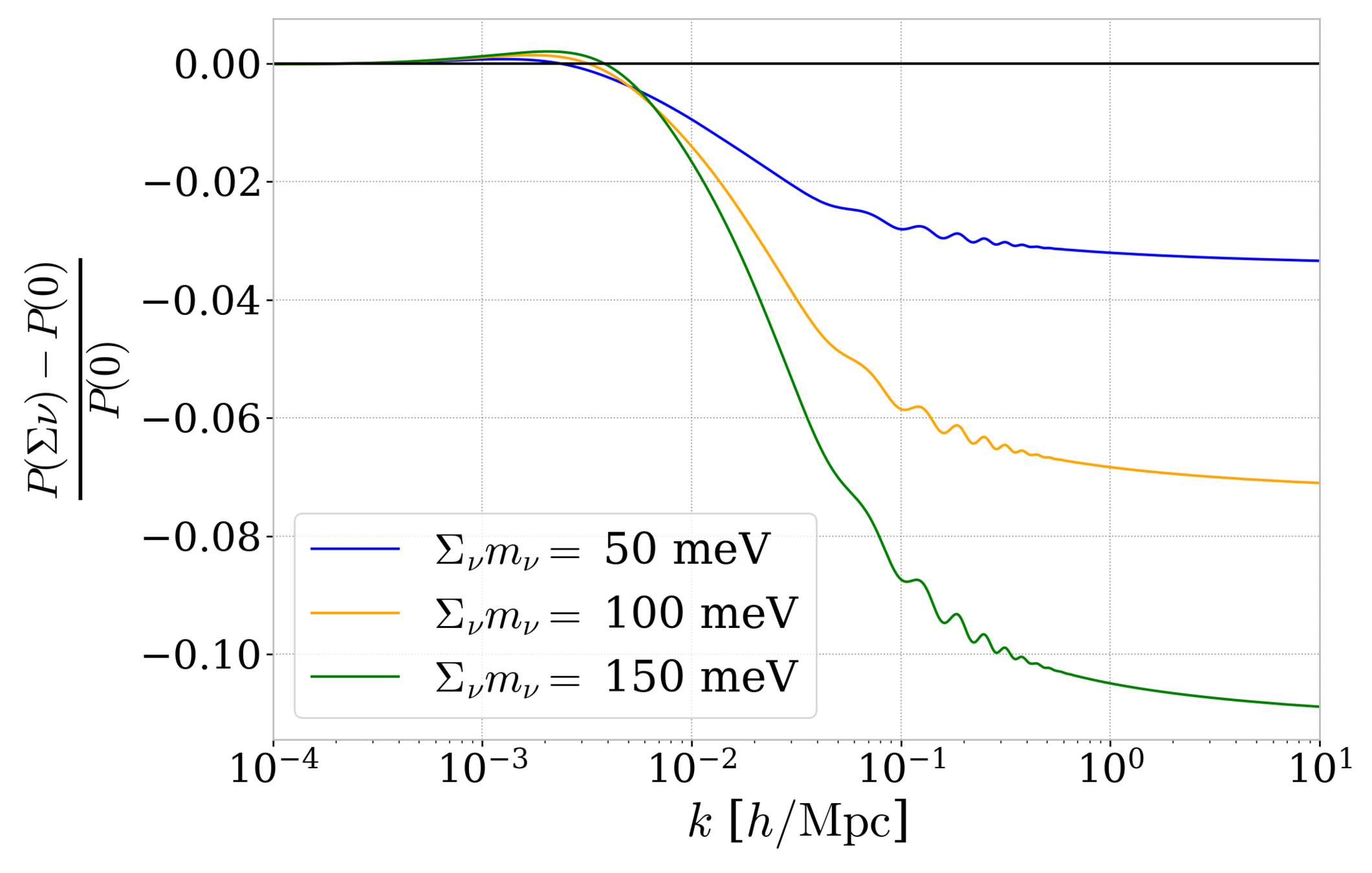
- Oscillations experiments measure mass differences
- Cosmology:
- Neutrinos impact structure formation by smoothing matter power spectrum at small scales
- Effect depends on the sum of neutrino masses
P1D constrain neutrino masses
Ecole Rodolphe Cledassou 2025 - galaxy clustering: observation 4/4
- Warm dark matter:
- Thermal relics from cosmic microwave background
- Mass-dependent power spectrum cut-off on small scales
- Other models:
- Fuzzy dark matter
- Self-interacting dark matter
- Primordial black holes
Dark matter properties
P1D range
Baur et al. 2015
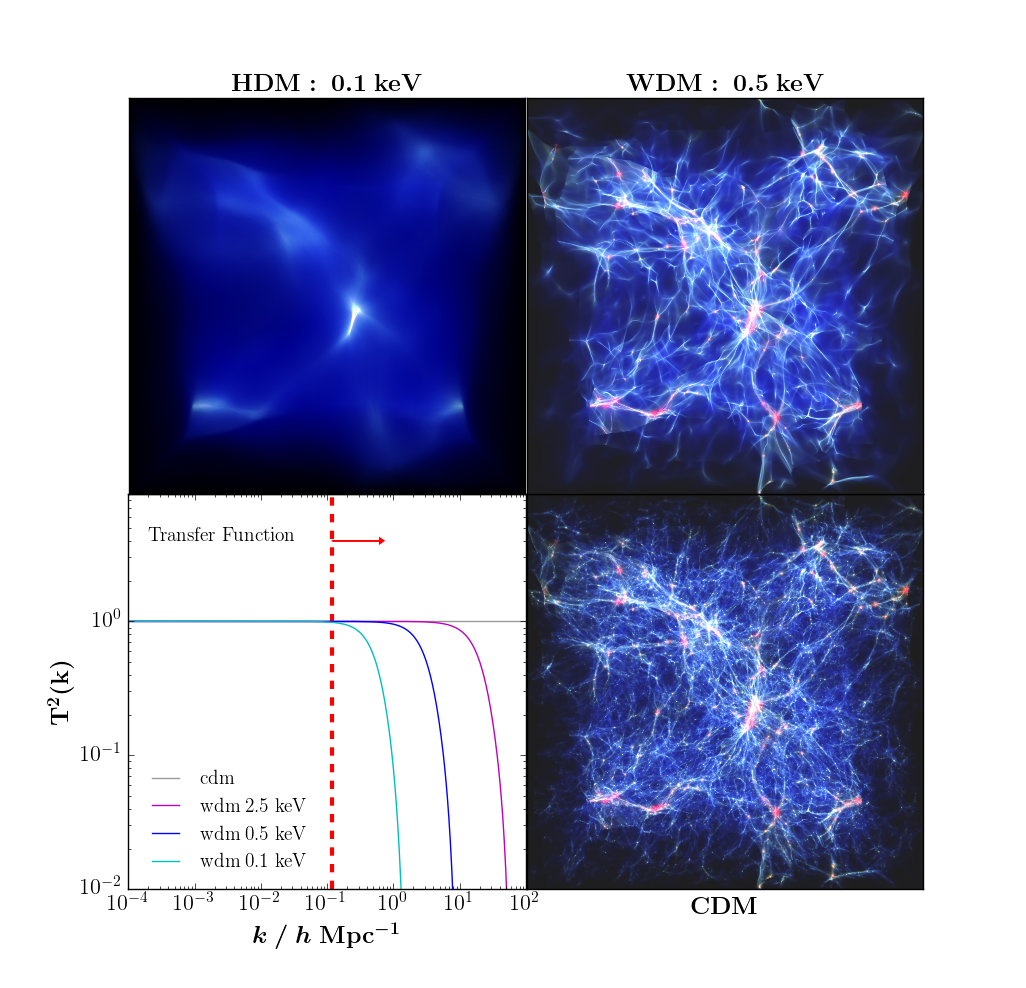
P1D constrain dark matter models
Ecole Rodolphe Cledassou 2025 - galaxy clustering: observation 4/4
P1D estimator
- P1D measured using Fast Fourrier Transform estimator
Ecole Rodolphe Cledassou 2025 - galaxy clustering: observation 4/4
Without correction, Fourier transform of flux contrasts and averaging for all quasars
P1D estimator
- P1D measured using Fast Fourrier Transform estimator
Ecole Rodolphe Cledassou 2025 - galaxy clustering: observation 4/4
Correction of the noise estimation
Spectroscopic resolution correction
P1D estimator
- P1D measured using Fast Fourrier Transform estimator
Measurement of absorption from other IGM elements
Ecole Rodolphe Cledassou 2025 - galaxy clustering: observation 4/4
Correction of the noise estimation
Spectroscopic resolution correction
P1D estimator
- P1D measured using Fast Fourrier Transform estimator
Masking of atmospheric lines
Masking of Damped Lyman-α systems
Correction of continuum fitting error
Correction of the noise estimation
Spectroscopic resolution correction
Measurement of absorption from other IGM elements
Correction of the resolution estimation
Ecole Rodolphe Cledassou 2025 - galaxy clustering: observation 4/4
All corrections derived from simulation/models on simulations
P1D measurements on intermediate resolution
Ecole Rodolphe Cledassou 2025 - galaxy clustering: observation 4/4
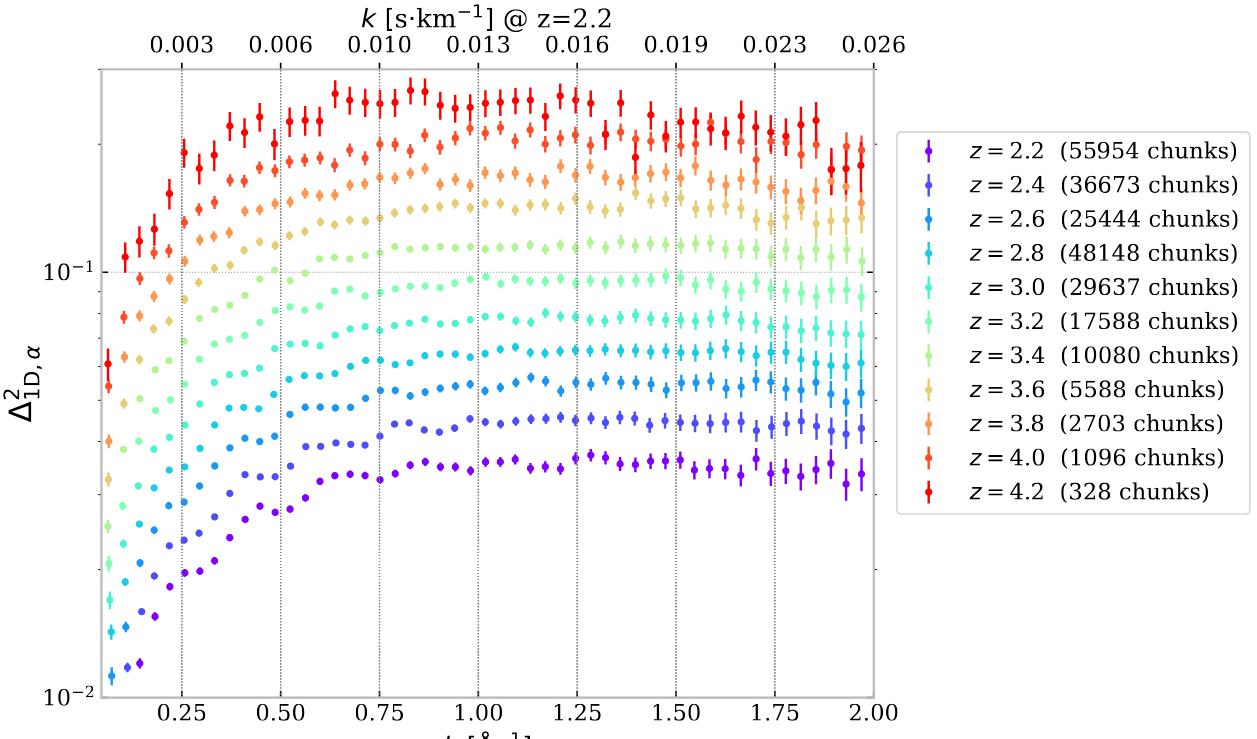
P1D
Wavenumber k [Ang^-1]
- DESI DR1 measurement
- Large number of quasars (159132) with rather noisy spectra = small statistical error
- Error bars accounting for systematic and statistical uncertainties
Ravoux et al. 2025
P1D measurements on high resolution
- KODIAQ + SQUAD + XQ-100 measurement
- Very few quasars (538)
- Goes to very small scales = more constraining power for dark matter models
Karacaylı et al. 2022
Ecole Rodolphe Cledassou 2025 - galaxy clustering: observation 4/4
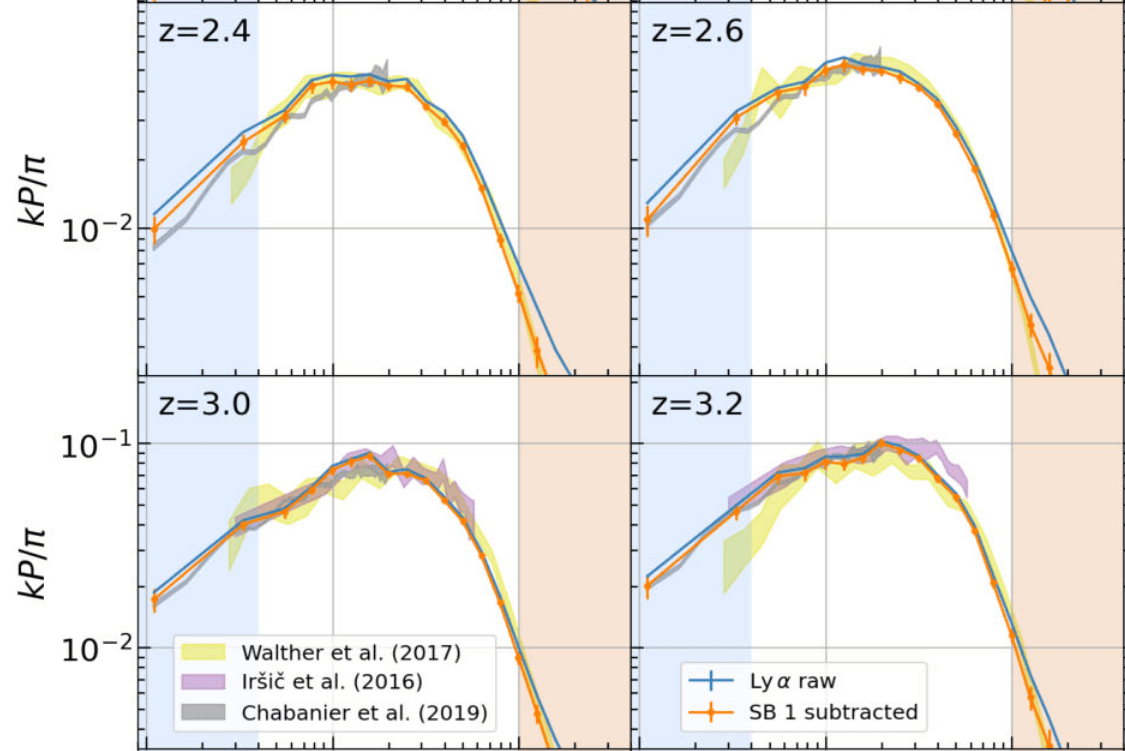

P1D
Wavenumber k [s/km]
Modeling: High-resolution simulations
Walther et al. 2021
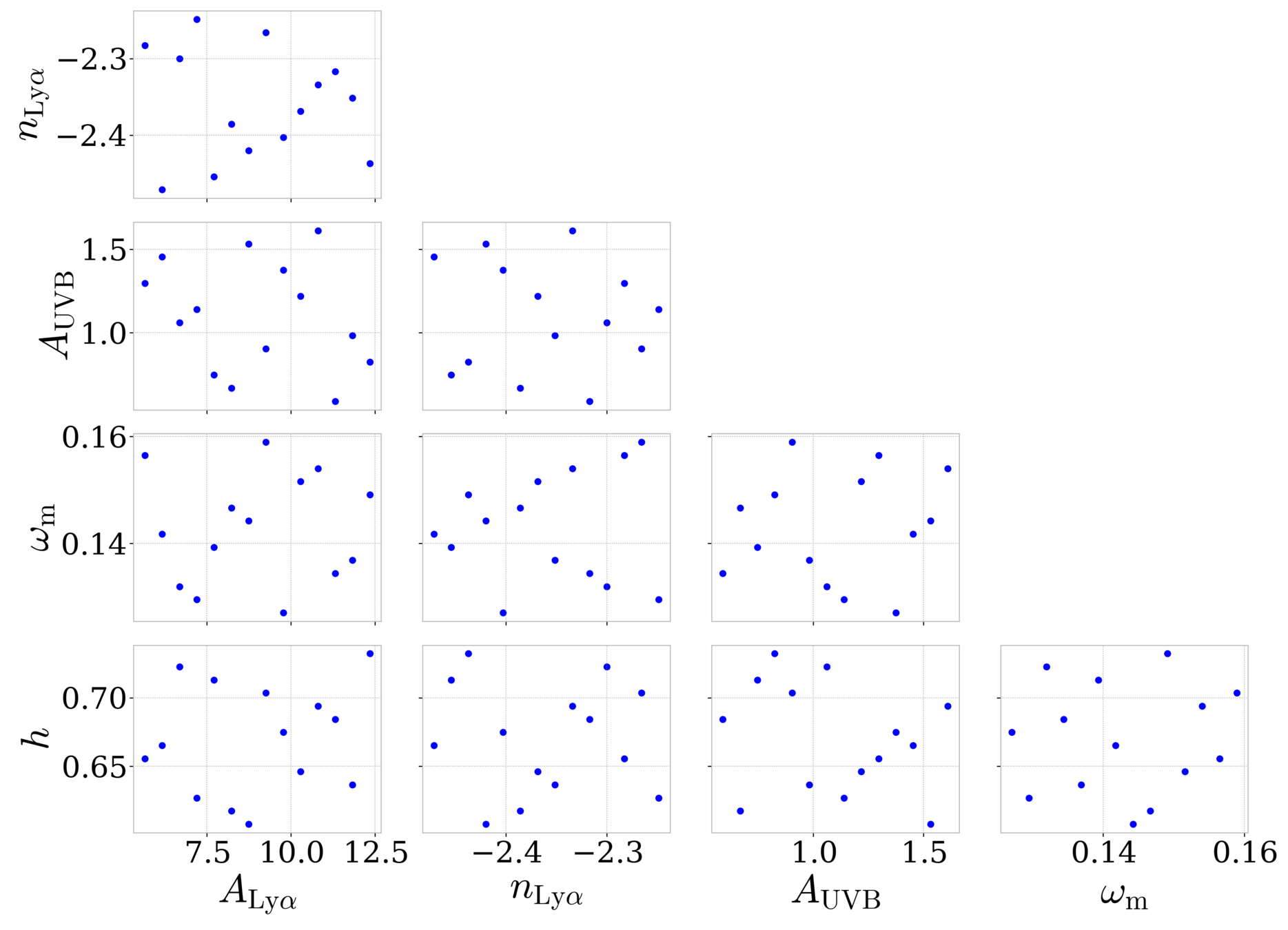
- Interpretation of P1D measurement with high-resolution hydrodynamical simulations (very expensive)
- Machine learning methods:
- Interpolation between simulations
- Covers cosmological parameter space evenly
Ecole Rodolphe Cledassou 2025 - galaxy clustering: observation 4/4
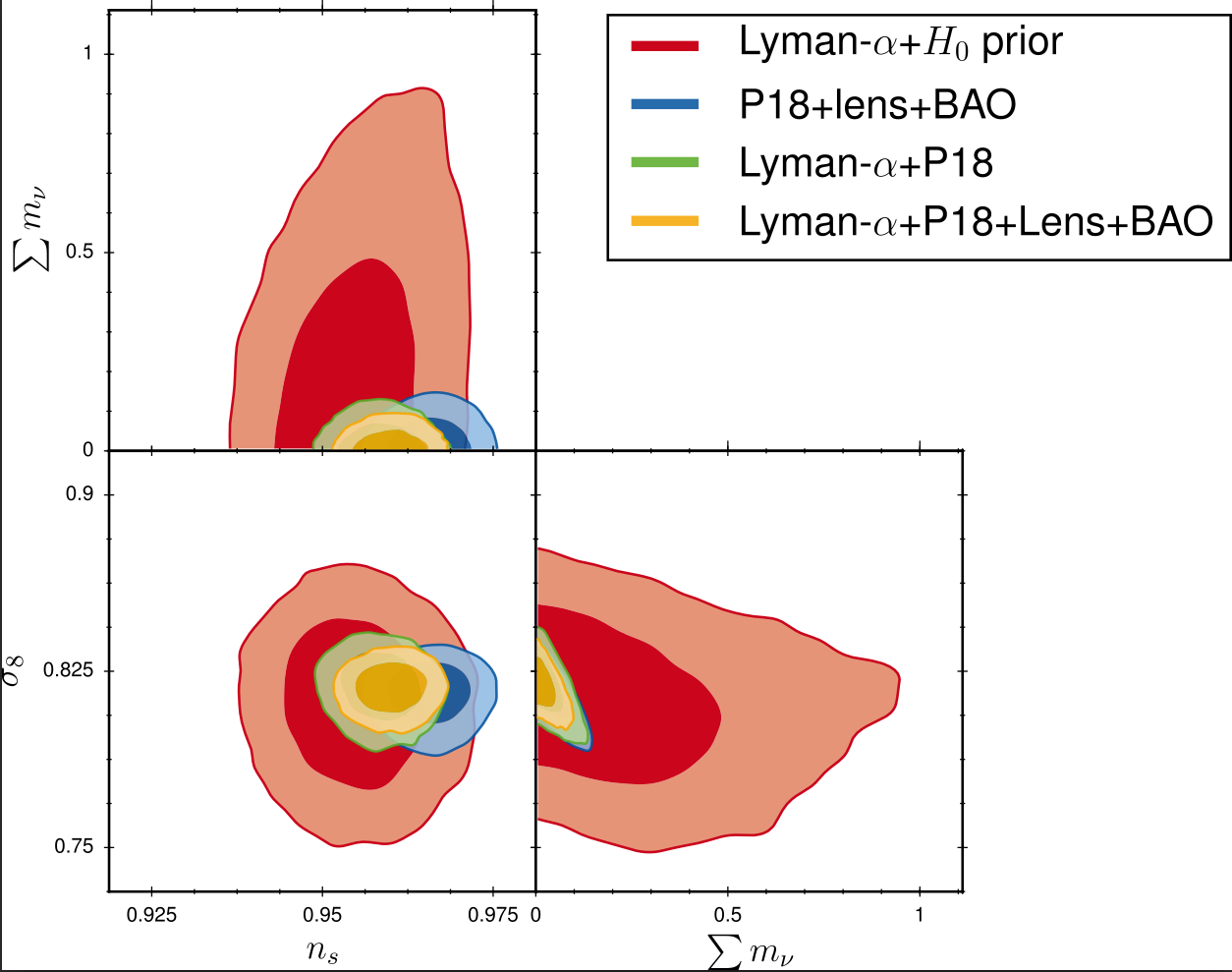
Current and future constraints
Palanque-Delabrouille et al. 2020
Ecole Rodolphe Cledassou 2025 - galaxy clustering: observation 4/4
- Neutrino mass (P1D +CMB):
- Warm dark matter model:
- Other constraints: Fuzzy dark matter, sterile neutrinos, running of the primordial power spectrum
at 95% C.L.
at 95% C.L.
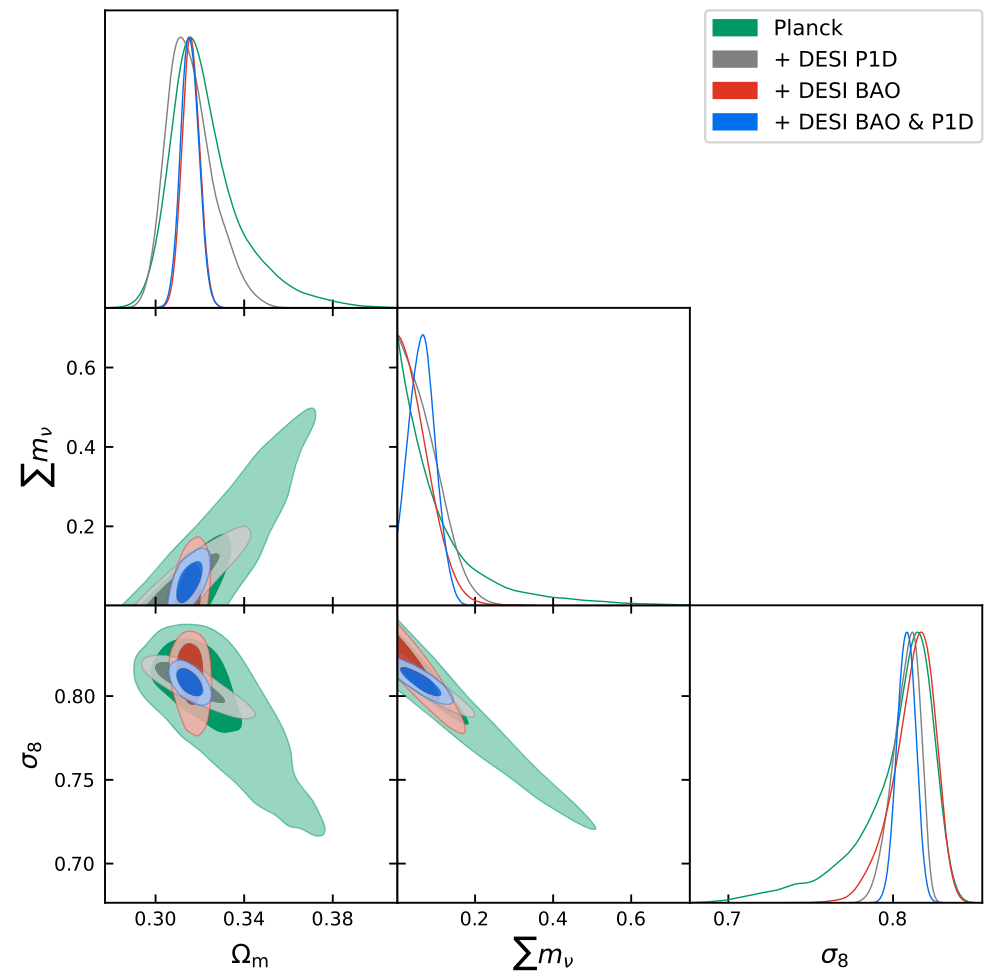
Current and future constraints
Ecole Rodolphe Cledassou 2025 - galaxy clustering: observation 4/4
- Constraints on WDM improved by a factor 1.6
- IGM thermal parameters by a factor 2.
- Neutrino mass, in association with BAO and CMB:
Valluri et al. 2022
Credits to A. Font-Ribera
Preliminary
Future of Fourier space measurements
Ecole Rodolphe Cledassou 2025 - galaxy clustering: observation 4/4
3D power spectrum
Bispectrum
- 3-point correlation function in Fourier space = more information from cosmic web
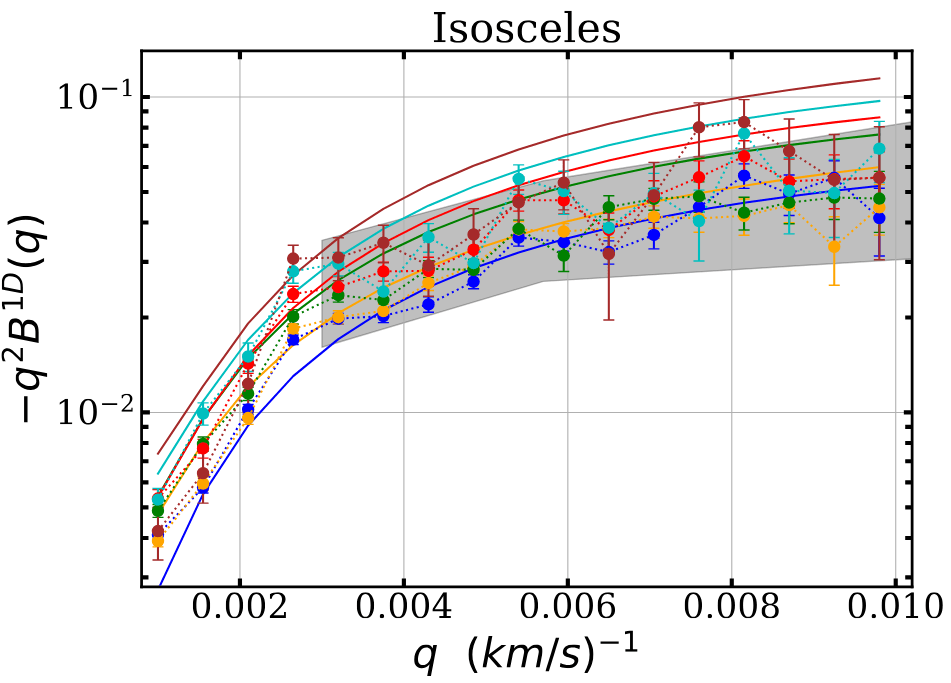
- 3D information in Fourier space
- Made complicated by the intrinsic anisotropy of the Lyman-α forest
- 3-point correlation function in Fourier space = more information from cosmic web
de la Cruz et al. 2024
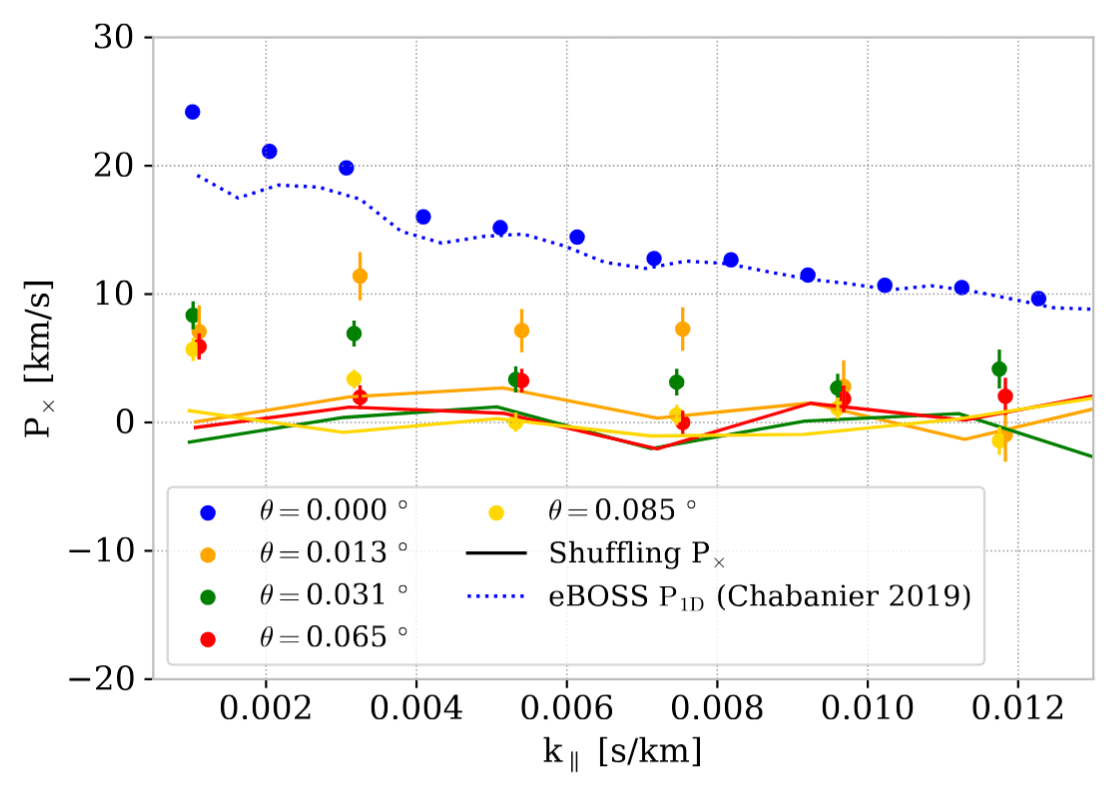
Abdul Karim et al. 2023
Outline
1. Lyman-α forest physics
2. Observations
3. Clustering with Lyman-α forest
a. 3D correlation function
b. 1D power spectrum
c. Lyman-α tomography
Ecole Rodolphe Cledassou 2025 - galaxy clustering: observation 4/4
c. Lyman-α tomography
Lyman-α tomography
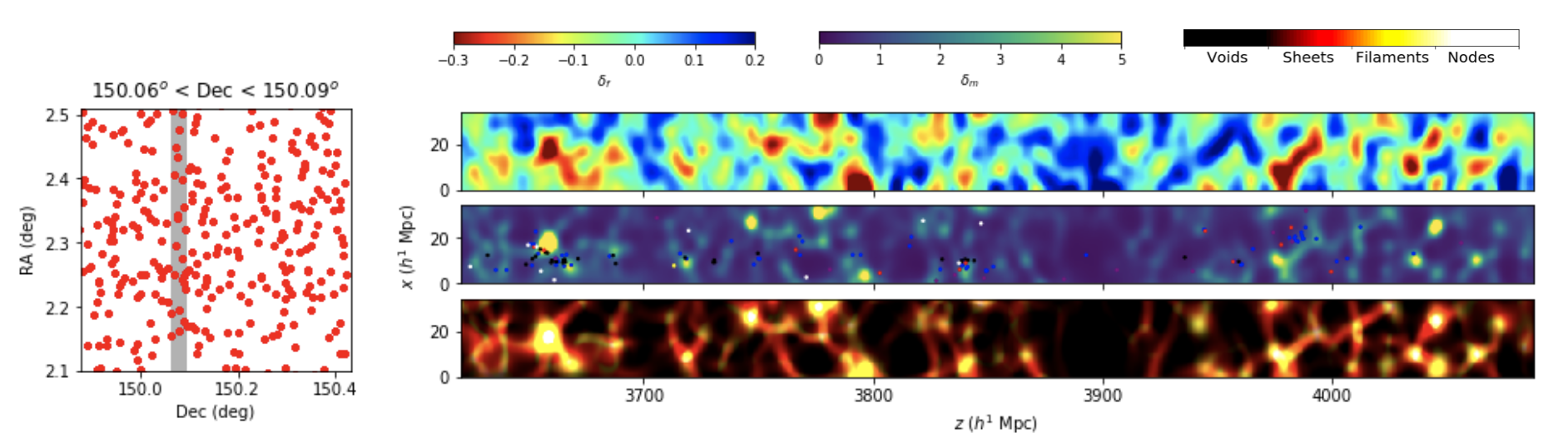
- 3D map of Lyman-α absorption from 1D spectra
- Goal: Map the cosmic web at high redshift
- Require large sample of Lyman-α with high angulardensity
Lyman-α tomography
Ecole Rodolphe Cledassou 2025 - galaxy clustering: observation 4/4
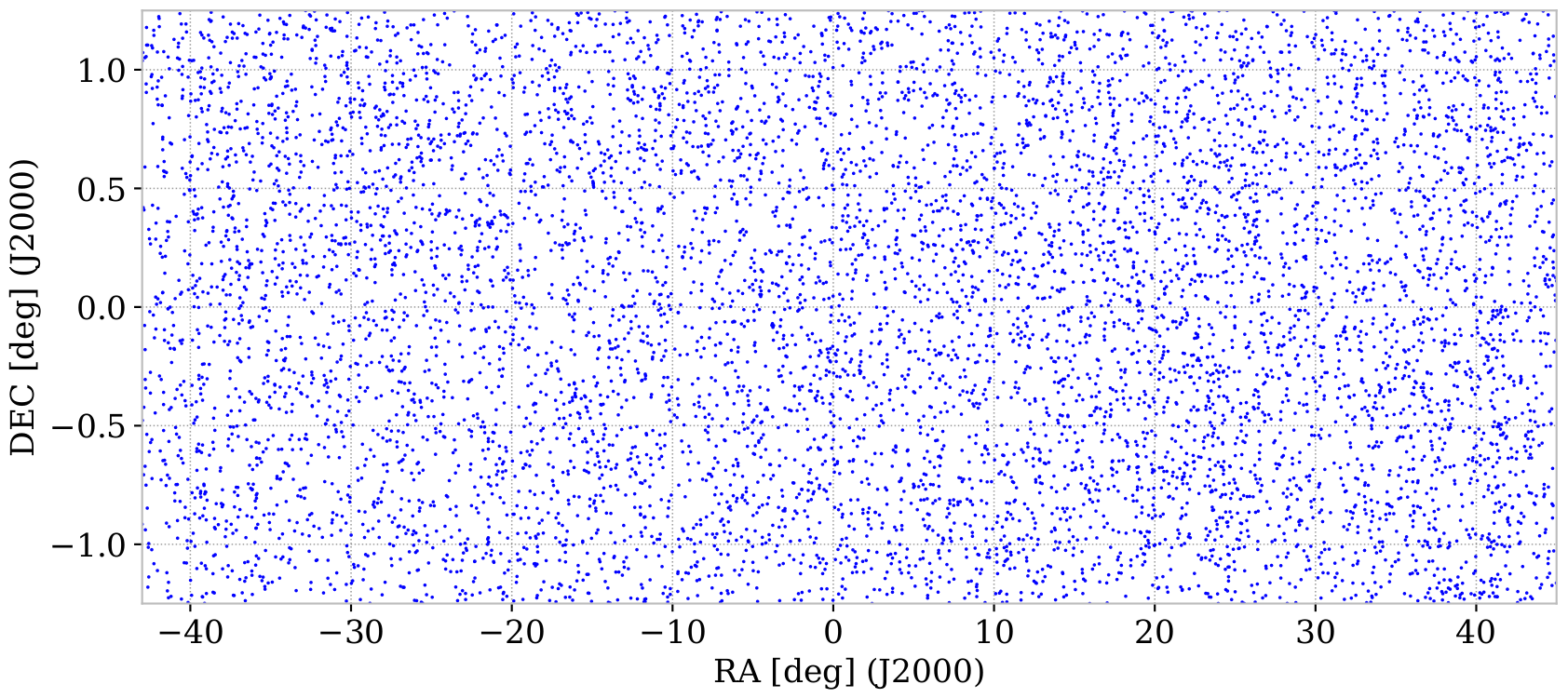
Ravoux et al. 2020
Horowitz et al. 2021
Interpolation algorithms
- Wiener filter ~ Noise-dependent interpolation of forests
Ecole Rodolphe Cledassou 2025 - galaxy clustering: observation 4/4
Map (output)
Forests (input)
Noise
Map-data and data-data covariance, modeled with Gaussian kernels
Interpolation algorithm data
Ecole Rodolphe Cledassou 2025 - galaxy clustering: observation 4/4
- Forward modeling ~ Evolving density field from simulation to reproduce data (expensive and hard for large maps)
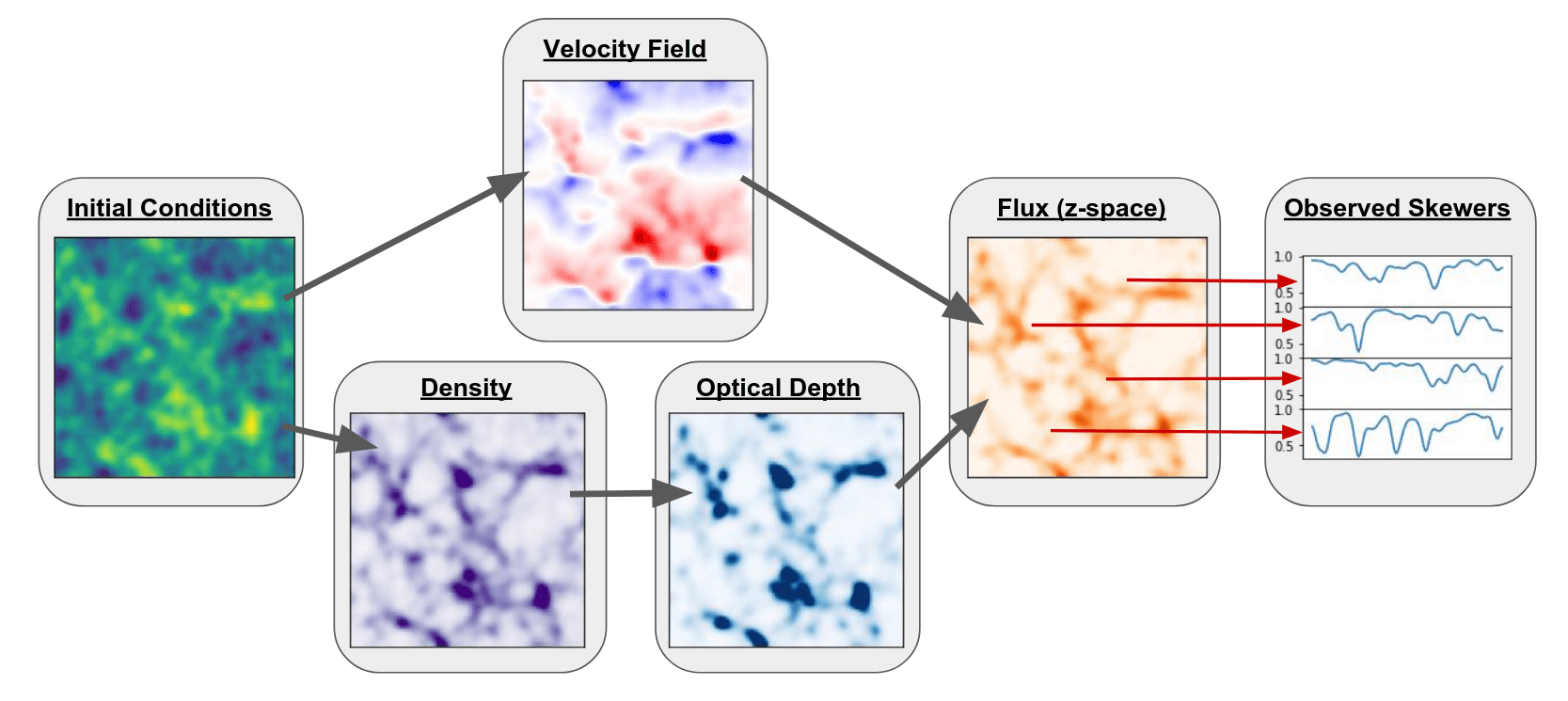
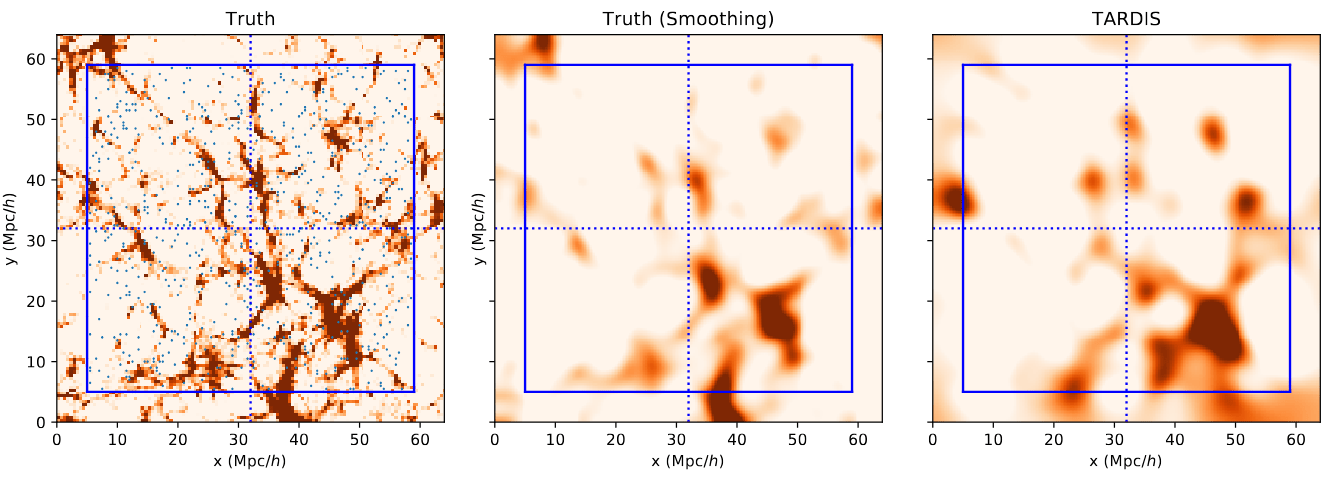
Horowitz et al. 2020
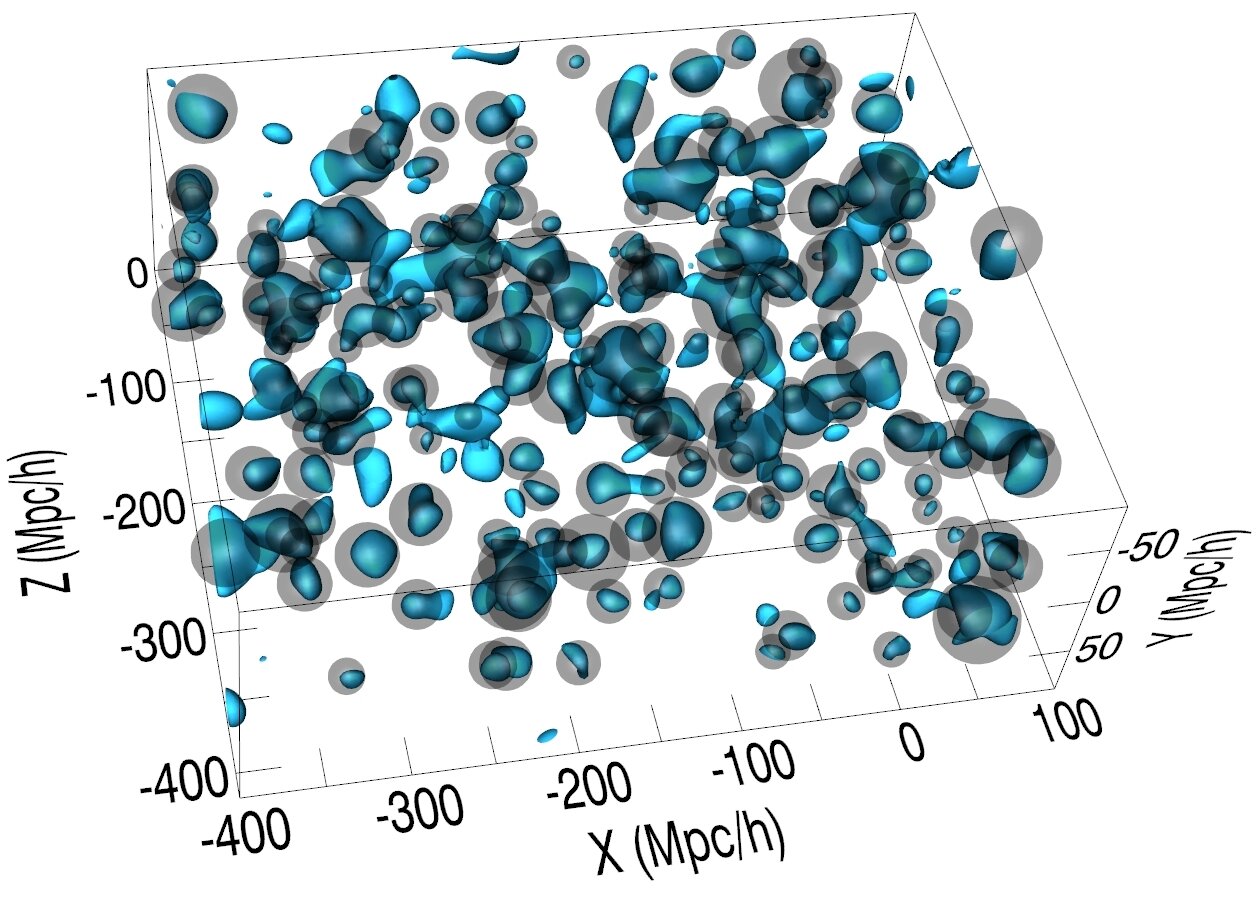
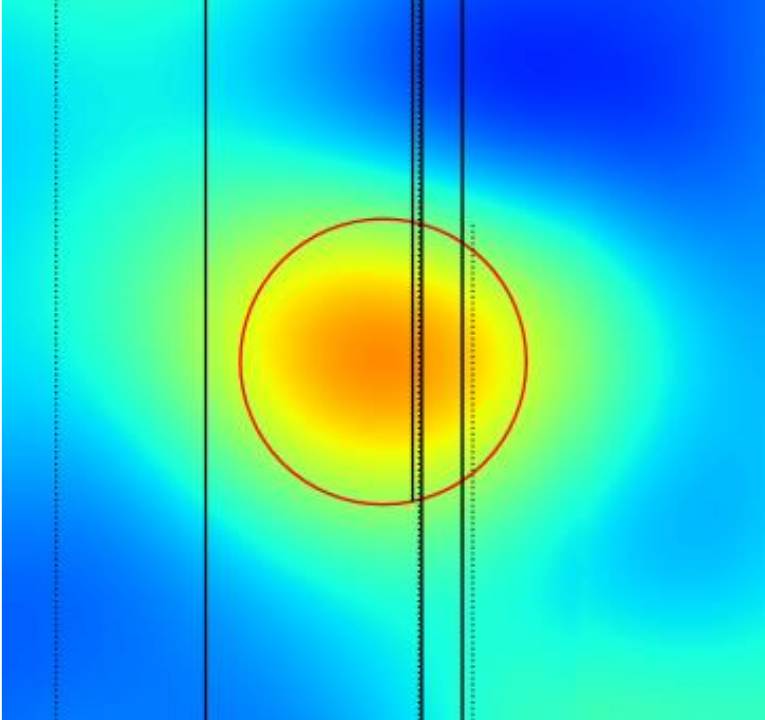
Example: wiener filter map on eBOSS data
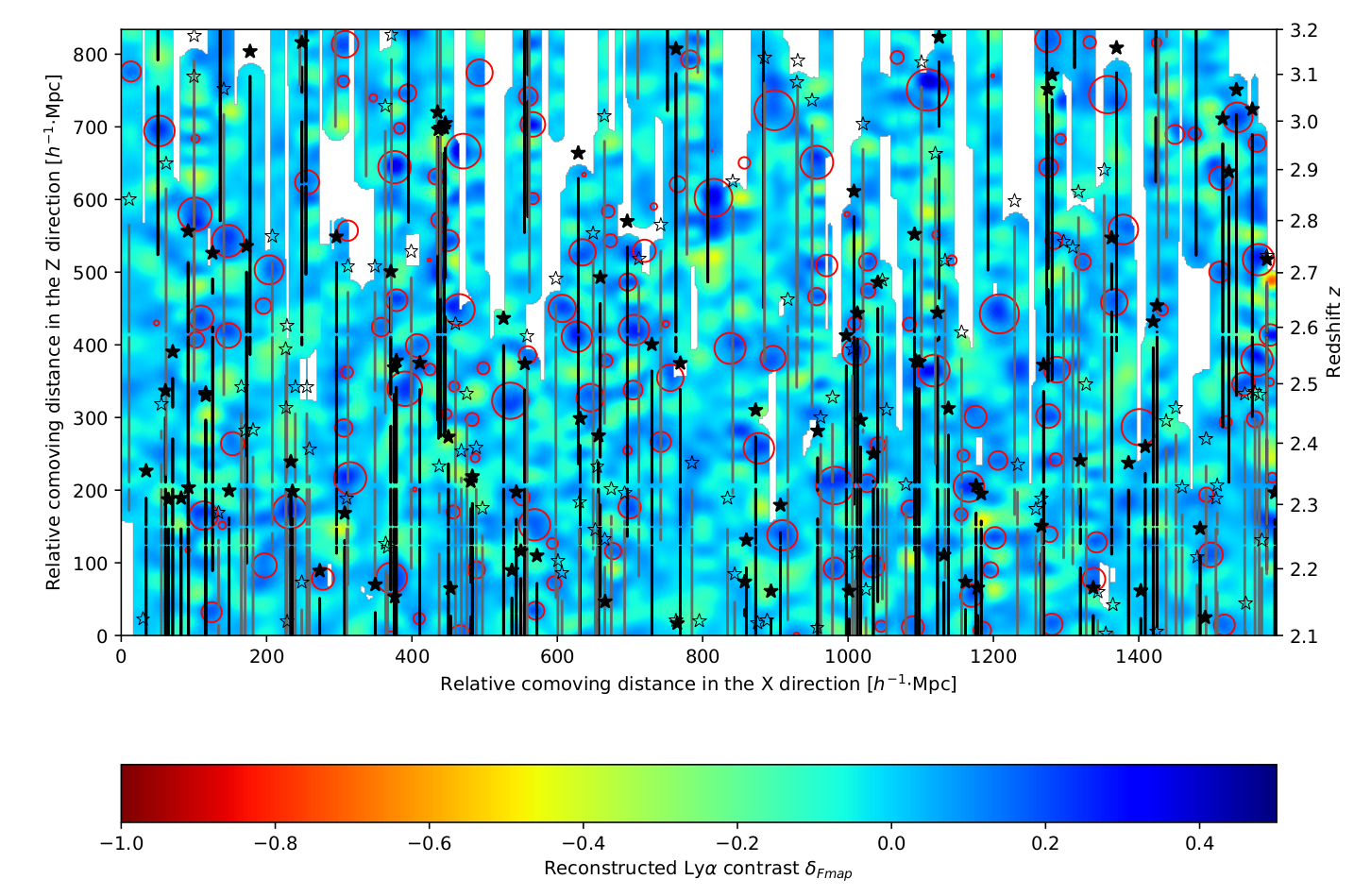
Lyman-α forest
Quasar
Reconstructed Lyman-α contrast
Void
Ravoux et al. 2020
Ecole Rodolphe Cledassou 2025 - galaxy clustering: observation 4/4
Gives a 3D map tracing matter at redshift z > 2
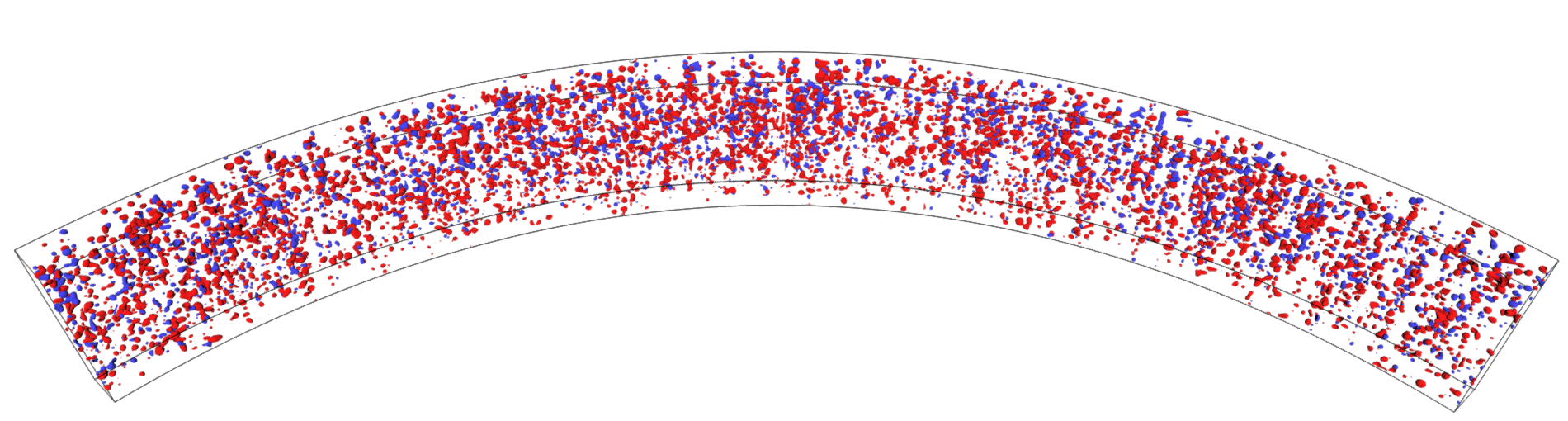
Redshift
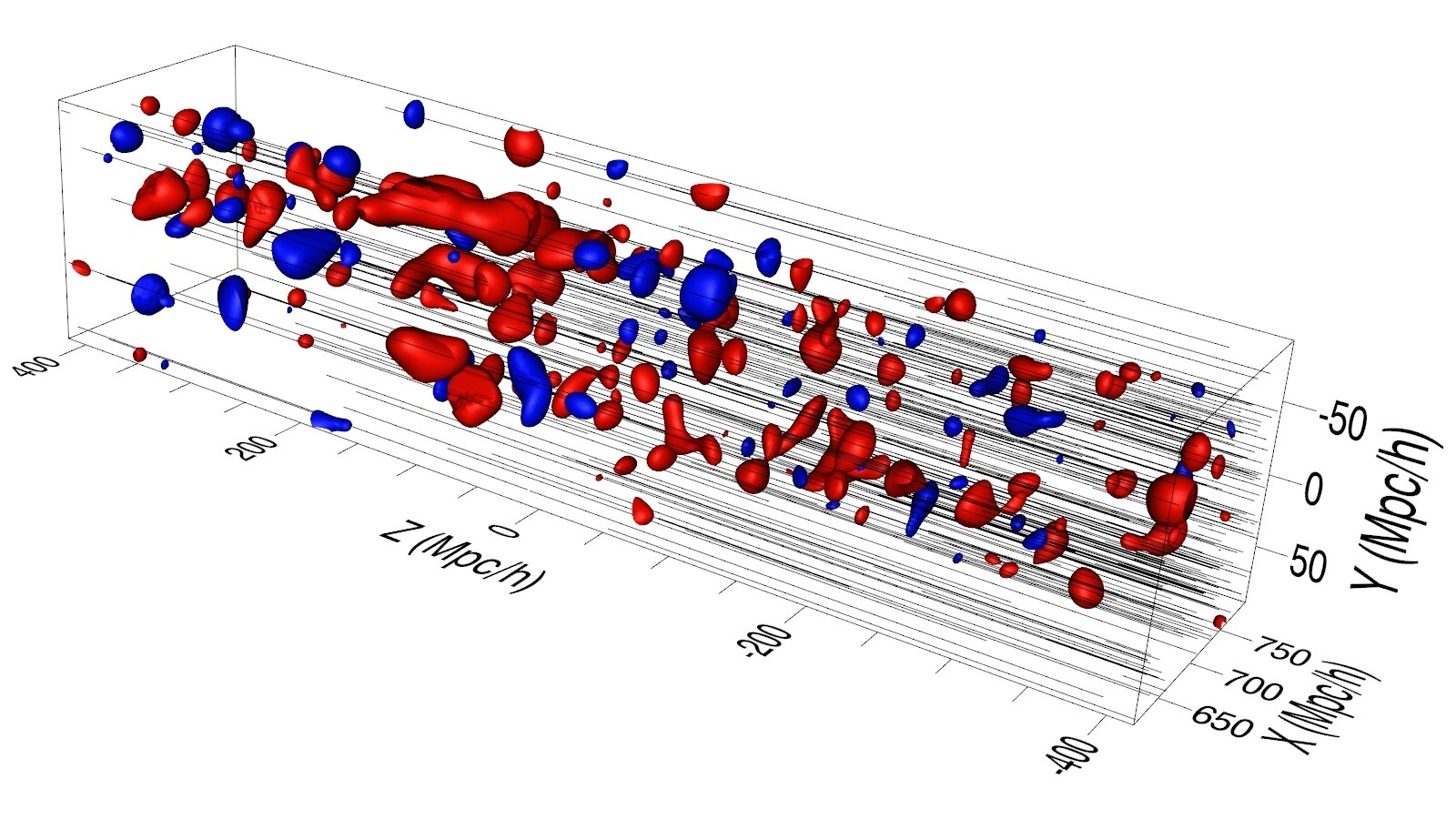
Redshift
Ravoux et al. 2020
Ecole Rodolphe Cledassou 2025 - galaxy clustering: observation 4/4
Example: wiener filter map on eBOSS data
Applications
- Identification of proto-cluster candidates:
- Densest regions of the map with density threshold
- Criteria on the number of crossed lines-of-sight
- High redshift cosmic voids:
- Adapted for void grid finders
- Void can be used to probe the dynamic of the cosmic web
Ravoux et al. 2020
Ravoux et al. 2020
Ecole Rodolphe Cledassou 2025 - galaxy clustering: observation 4/4
cf. M. Aubert "Le clustering des galaxies : les vides"
Lyman-α void cross correlation
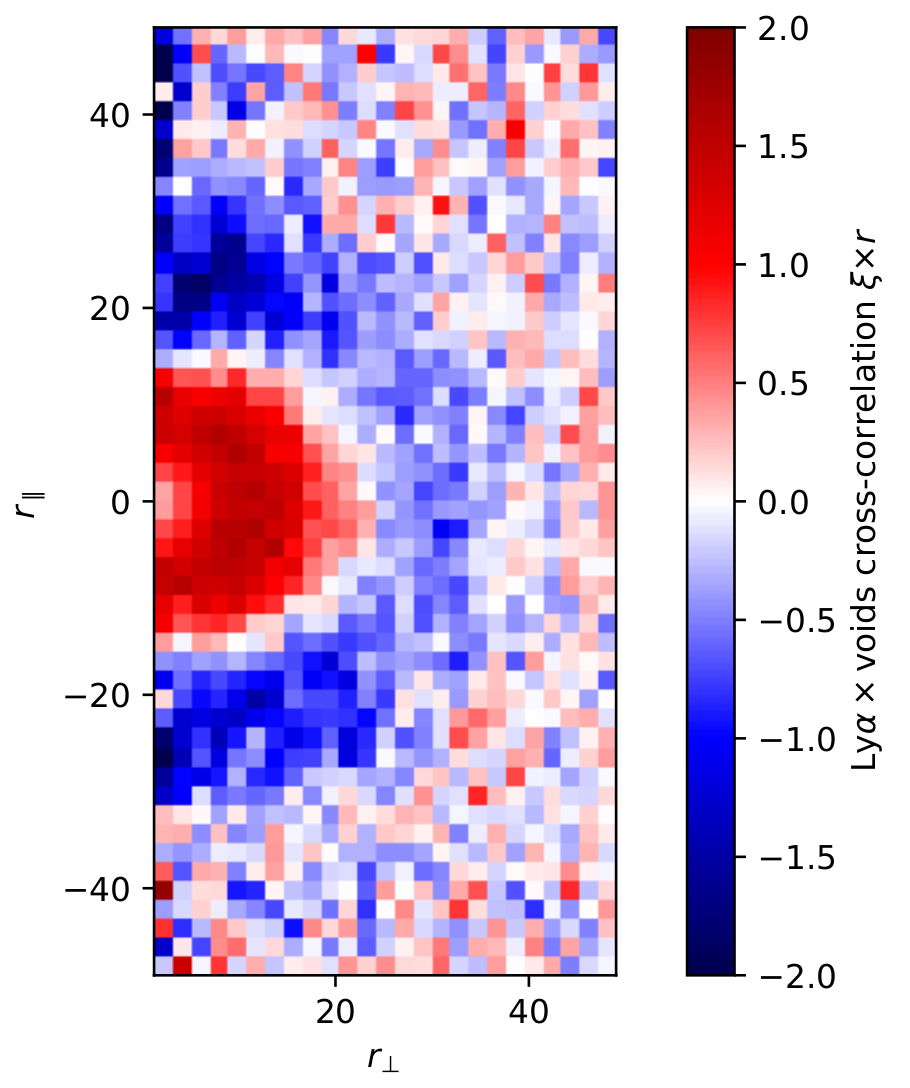
- Use distance between void centers and flux contrast
- Same estimator as cross-correlation with quasars
eBOSS measurement
Ravoux et al. 2022
3D cross correlation with voids
Ecole Rodolphe Cledassou 2025 - galaxy clustering: observation 4/4
Quasar
Lyman-α forest
Void
x
Linear void model
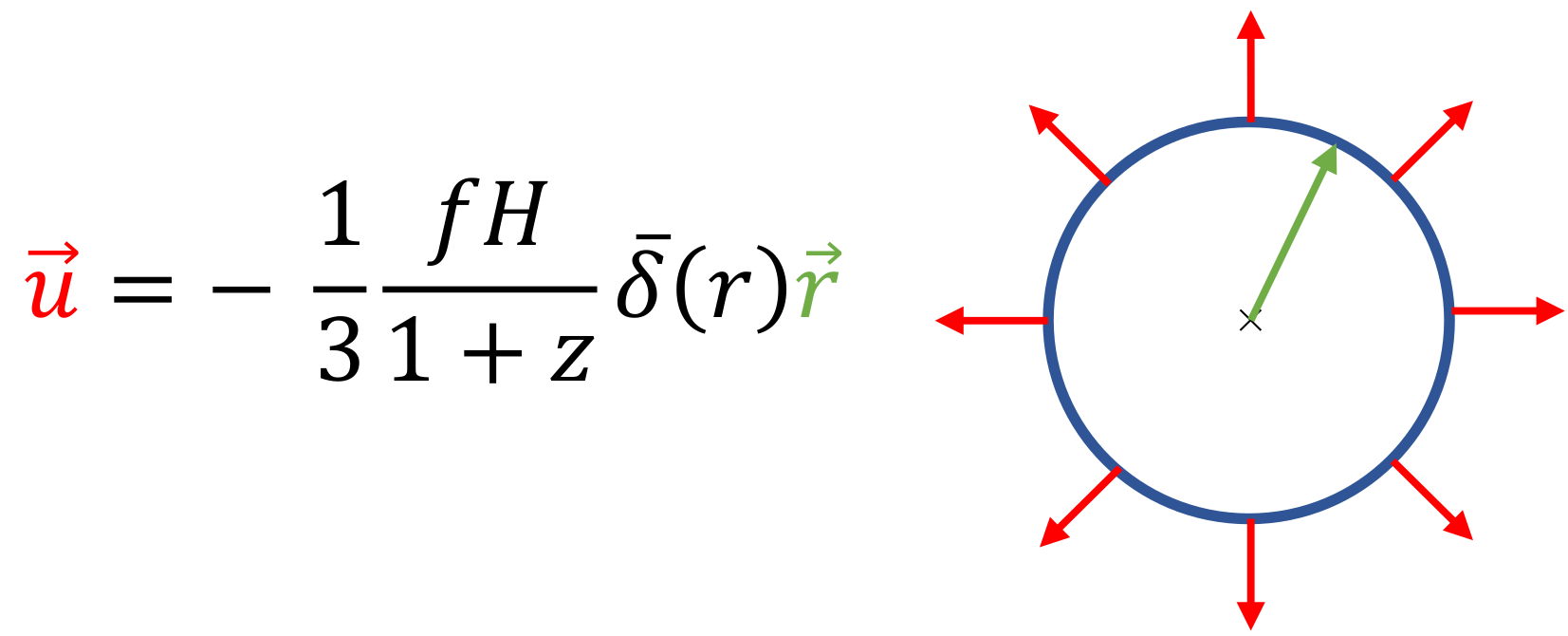
- Velocity field around void center:
Velocity
Position
- Due to velocities, the void shape is deformed.
- Measuring void shape = constraints on the cosmic web dynamics
Density
Cosmic web dynamics parameter
Ecole Rodolphe Cledassou 2025 - galaxy clustering: observation 4/4
Example: eBOSS data
- Use of a spherical decomposition to measure deformation of voids
- Effect of velocities seen in eBOSS data
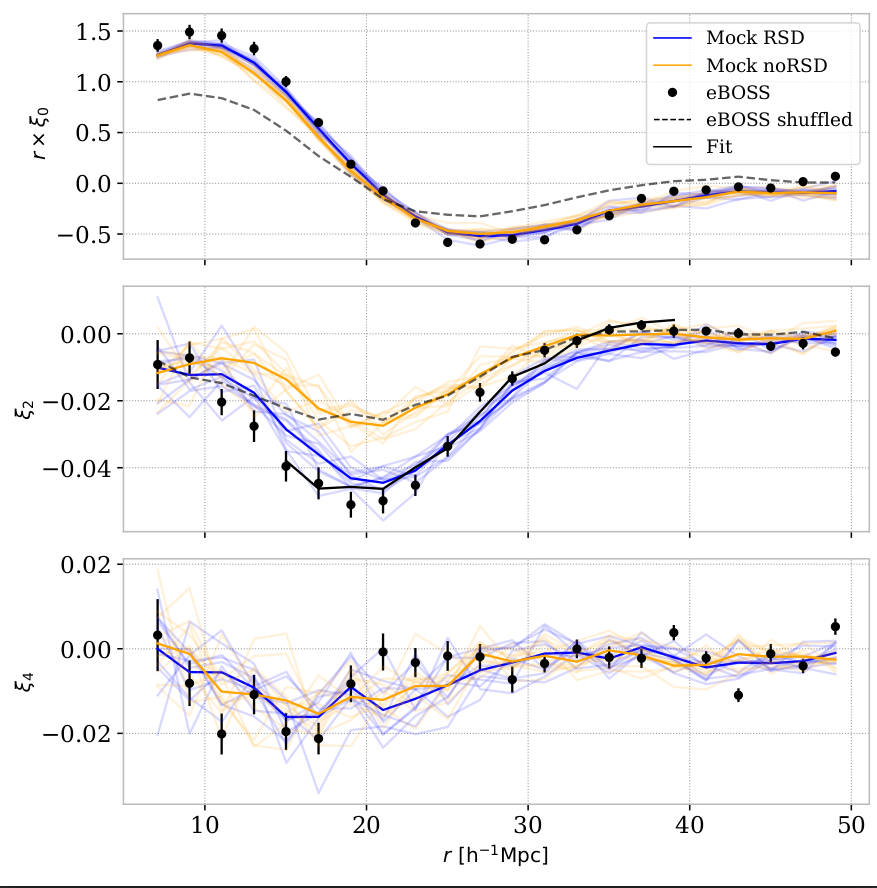
Hexadecapole
r x Monopole
Quadrupole
View of velocity
flow around voids at z > 2
Ravoux et al. 2022
Ecole Rodolphe Cledassou 2025 - galaxy clustering: observation 4/4
Tutorials
P1D
BAO
Tomography
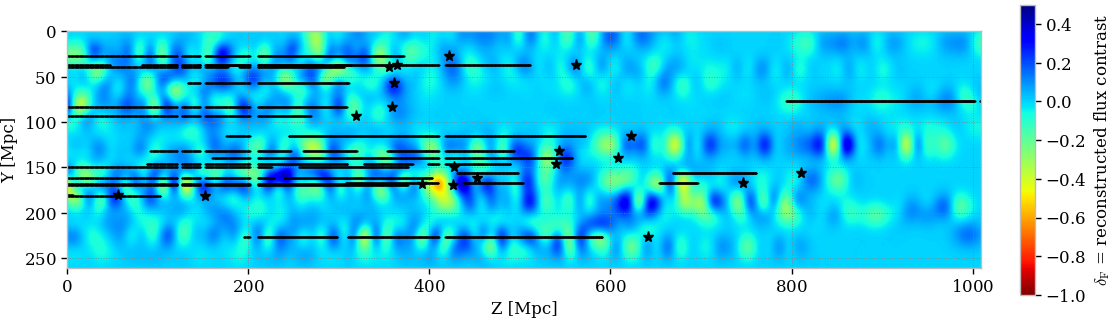
Understand Lyman-α forest and manipulate a small tomographic map
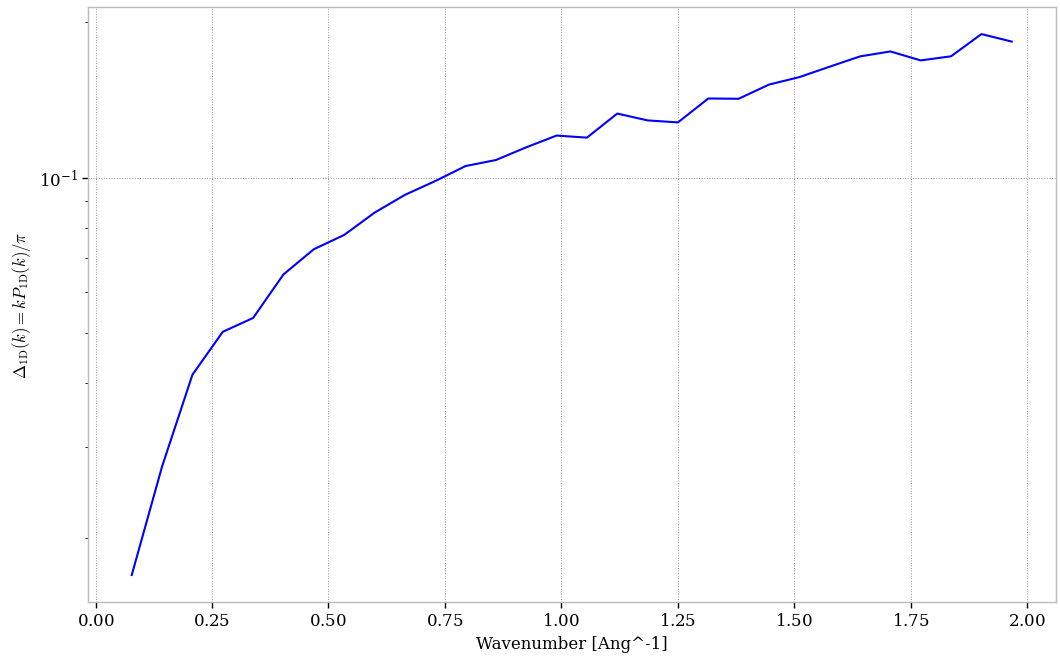
Understand DESI data and compute a Fast Fourrier Transform
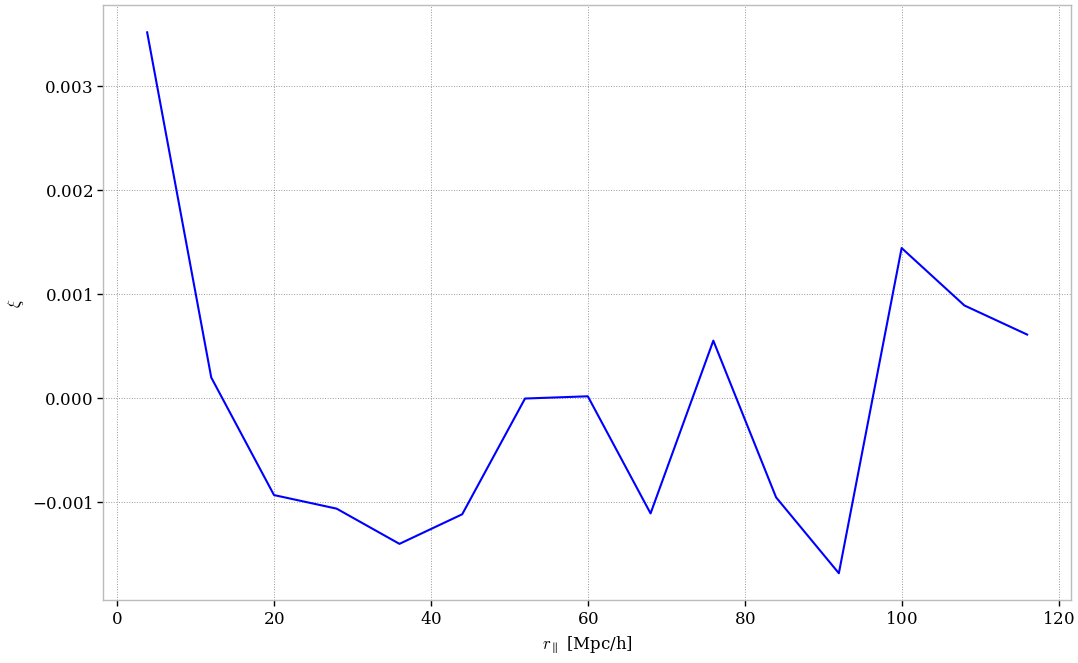
Build an estimator of 3D correlation functions used in BAO measurement
Ecole Rodolphe Cledassou 2025 - galaxy clustering: observation 4/4
+ Some suggestions for projects if you want to go further
Ecole Rodolphe Cledassou 2025 - galaxy clustering: observation 4/4
Earth
Forests