Impact of DESI-ext and DESI-II redshifts on LSST SNIa cosmology
Corentin Ravoux, Philippe Gris, Damiano Rosselli, Julian Bautista, Bastien Carreres
DESI-II telecon - 23 January 2025


ACCEL² simulation

Corentin Ravoux DESI-II telecon - January 2025
-
DESC Project: Impact of redshift host measurements from DESI and DESI-II on supernovae cosmology
SNe Ia host redshift project
-
Objectives:
- Number of host spectroscopic redshift measured by DESI, DESI-ext, DESI-II (+ 4MOST 4HS & CRS)
- Optimal strategy for DESI-II in terms of SNe Ia
- Improvement in term of SNe Ia cosmology
- Complementarity with 4MOST TiDES studies (SNIa follow-up in the south)
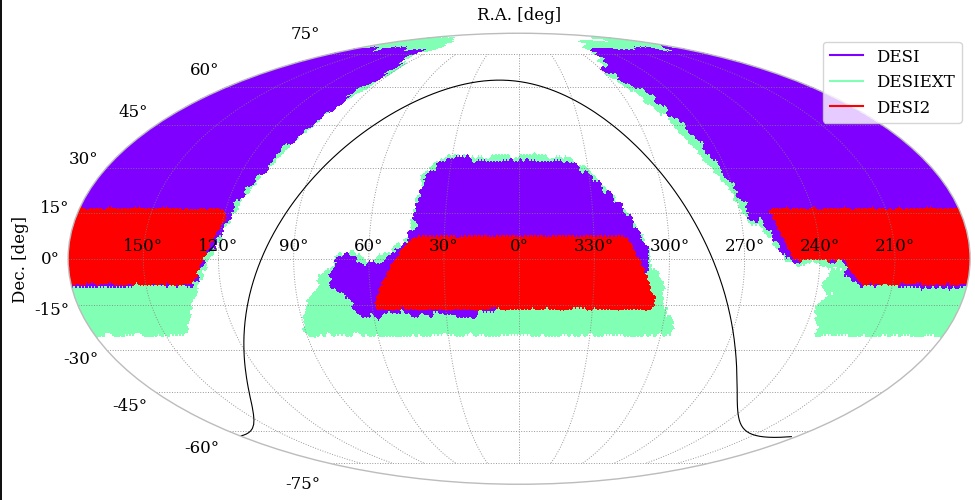
- DESI: Galaxy density and footprint extracted from public target
selection only - DESI-II: Forecast for the low-z galaxy sample made by Noah Weaverdyck and shared between DESC and DESI
-
4MOST:
- 4HS: Edward Taylor and Michelle Cluver (PI)
- CRS: Johan Richard and Jean-Paul Kneib (PI)
- For both, agreement to use forecast in this project
Data origin
https://github.com/LSSTDESC/sn_pipe
https://github.com/corentinravoux/desidescsn/
- Codes used:
Corentin Ravoux DESI-II telecon - January 2025
SNe Ia host properties
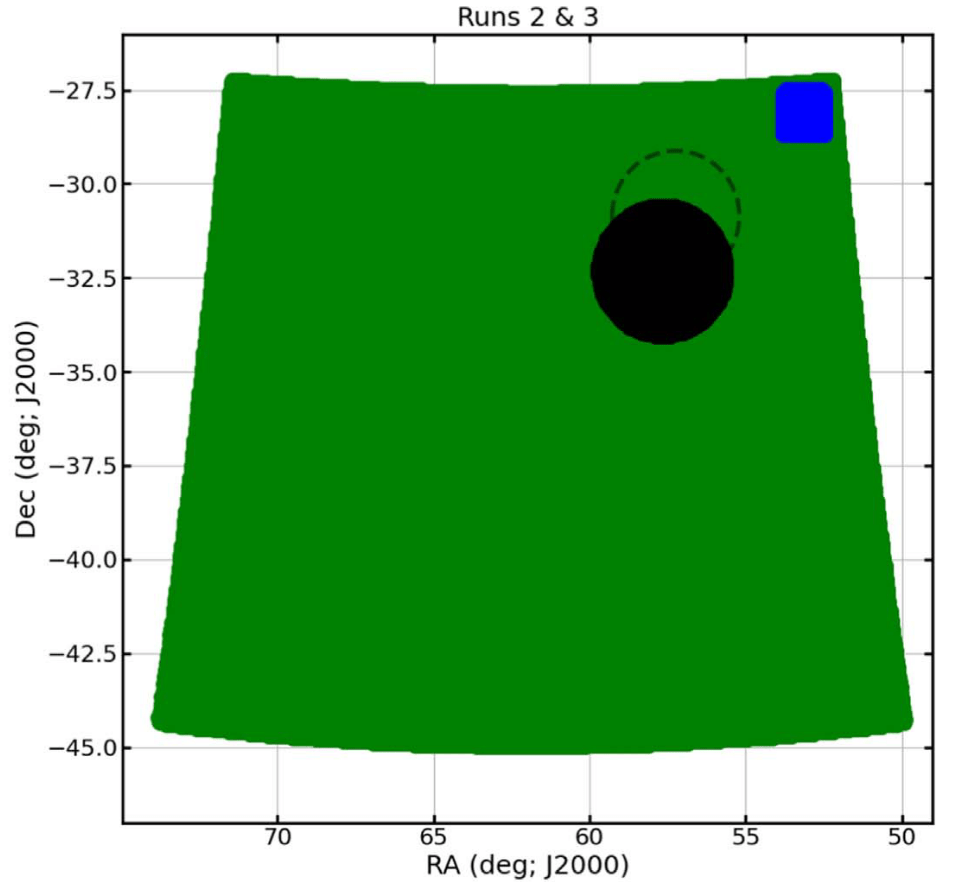
DC2 paper 2021
Methodology:
- Galaxy field from cosmoDC2
-
Rubin-Roman catalog:
- SFR, Stellar mass
- Galaxy magnitudes (LSST, SDSS, IR with Roman bands)
- ZTF20 rate + SN Ia weights model:
Mannucci et al. 2005
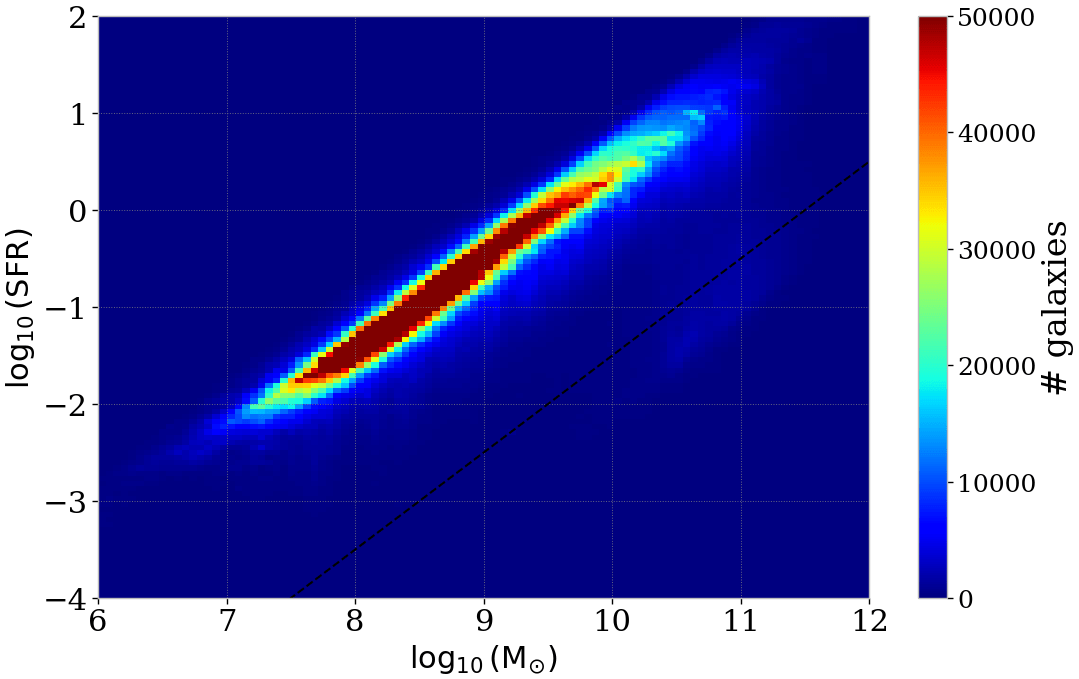
Troxel et al. 2023
Host properties for SNe Ia in DC2
Corentin Ravoux DESI-II telecon - January 2025
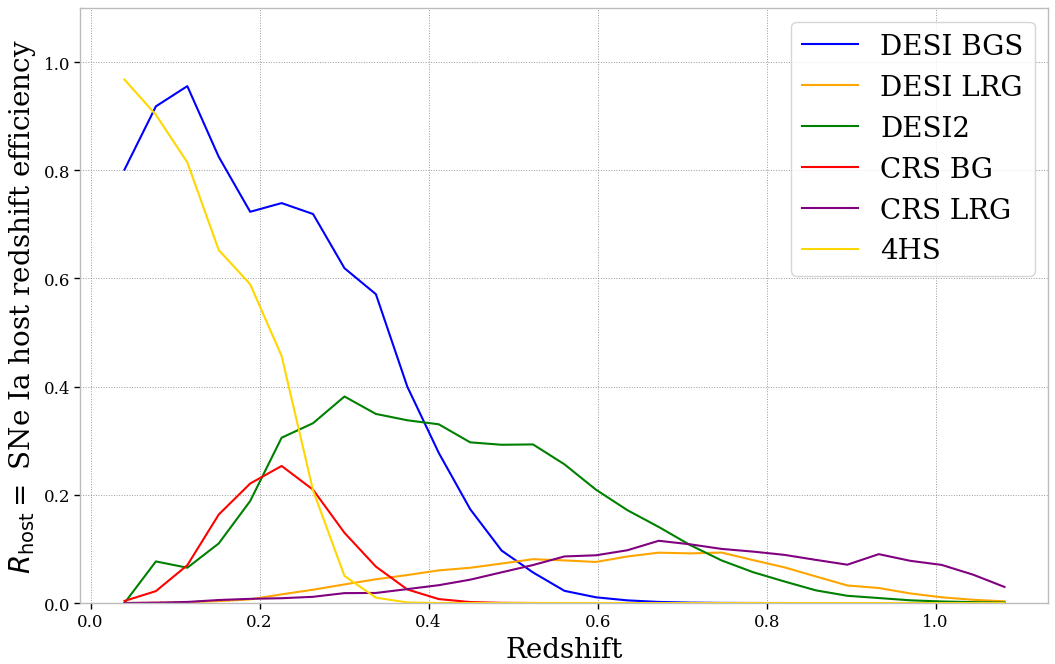
SNe Ia host redshift efficiency
- Ability for a spectroscopic survey to measure redshift of a LSST SNe Ia host
- Mathematically: proportion of LSST SNe Ia host whose redshift is measured with respect to the total number of SNe Ia, as function of redshift
Spectroscopic survey redshift efficiency (renormalize survey to cosmoDC2)
Proportion of SNe Ia located in the targeted host (host properties)
Corentin Ravoux DESI-II telecon - January 2025
- Target selection cuts of DESI/DESI-II/4MOST applied to cosmoDC2 galaxies
SNe Ia host redshift efficiency

Proportion, not absolute number
SNe Ia proportion located in the targeted host
Spectroscopic survey redshift efficiency
Corentin Ravoux DESI-II telecon - January 2025
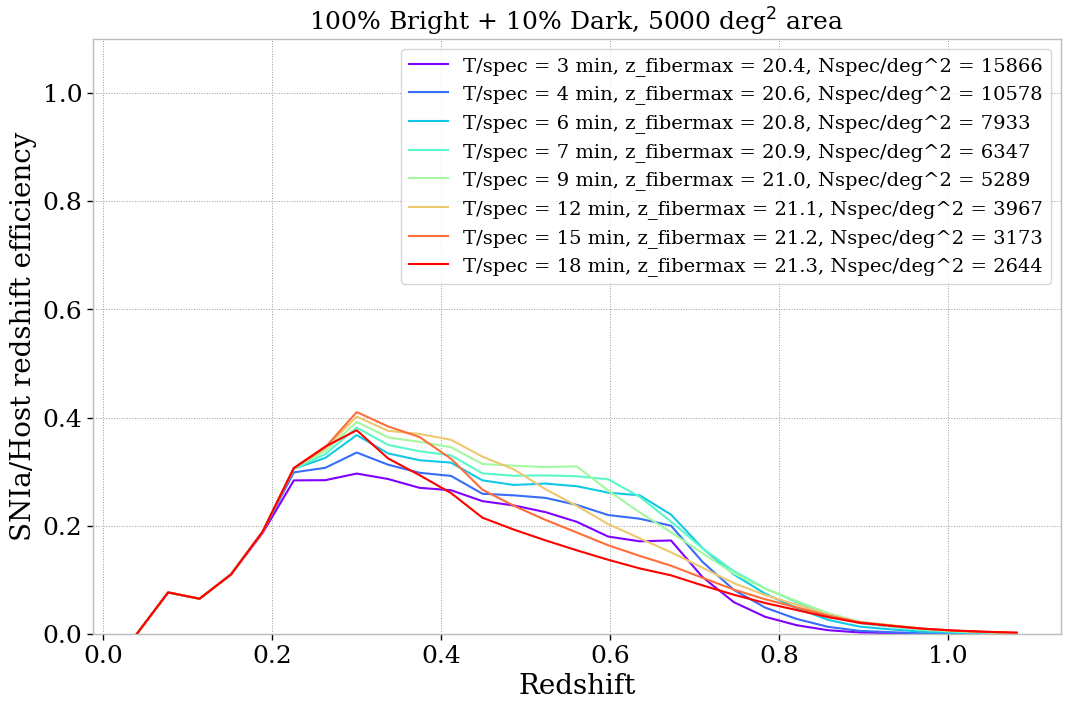
DESI-II strategy variation
- From the work of Noah Weaverdyck and help from Sven Heydenreich: DESI-II strategies for a low-z complete galaxy sample, with fixed amount of observation time
- Variation on maximal magnitude targeted, density and exposure time per spectrum
Less spectra but deeper
More spectra but shallower
Corentin Ravoux DESI-II telecon - January 2025
Impact on SNIa dark energy constraints
Gris Regnault et al. 2022, Gris et al. 2024
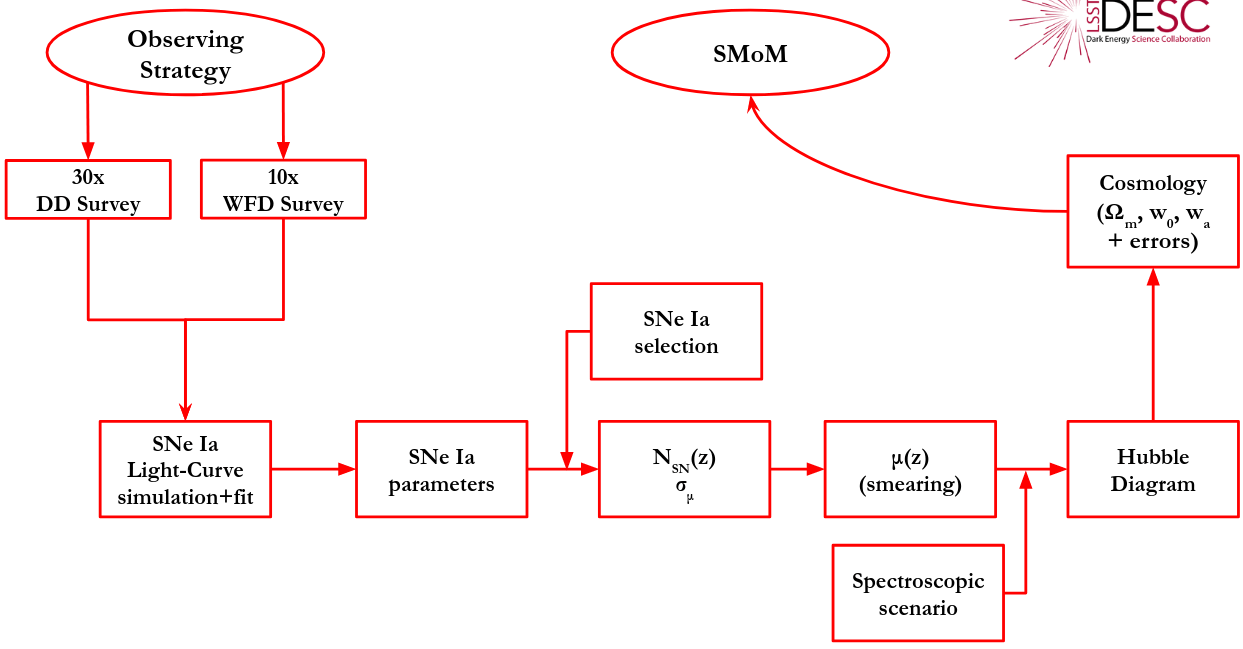
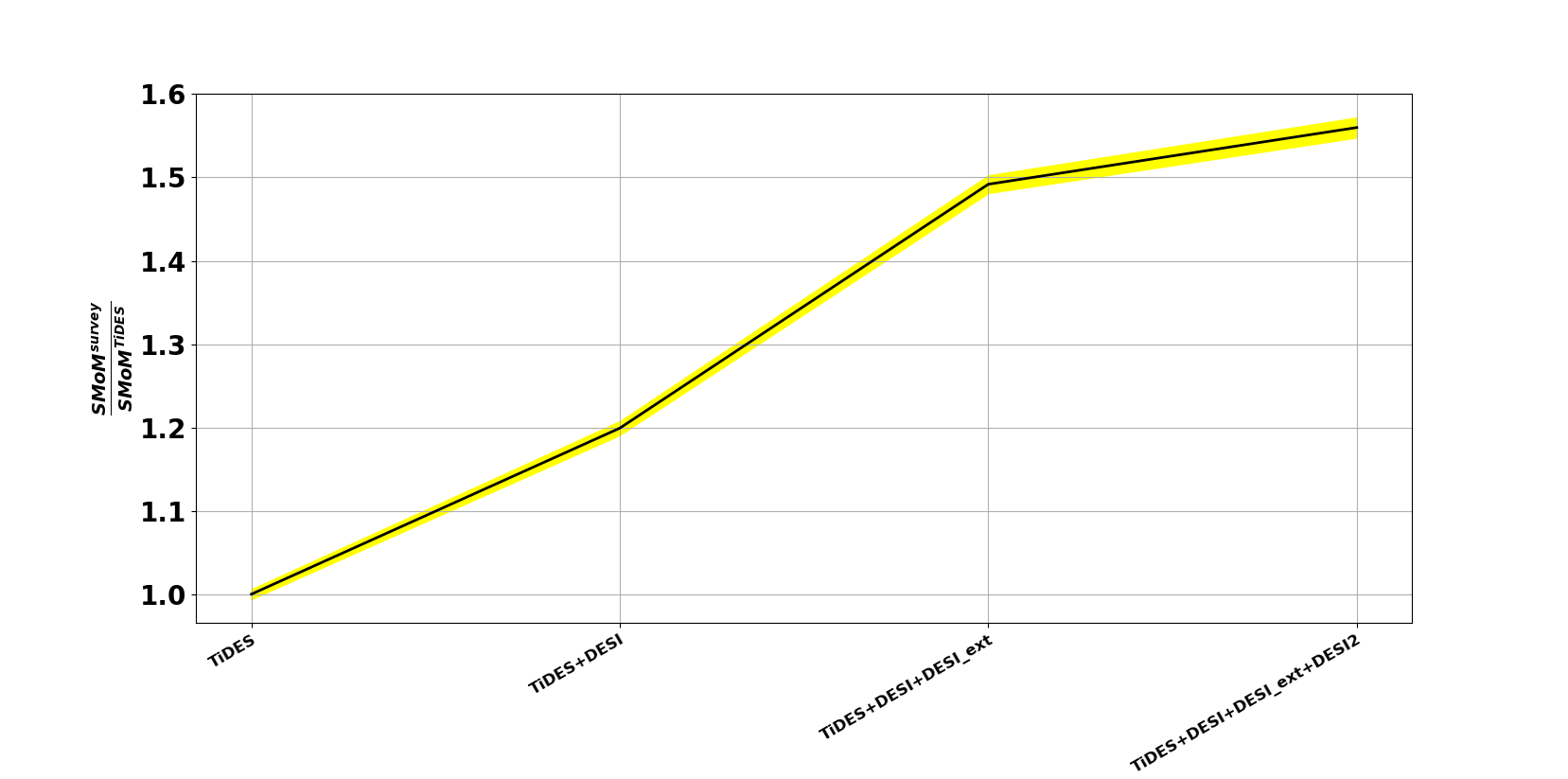
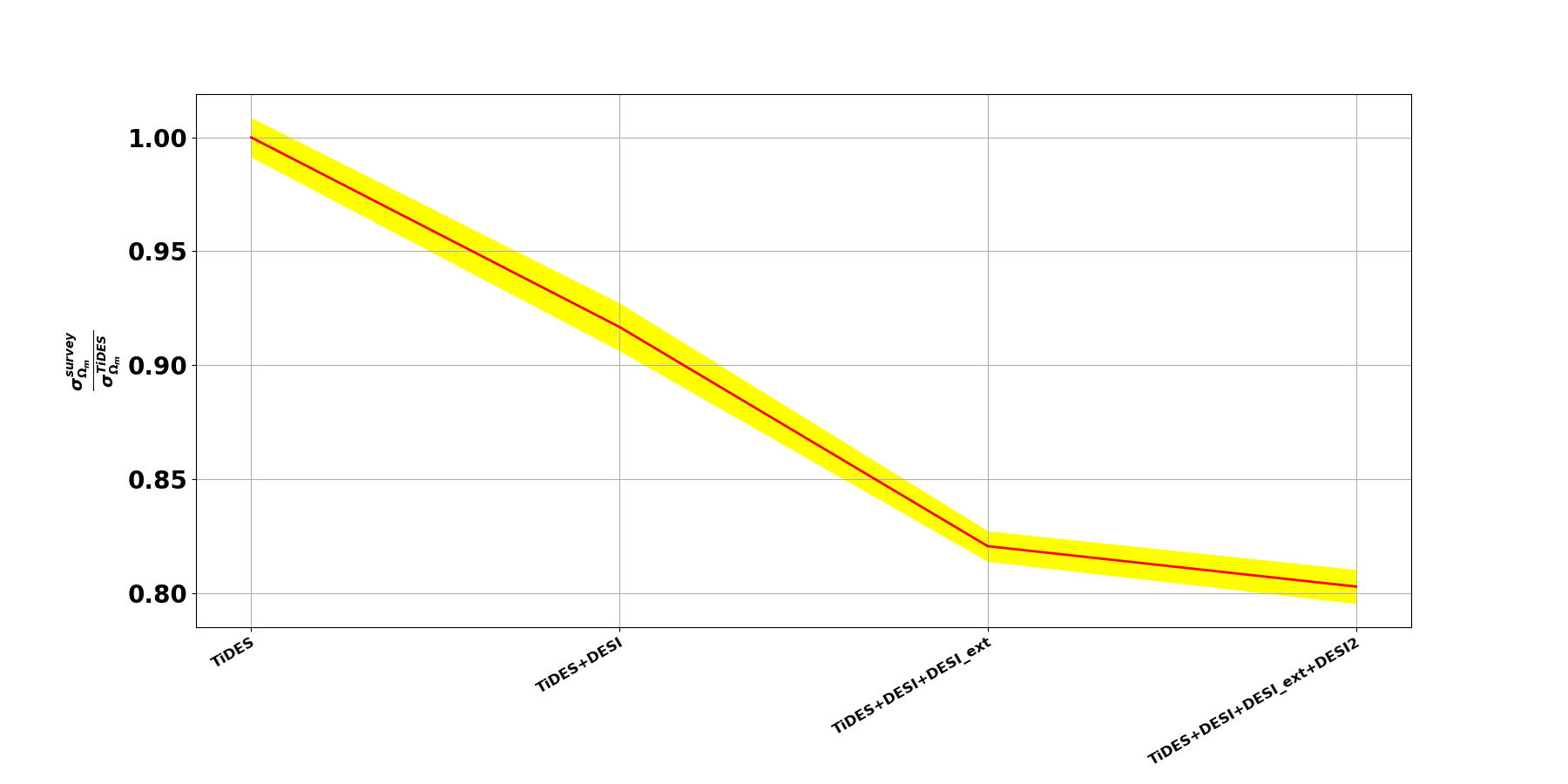
- SMoM: metric to evaluate the impact of observation strategy on SNIa (Ω,w) constraints
- Changing the spectroscopic scenario in sn_pipe pipeline
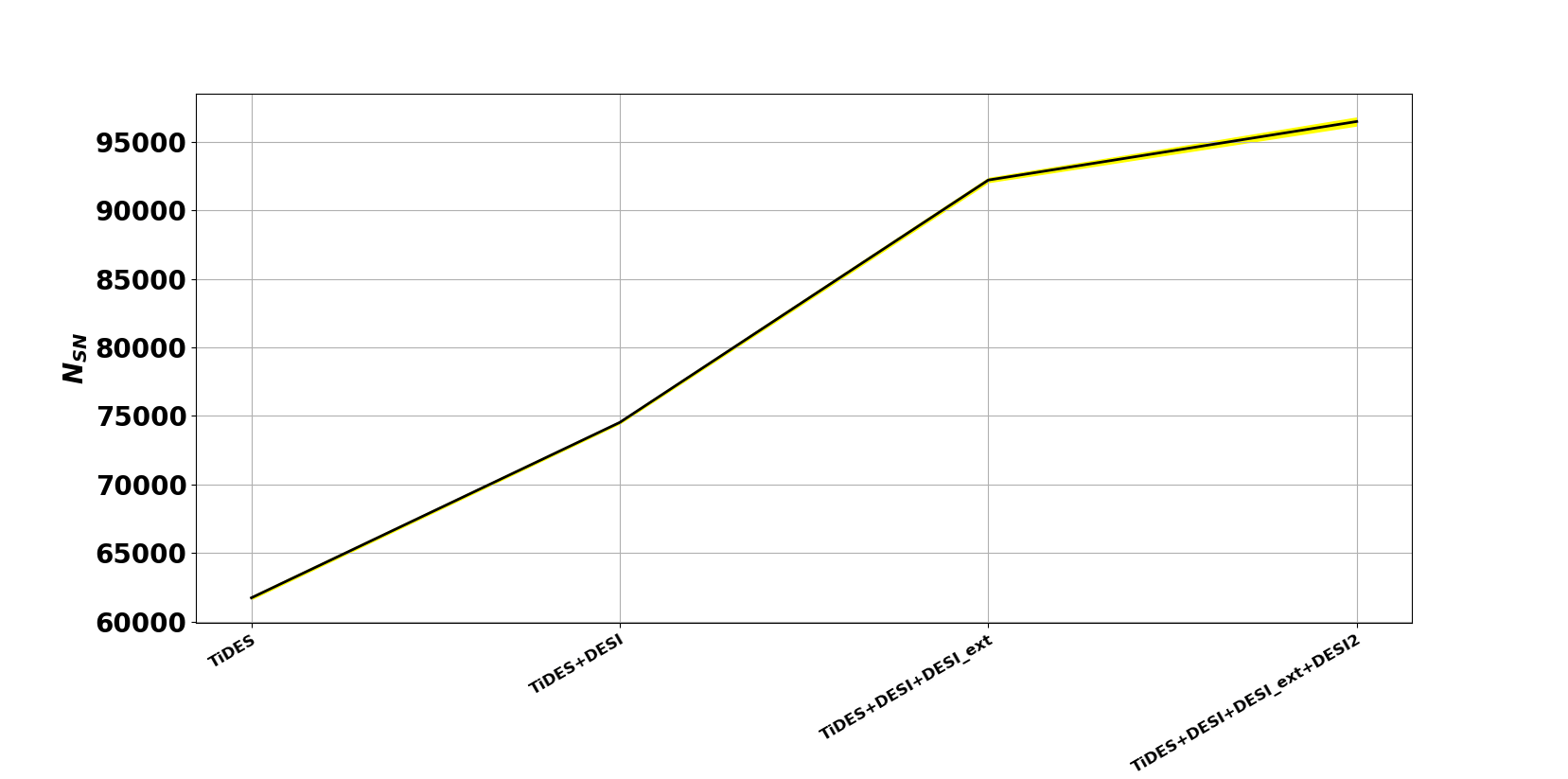
DESI, DESI-ext, DESI-II spectroscopic scenario
(4MOST TiDES included)
Corentin Ravoux DESI-II telecon - January 2025
- Baseline: redshifts from 4MOST TiDES and Subaru (in COSMOS XMM DDF)
- Photo-z not considered here
- One DESI-II strategy
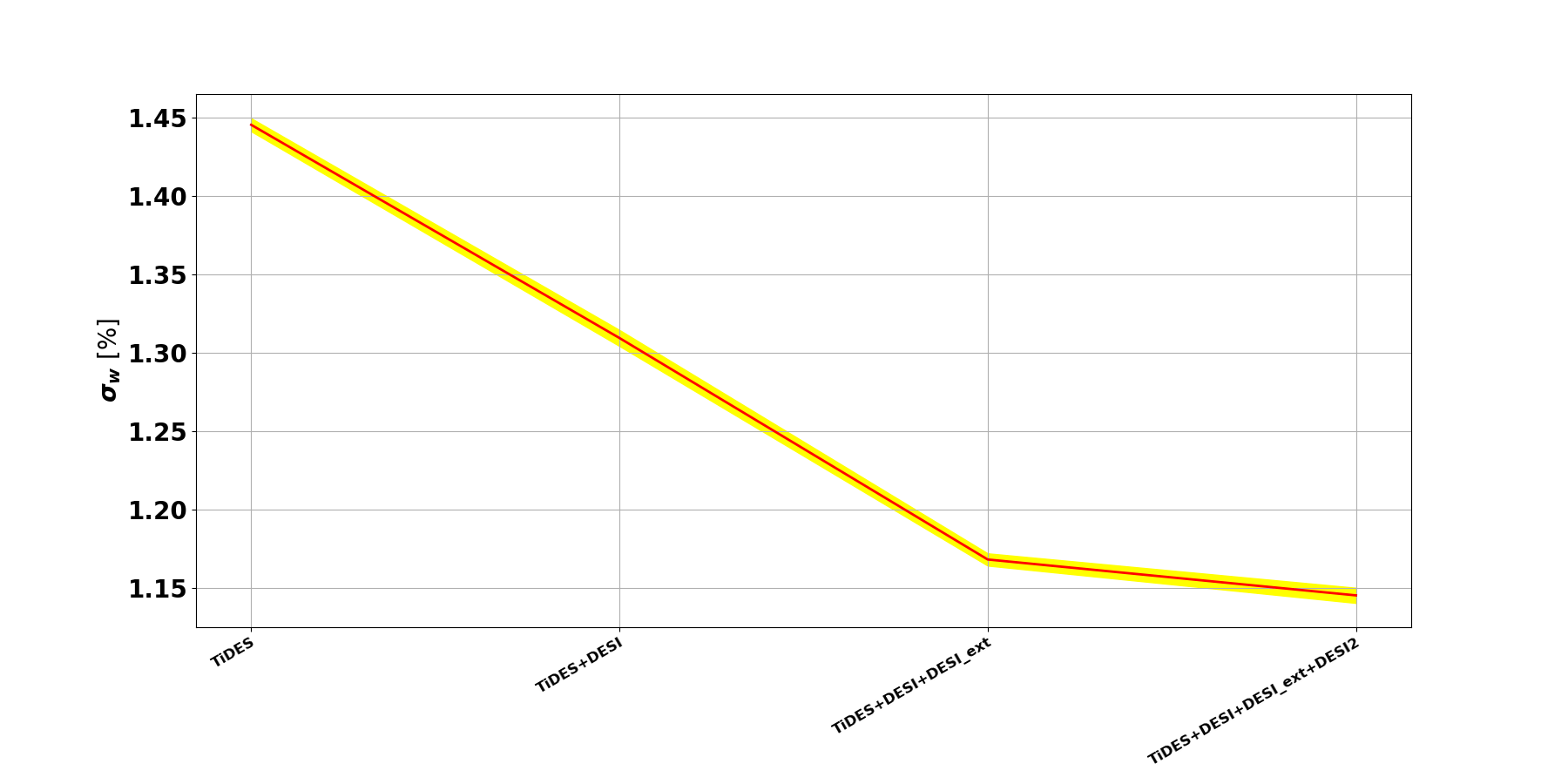
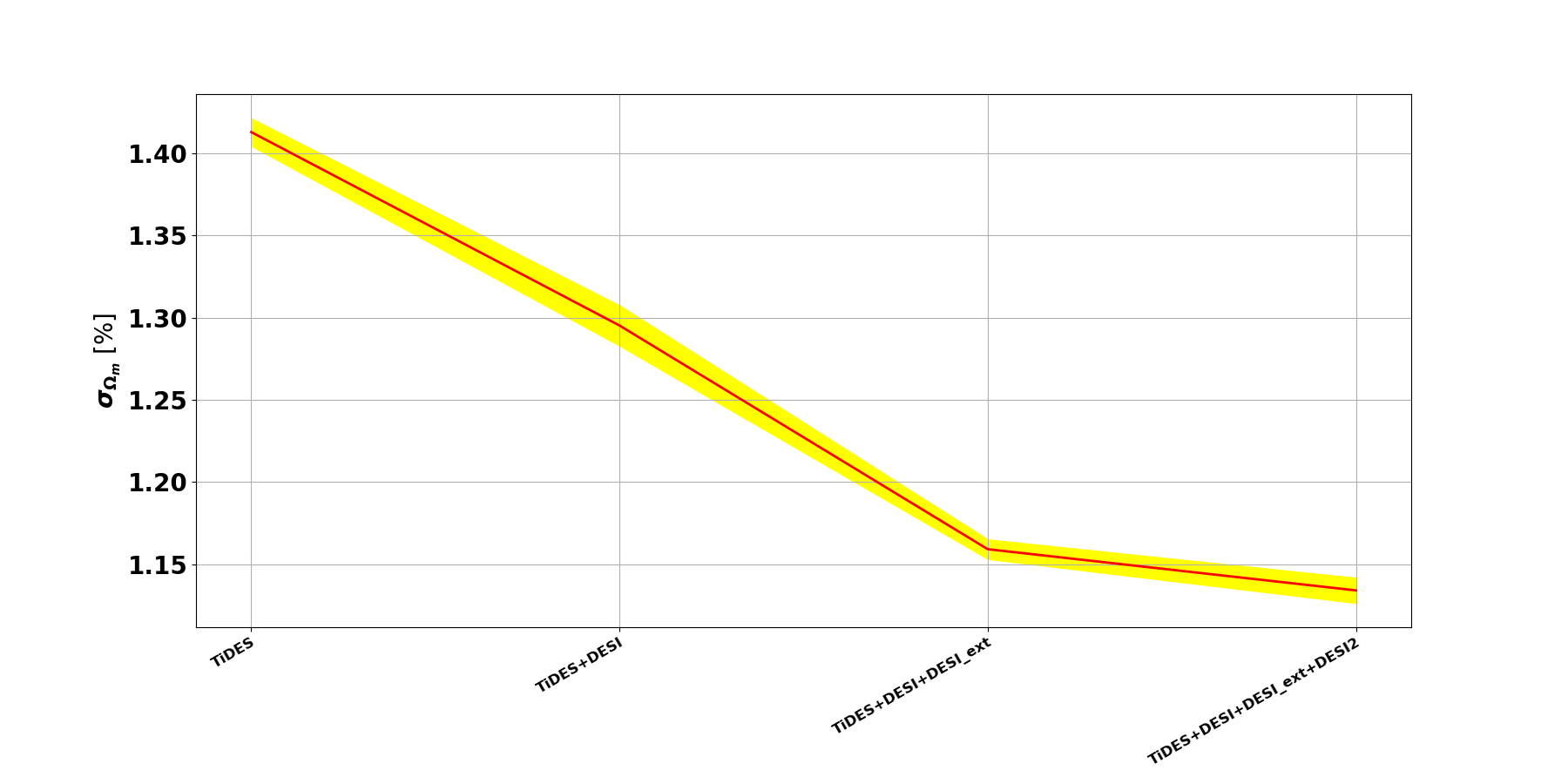
- Large increase in SN Ia host redshifts
Impact on SNIa dark energy constraints
Corentin Ravoux DESI-II telecon - January 2025
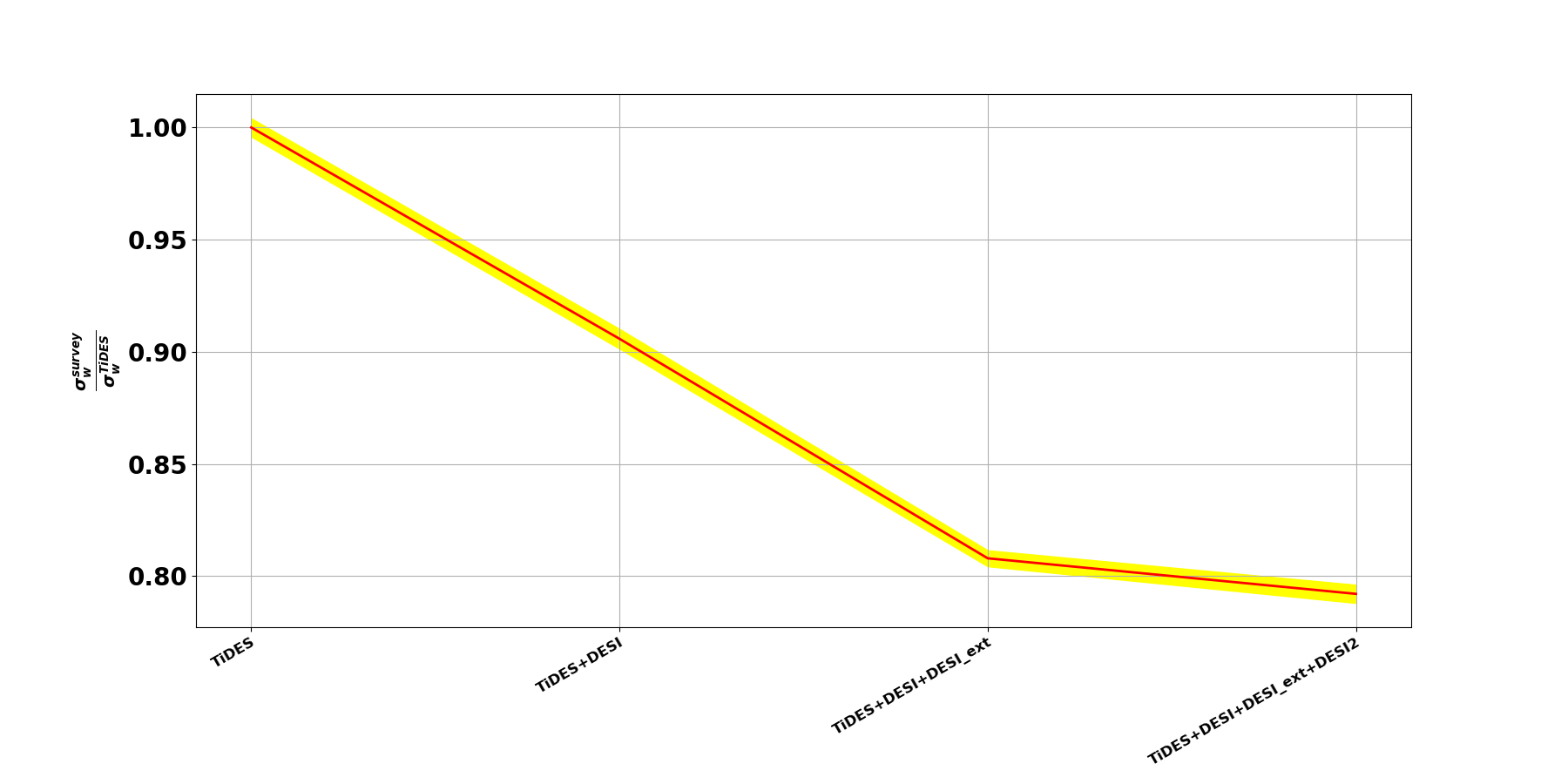
- Baseline: redshifts from 4MOST TiDES and Subaru (in COSMOS XMM DDF)
- Photo-z not considered here
- One DESI-II strategy
- Up to 20 % improvement on w error compare to baseline
Impact on SNIa dark energy constraints
Corentin Ravoux DESI-II telecon - January 2025
- 8 OuterRim simulations with LSST SNe Ia observation strategy
- Measurement of fσ8 with SNe Ia peculiar velocities
- Inclusion of different spectroscopic scenarios
Impact on SNIa growth rate constraints
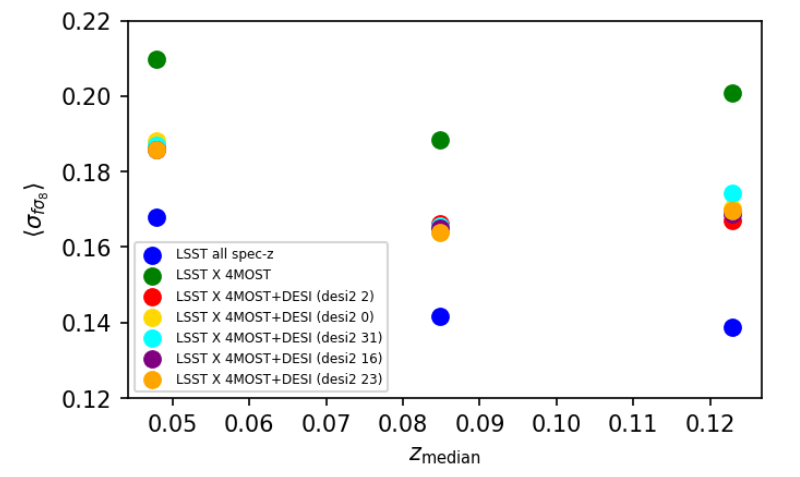
Measurement improved by DESI (~4 %), not much by DESI-II (~0.5%)
Rosselli et al. in prep.
Corentin Ravoux DESI-II telecon - January 2025
ACCEL² simulation
- Improvement of LSST SNIa dark energy contrast from spectroscopic sample with DESI, DESI-ext and DESI-II redshifts
- Not a large improvement on peculiar velocity studies mainly sensitive to low redshifts
Conclusion
Hypothesis for DESI
- Hypothesis to select the galaxy population observed by DESI in the cosmoDC2 simulation:
- Strongest hypothesis: fiber magnitude not calculated on cosmoDC2
- BGS: main magnitude cut r < 20.175, no star-galaxy separation (star not accounted in DC2), no very bright color cut, no bright/faint differenciation
- LRG: LRG South magnitude & color cuts
- DESI-ext: same selection as DESI
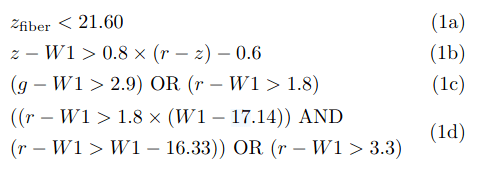
- DESI-II: magnitude cut depending on DESI-II strat and color cuts:
Other plots
Other plots