Cosmology session overview
Journée de Rencontre Jeunes Chercheur.se.s 2024
Corentin Ravoux
LPCA, CNRS/IN2P3, Clermont-Ferrand
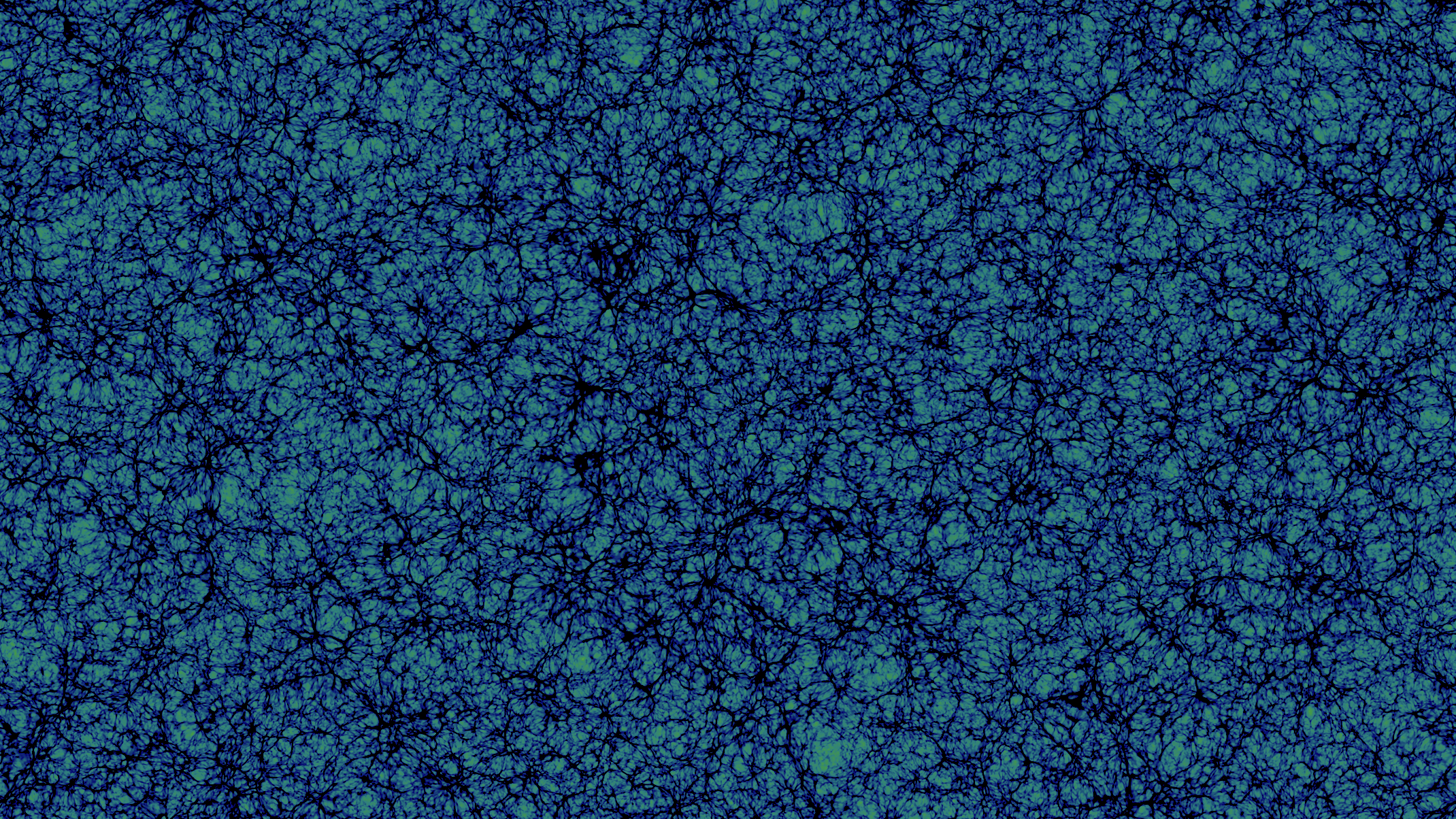
ACCEL² simulation

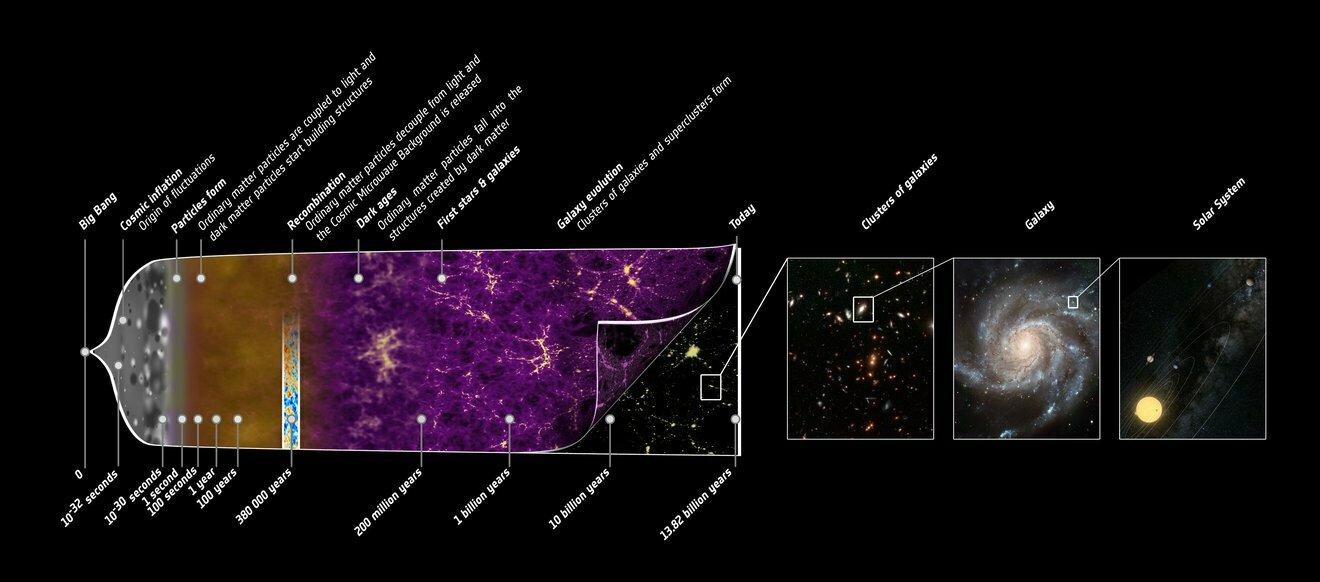
Cosmological context
How did the Universe evolve to its current state?
What are the fundamental constituents of our Universe?
How is matter distributed in the Universe?
The Story of Our Universe - NASA
You are here
JRJC 2024 - Cosmology session 25 november 2024
JRJC 2024 - Cosmology session 25 november 2024
Global Universe description
Structures in the Universe
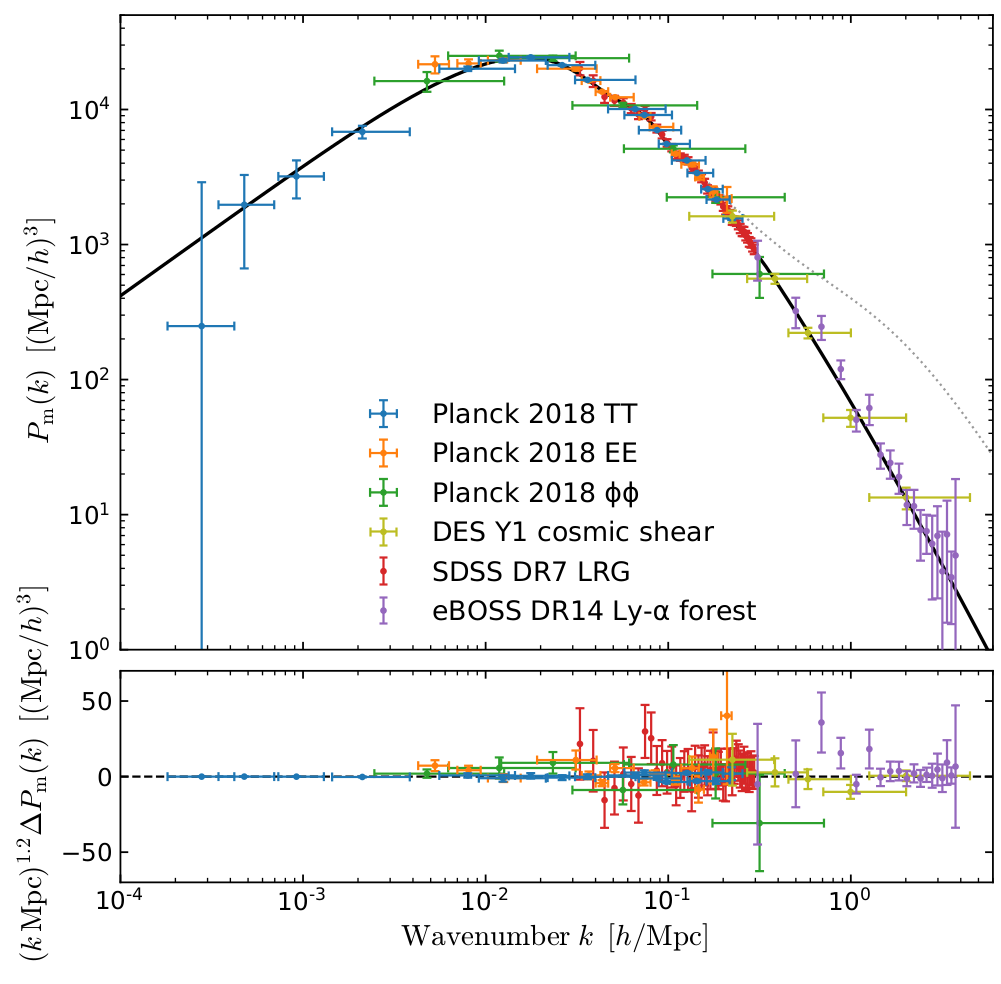
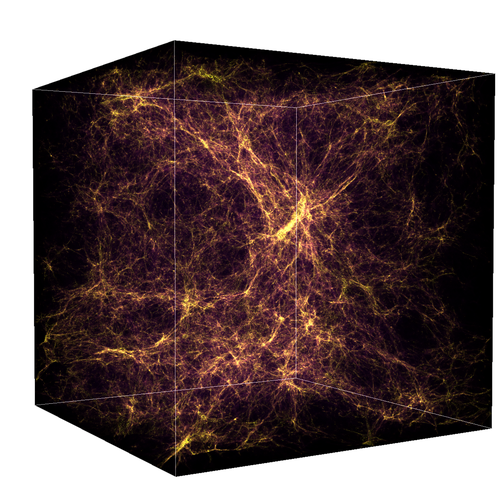
Chabanier et al. 2019
Walther et al. 2021
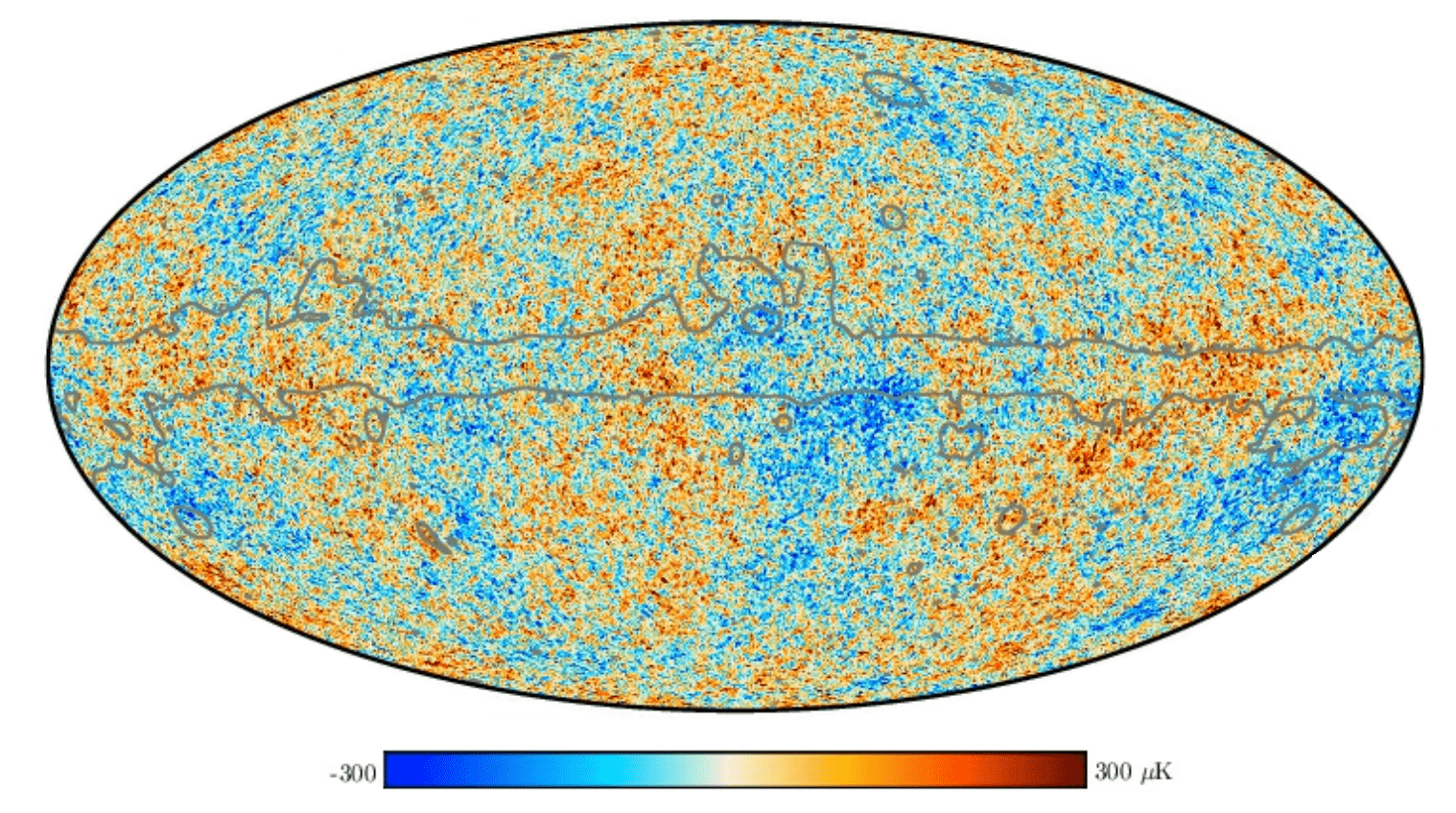
Planck 2018
Adapted from Dijkstra 2017

Cosmic Krampouz
Galette dark matter model ?
JRJC 2024 - Cosmology session 25 november 2024
Global Universe description
Einstein equation
Flat FLRW metric
Cosmological constant
Energy-momentum tensor
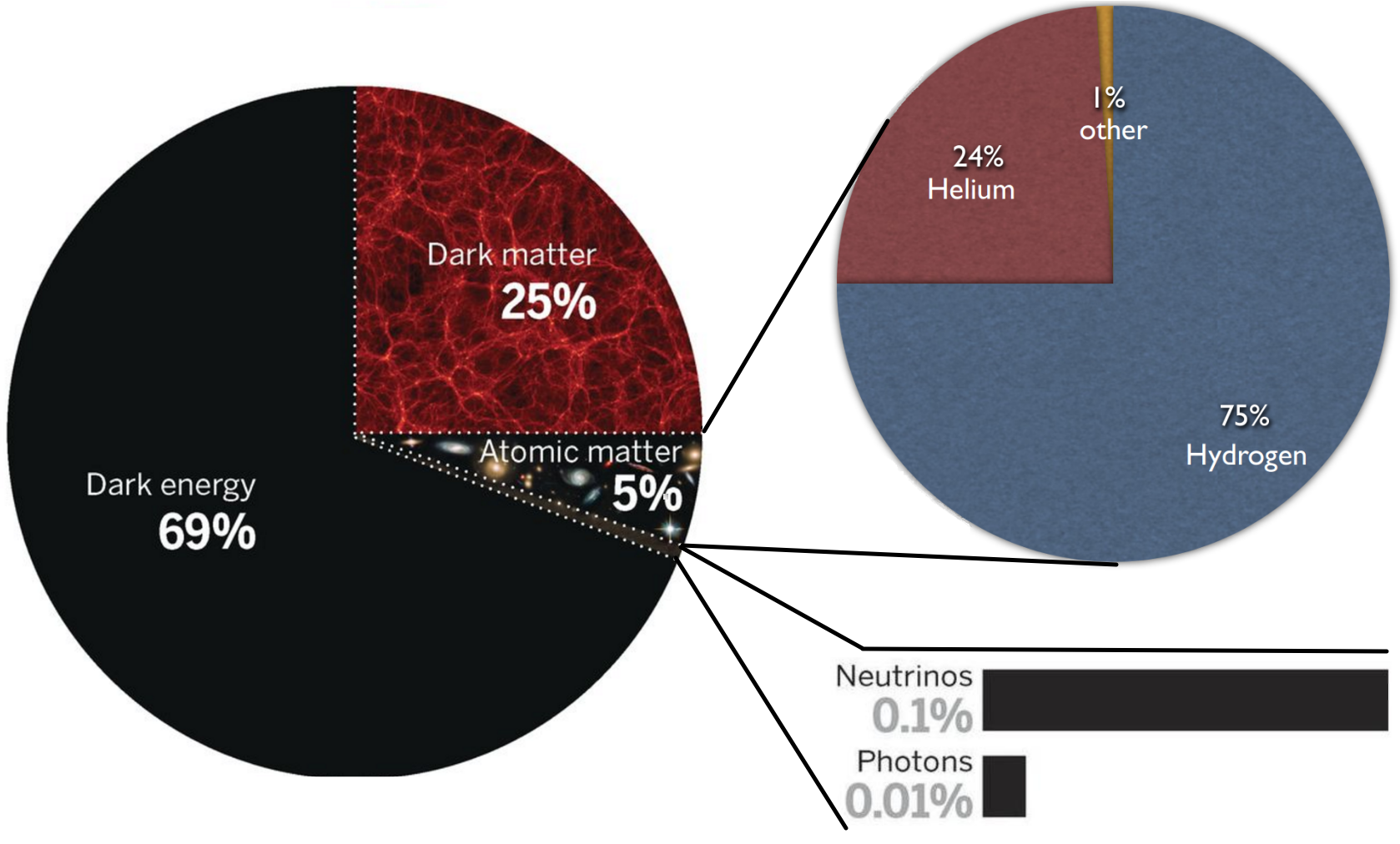
Components of the Universe (dark energy, dark matter, baryons, neutrinos, photons) modify the Universe expansion (Only 5% known)
Adapted from Dijkstra 2017
JRJC 2024 - Cosmology session 25 november 2024
Global Universe description
Structures in the Universe
Einstein equation
Flat FLRW metric
Cosmological constant
Energy-momentum tensor
Friedmann equation
Hubble constant
Adapted from Dijkstra 2017
JRJC 2024 - Cosmology session 25 november 2024
Structures in the Universe
Planck 2018
Cosmic Microwave Background = First light after recombination (e⁻,p)
- Initial density perturbations in the primordial Universe seen on CMB
- Measuring CMB provides information on the opacity of the Universe = optical depth to reionisation
JRJC 2024 - Cosmology session 25 november 2024
Structures in the Universe
Chabanier et al. 2019
Walther et al. 2021
- Perturbations grows to form the cosmic web: Nodes, filaments, walls and voids
- Large-scale distribution of matter characterized by the linear power spectrum amplitude and slope
Perturbed Einstein equation
... or full simulation
Only the simplest model !
ACCEL² simulation
Current questions in Cosmology
JRJC 2024 - Cosmology session 25 november 2024
- Dark energy: Nature (cosmological constant? particle? field? fifth force?) and Behavior (evolution? interaction?)
- Dark matter: Nature (particle? field?) and Behavior (cold? warm? interaction?)
- Testing general relativity: modified gravity at large scale could explain unknowns?
- Neutrinos: Impact on cosmology can constrain neutrino mass
- Inflation: Indirect detection, constraining theories
- Hubble tension: mismatch between early and late-time probe (up to 5σ)
ACCEL² simulation
Cosmological experiments
JRJC 2024 - Cosmology session 25 november 2024
ACCEL² simulation
Types of telescope
JRJC 2024 - Cosmology session 25 november 2024



Source
Cosmic web
Telescope
Atmosphere
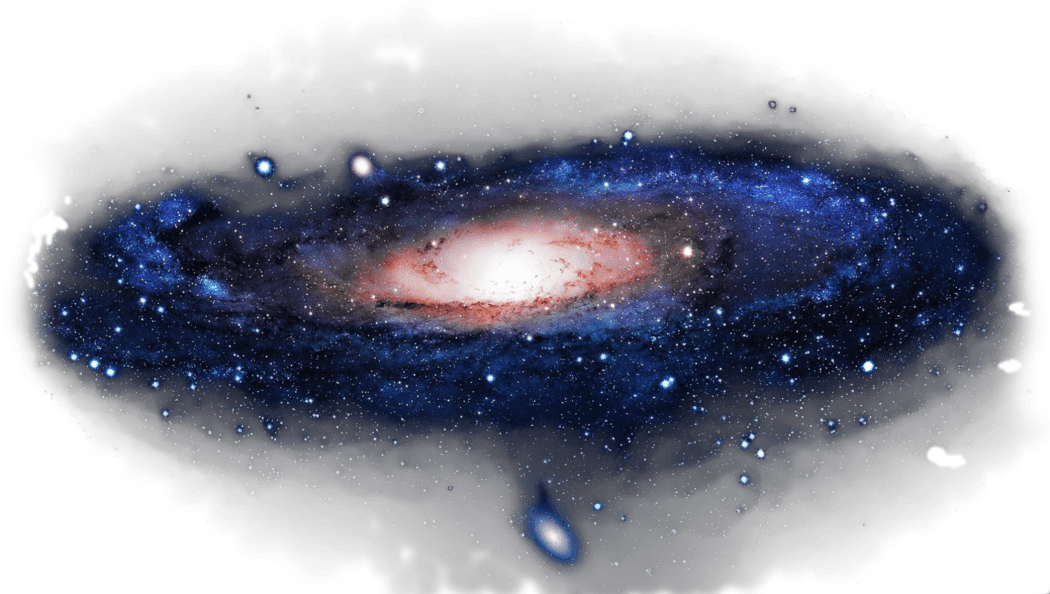
Milky Way
Electromagnetic radiation observations (from gamma to radio)
CMB, Supernova, galaxy...
ground/space
CMB experiments
The Story of Our Universe - NASA
You are here
JRJC 2024 - Cosmology session 25 november 2024
Cosmic Microwave Background (CMB)
ACCEL² simulation
Cosmic Microwave Background
JRJC 2024 - Cosmology session 25 november 2024
Planck 2018 temperature map
- CMB = quasi-perfect black body at 2.73 K
- Telescopes generally use bolometers to measure frequency maps (microwave range)
-
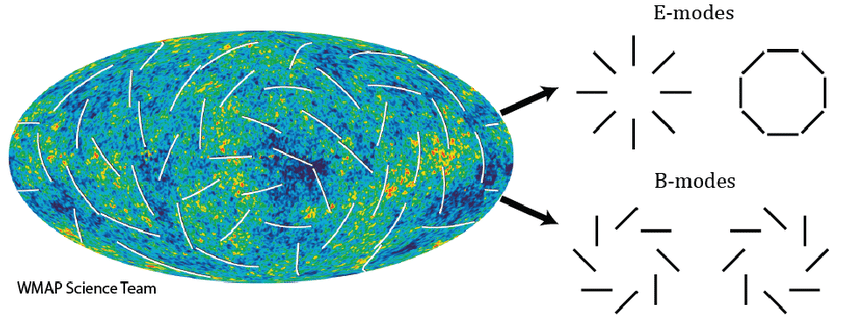
Variation in the temperature map used to constrain primordial Universe:
- Spatial variations (T)
- Polarization (E, B)
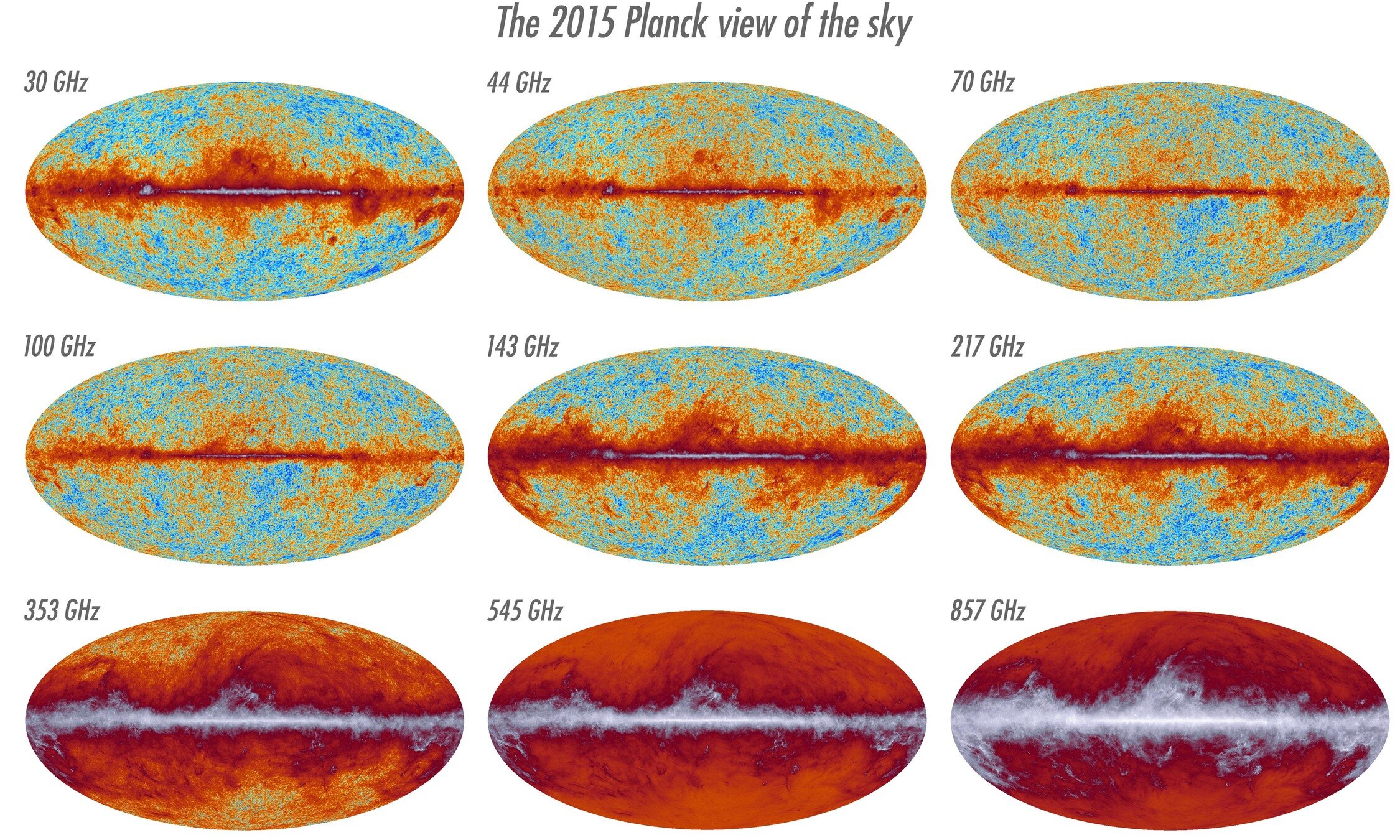
Planck 2015 frequency maps
ACCEL² simulation
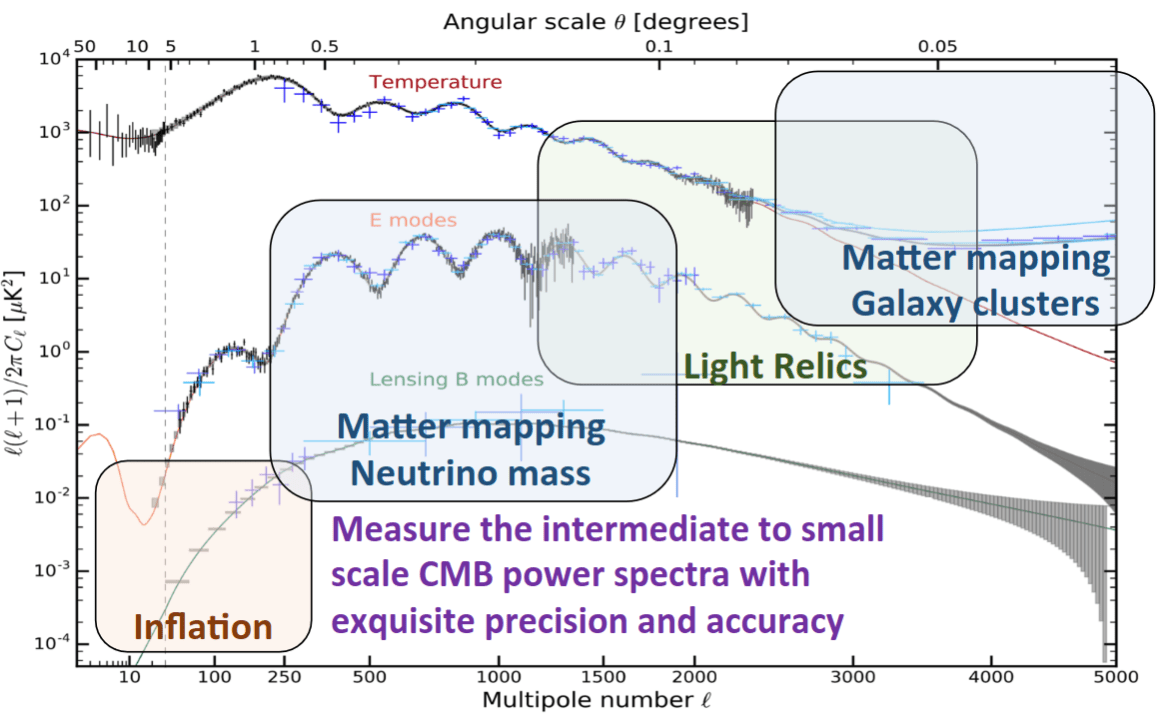
Current and future CMB experiments
JRJC 2024 - Cosmology session 25 november 2024
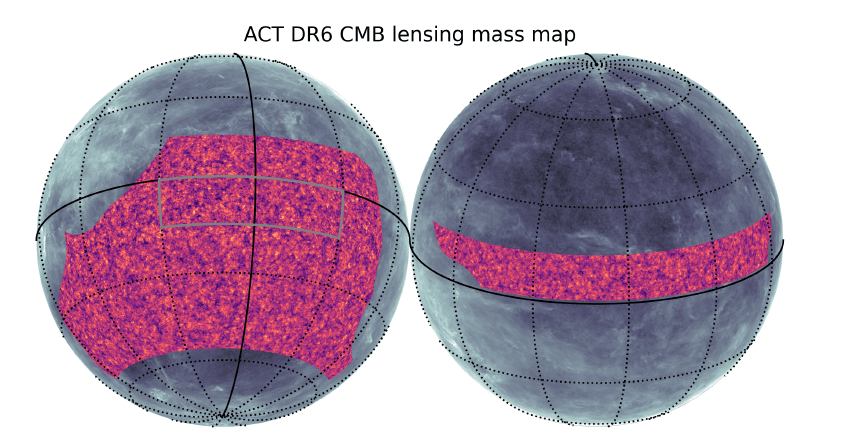
- COBE, WMAP, Planck: Space telescopes that gave precise temperature maps and stringent CMB constraints.
- Current: Atacama Cosmology Telescope, Simons Observatory, BICEP
- Future: CMB-S4 (2032)
-
Science cases:
- Inflation constraints (T, E, B maps)
- ΛCDM constraints (Neff, τ)
- CMB lensing
- Cluster detection
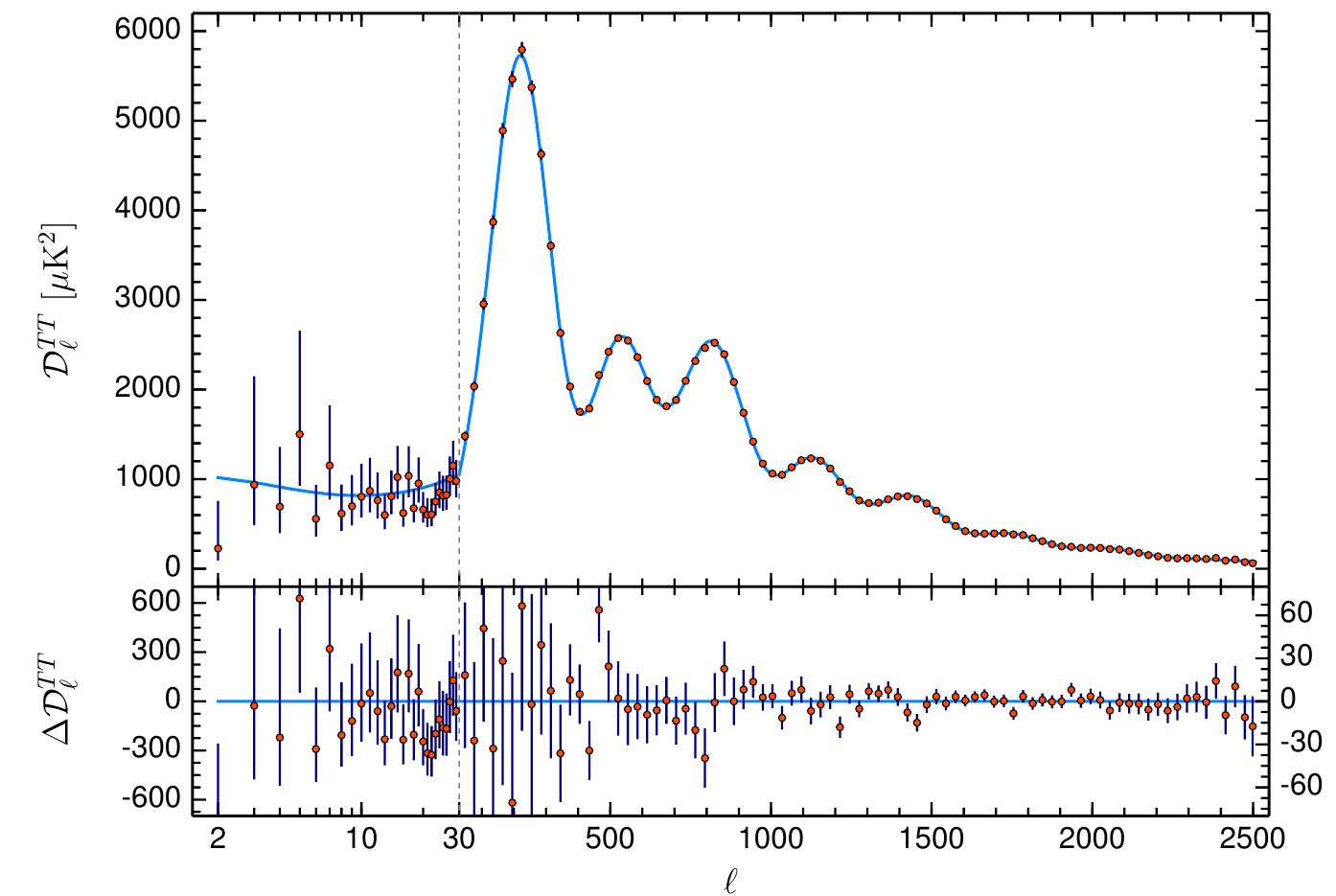
Planck 2018
TT power spectrum
ACCEL² simulation
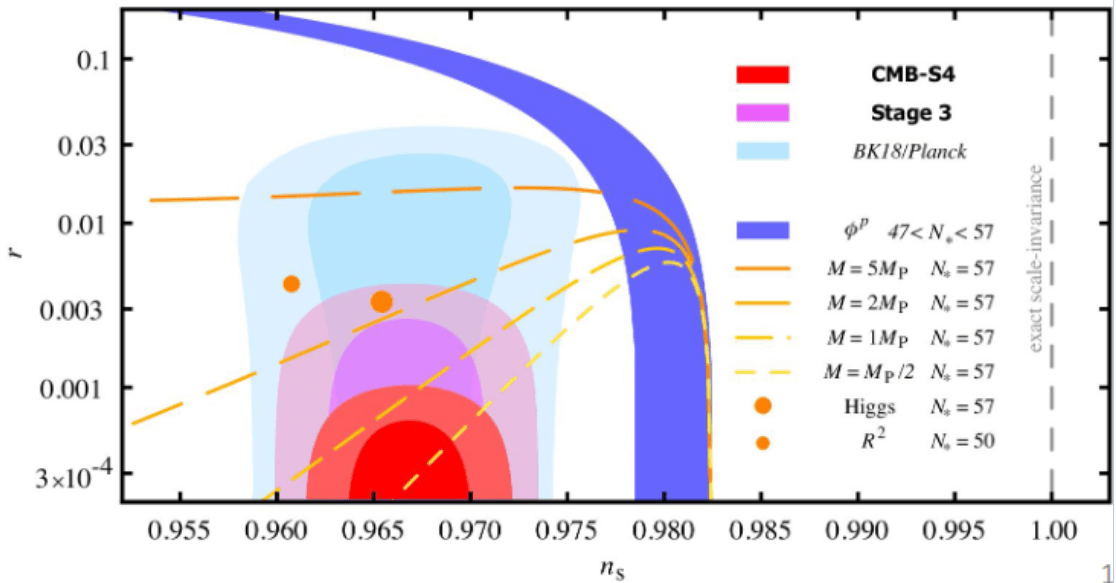
Signature from inflation
JRJC 2024 - Cosmology session 25 november 2024
- Most of inflation theories predict primordial gravitational waves, which create B-type polarization on CMB maps
- CMB measurement put constraints on the scalar-to-tensor ratio
- A lot of contaminants: lensing, dust, atmosphere, galactic synchrotron, systematics, noise...
See talk from Leonora Kardum
Galaxy experiments
The Story of Our Universe - NASA
You are here
JRJC 2024 - Cosmology session 25 november 2024
Galaxy surveys
JRJC 2024 - Cosmology session 25 november 2024
Photometric surveys
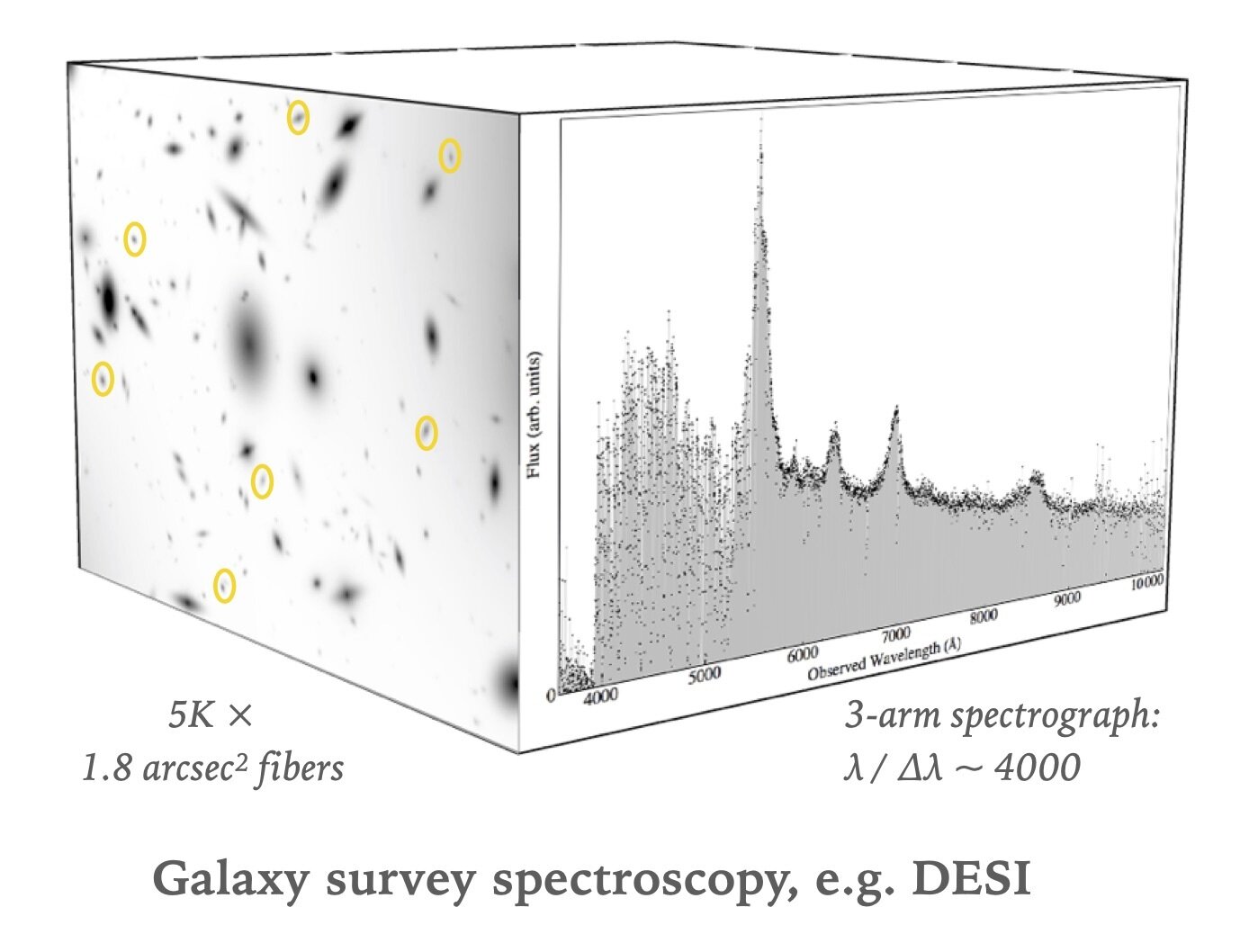
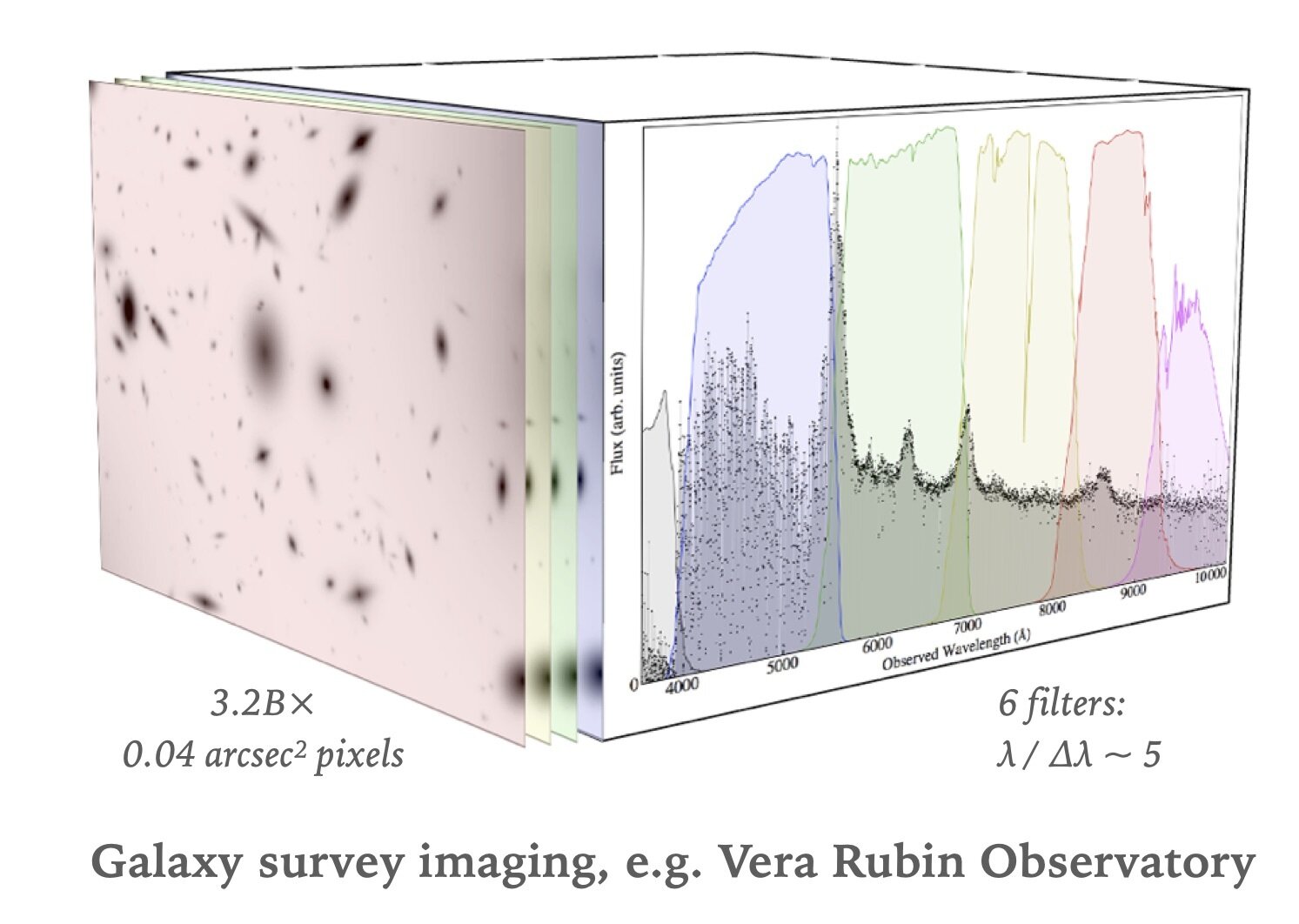
Source: DESI communication figures
- Measure the spectra of objects (selected or not)
- Examples: SDSS, 6dFGS, DESI, 4MOST, Euclid NISP (spectro)
- Measure the object flux through a filter
- Examples: DES, ZTF, CFHT, LSST, Euclid VIS, Euclid NISP (photo)
Spectroscopic surveys
ACCEL² simulation
JRJC 2024 - Cosmology session 25 november 2024
Zwicky Transient Facility (ZTF)
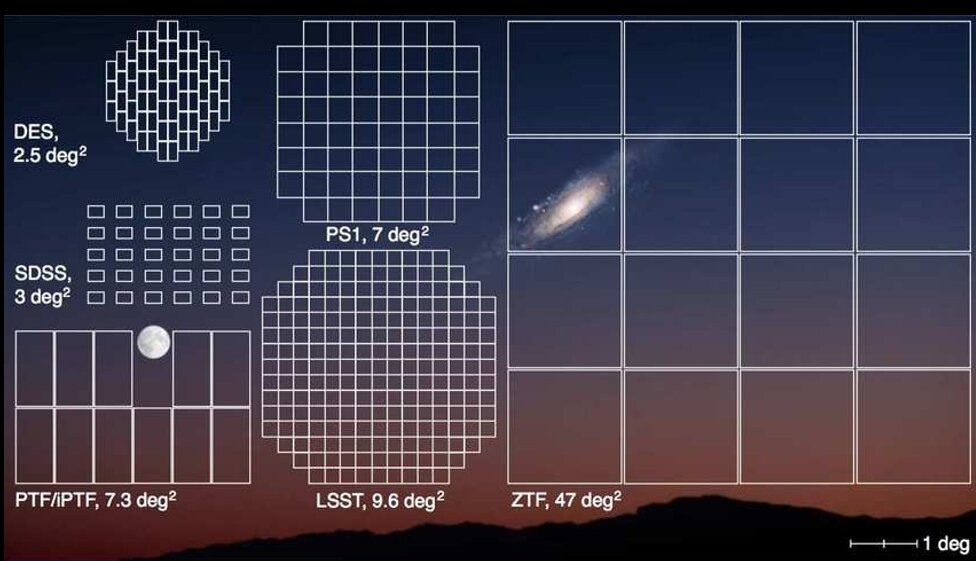
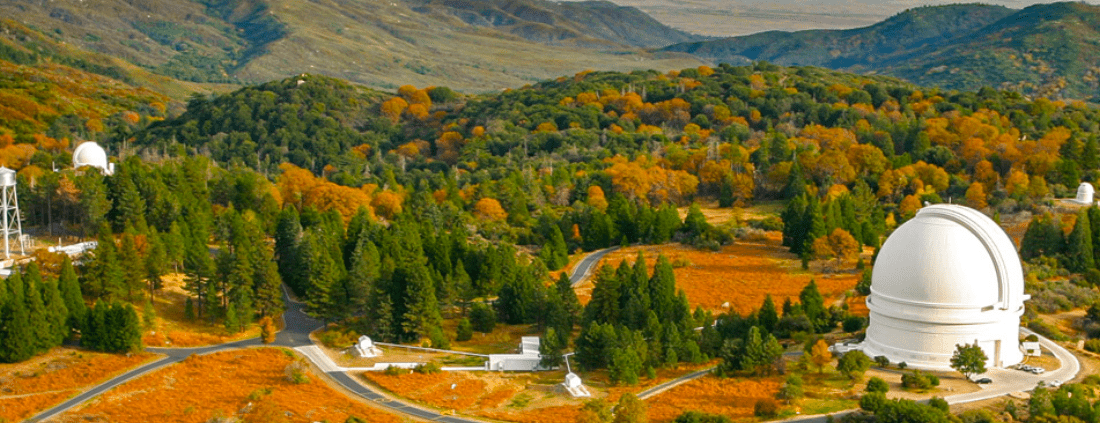
- ZTF = high-cadence photometric telescop in the Palomar observatory
- Very large field of view (47 deg²)
- Observing 3/4 of the sky every nights with 3 filters (g, r, i)
JRJC 2024 - Cosmology session 25 november 2024
Zwicky Transient Facility (ZTF)
- Transient sky: Supernovae, gamma ray burst, tidal distruptive events, comets, asteroids
-
Dedicated spectroscopic telescope measuring transient spectra
-
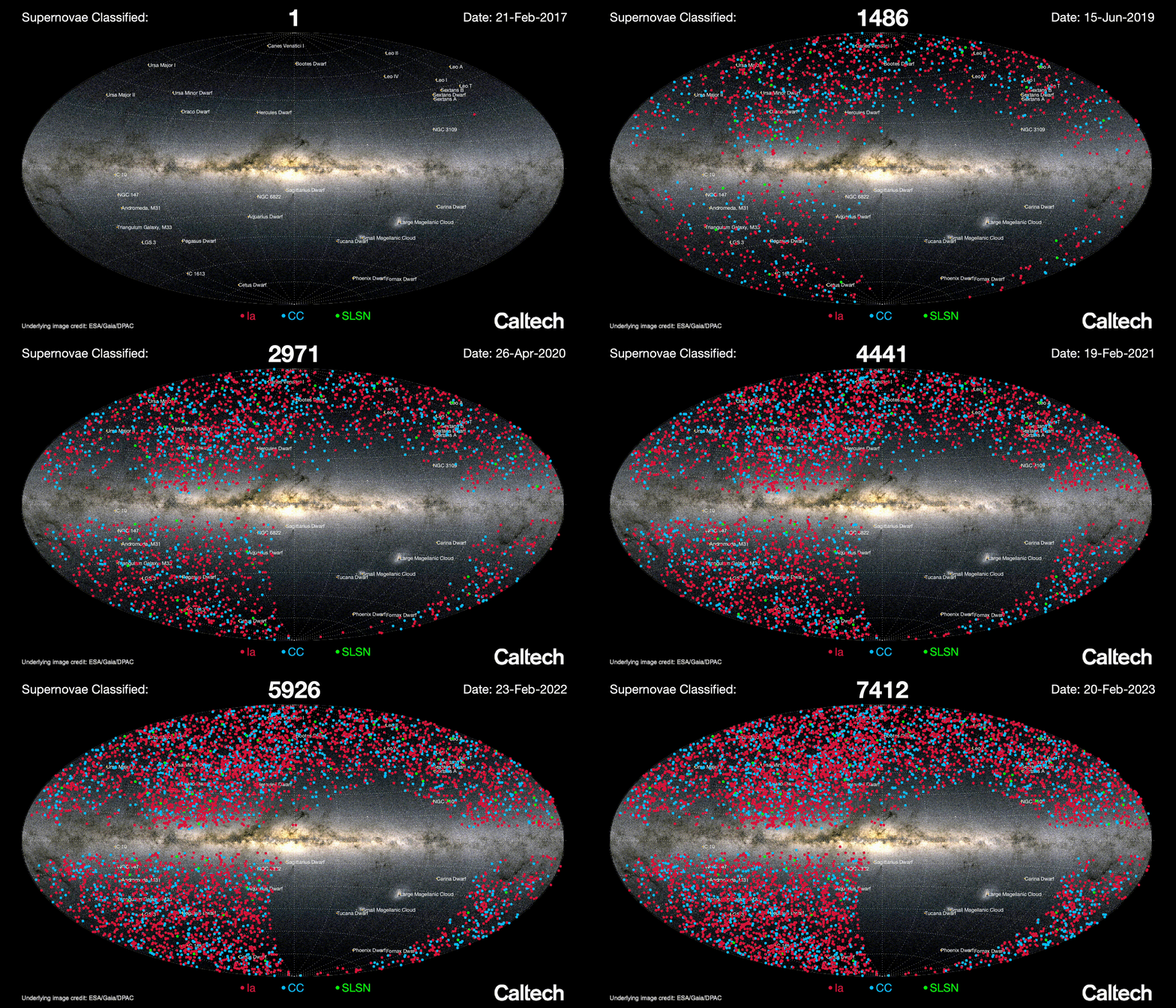
Latest release: More than 3000 classified supernovae of type Ia
ACCEL² simulation
JRJC 2024 - Cosmology session 25 november 2024
ZTF - supernovae of type Ia
See talk from Constance Ganot
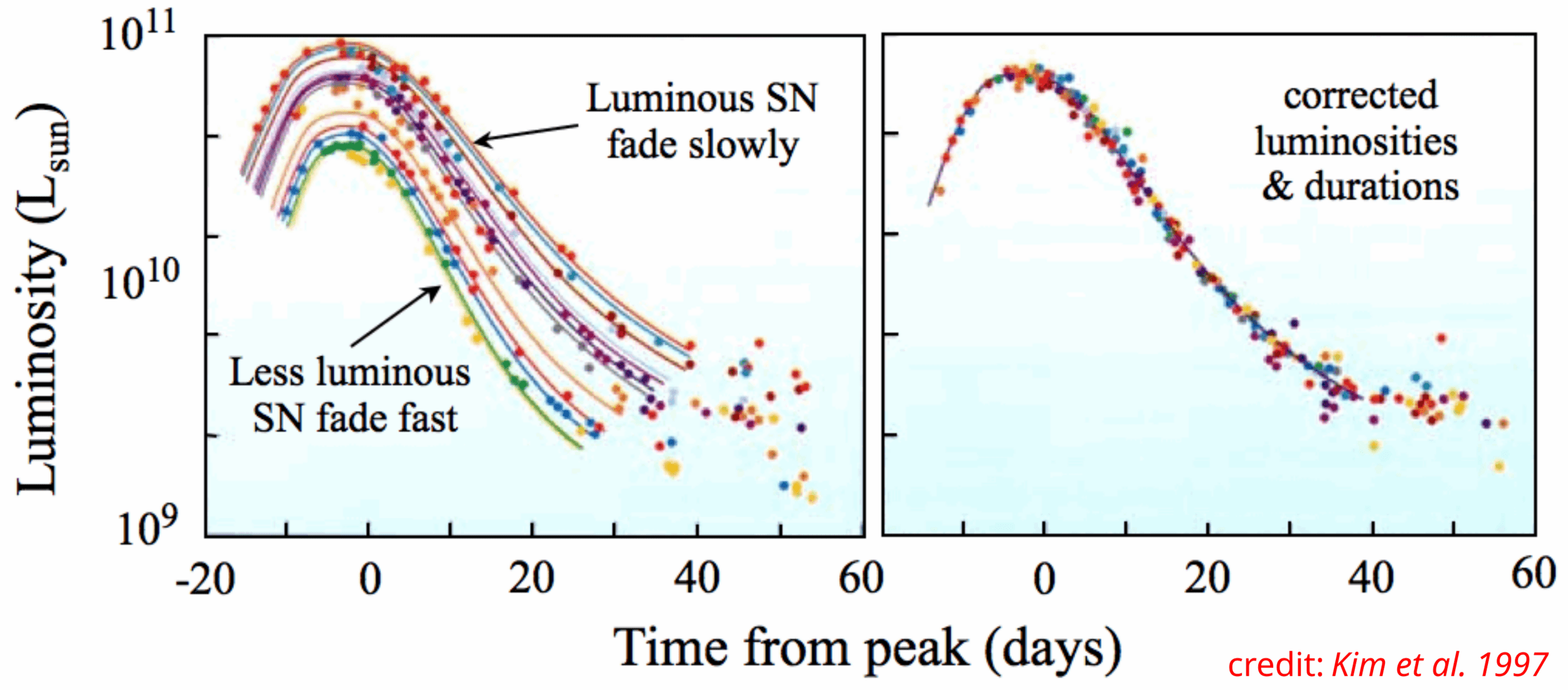
- SNIa: White dwarf in a binary system reaches Chandrasekhar mass
- Standardizable candle: can be used to measure distance
-
Science cases:
- Hubble constant measurement
- Dark energy constraints (with high-z)
- Modified gravity constraints
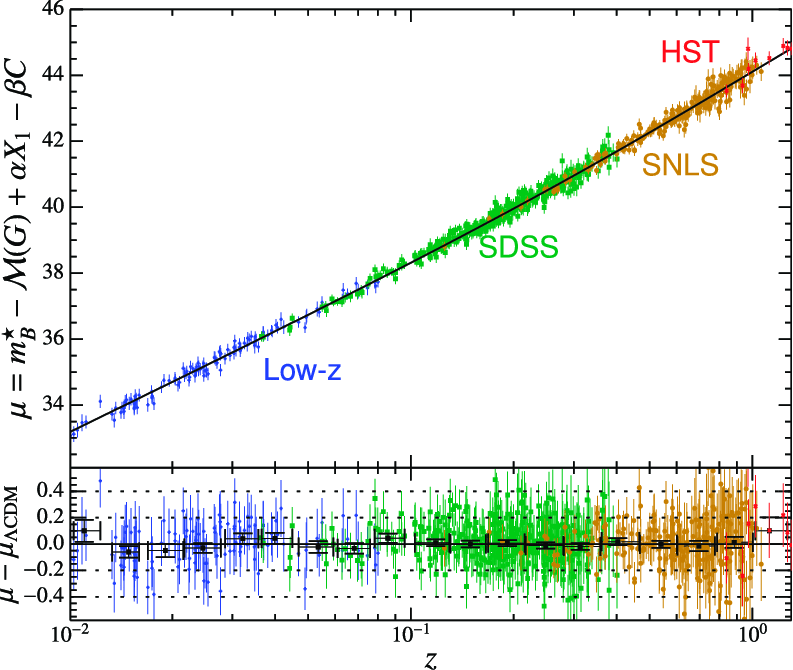
Betoule et al. 2014
JRJC 2024 - Cosmology session 25 november 2024
Rubin - LSST
30 m diameter dome
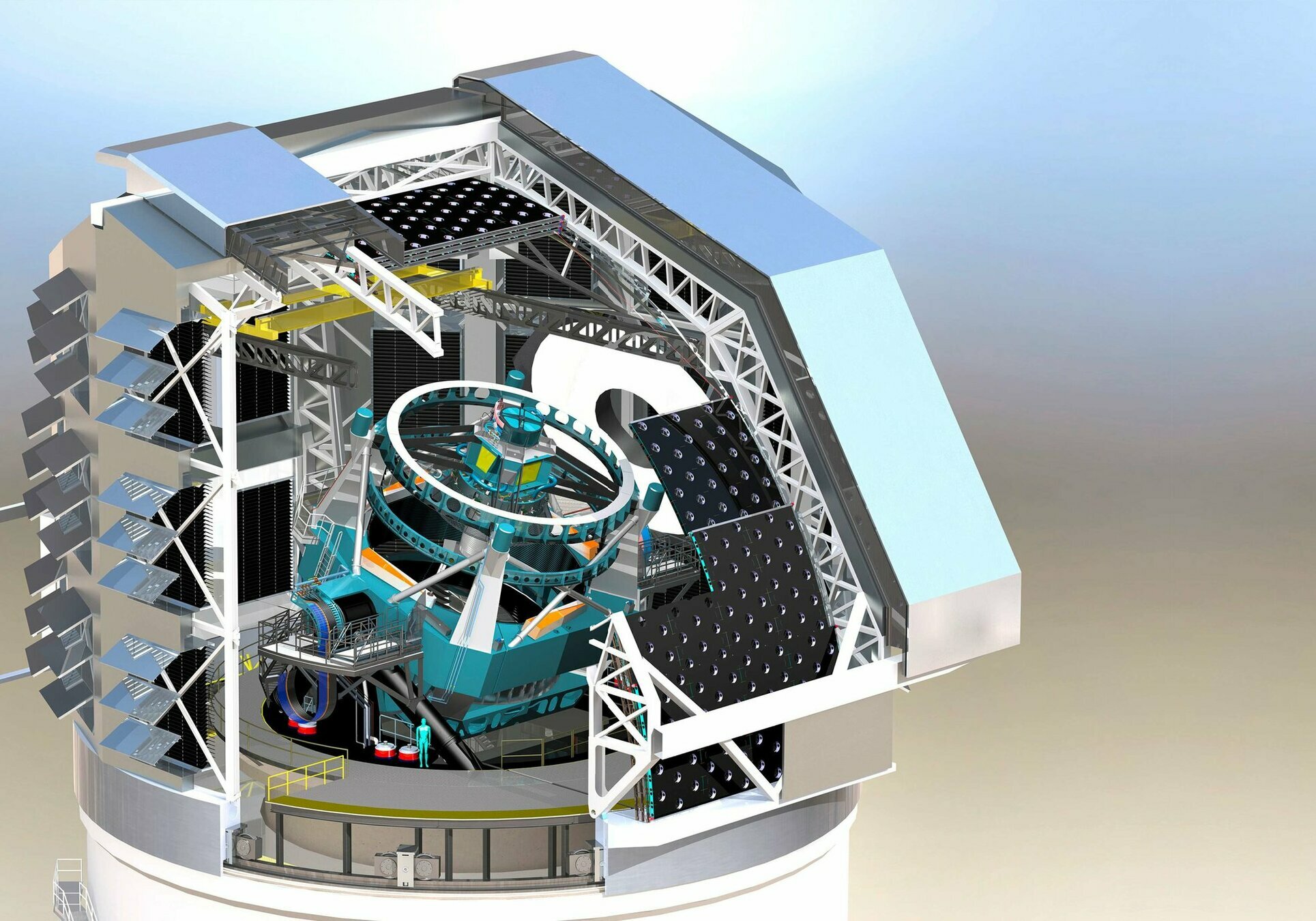
Telescope mount assembly
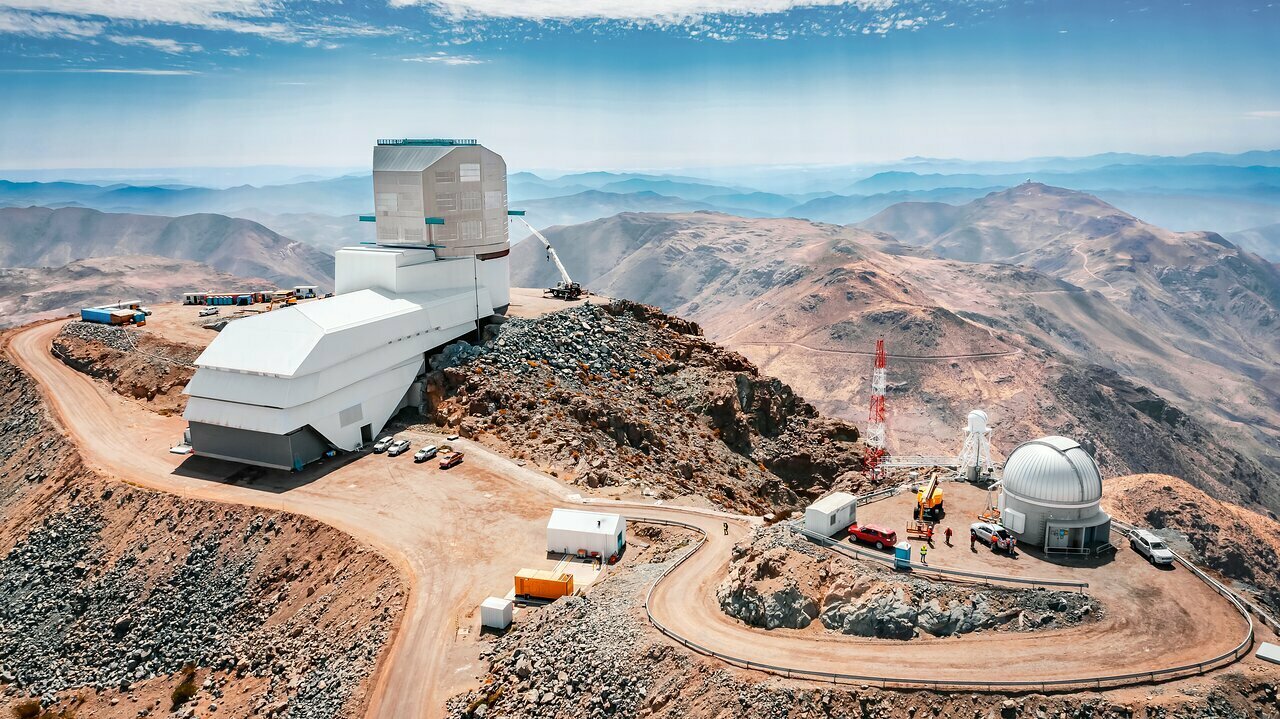
AuxTel: 1.2m atmospheric telescop
Cerro Pachon
Service and maintenance facility
Control room
JRJC 2024 - Cosmology session 25 november 2024
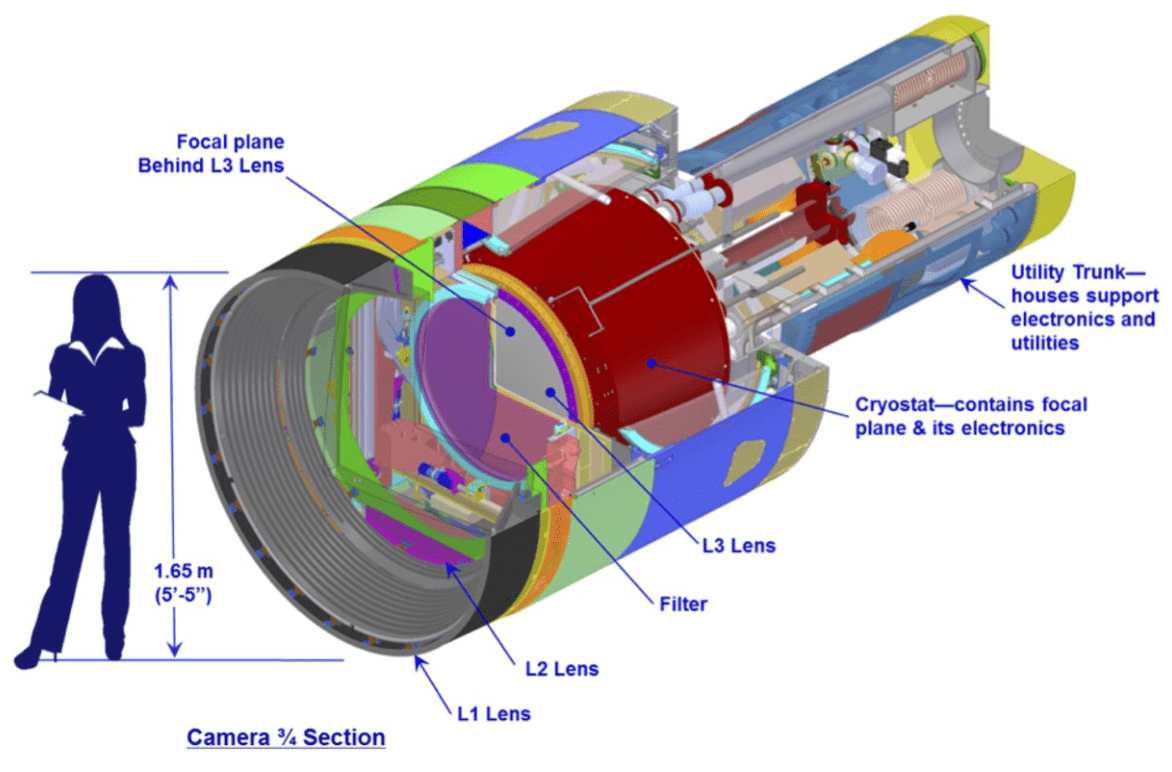
Rubin - LSST: instrument
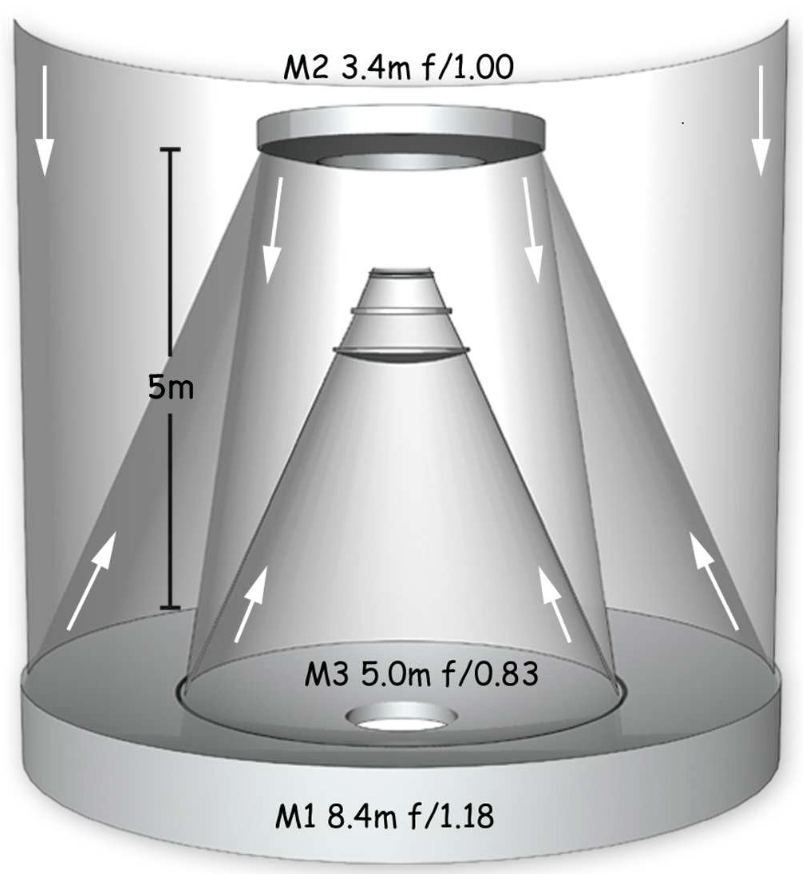
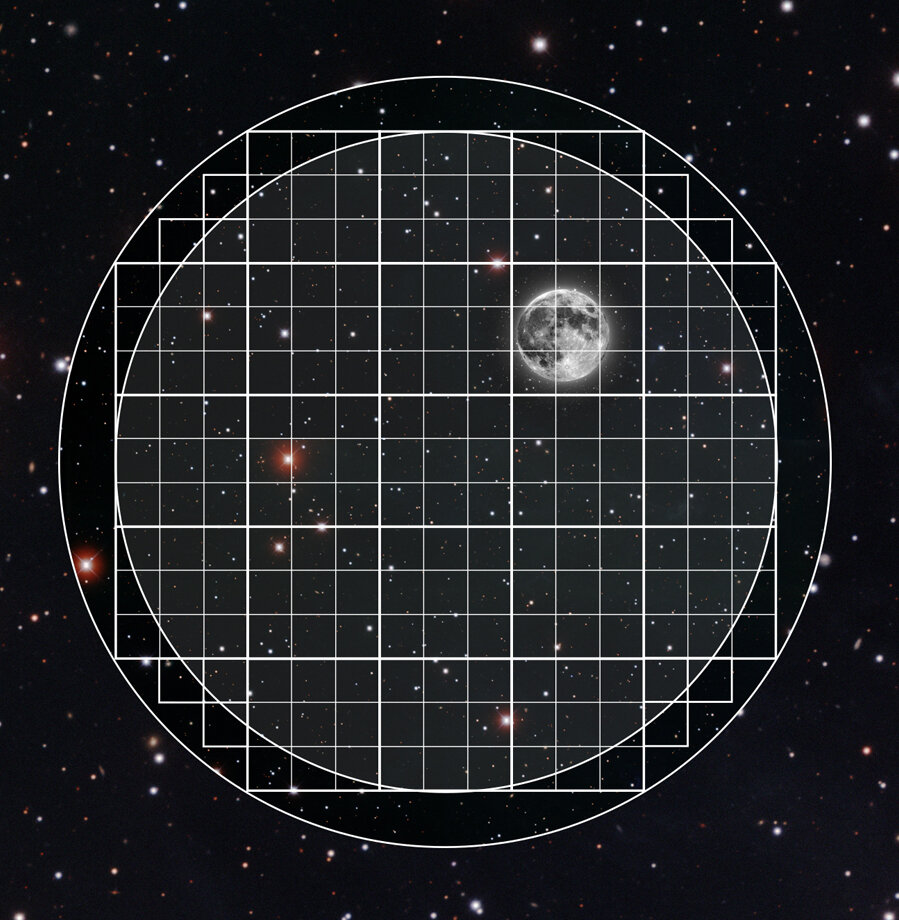
- Largest numerical camera in the world: 3.2 Gpixels with 2s readout time
- 8.4 m primary mirror and 9.6 deg² field of view
- 6 filters: (u, g, r, i, z, y)
- 10-year photometric survey of half of the sky (~ 20 000 deg²)
- Complete coverage every 4 nights (static and transient survey)
- In commissioning, expected start in september 2025
JRJC 2024 - Cosmology session 25 november 2024
LSST survey: science
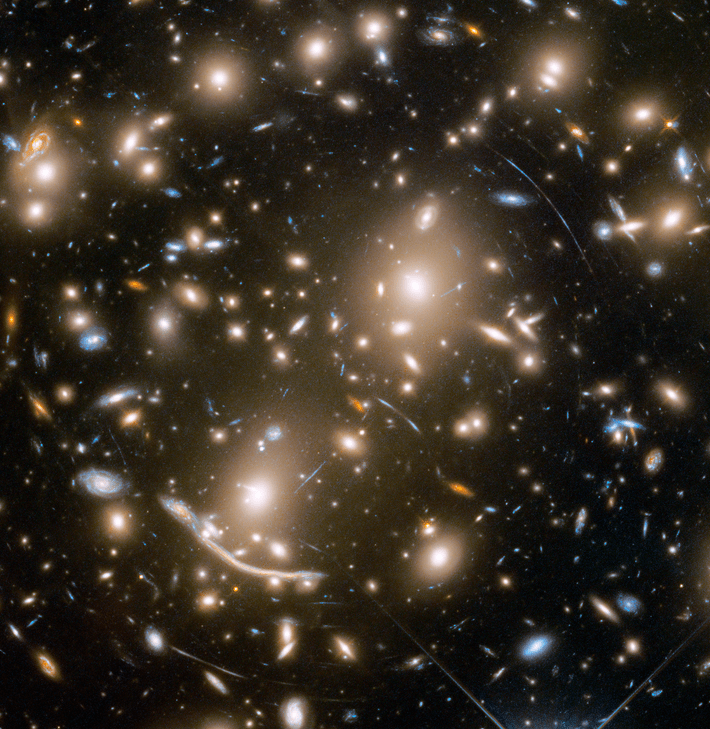
Dark matter & Dark energy
- Strong & Weak lensing
- BAO (angular and photo-z)
- Clusters, Supernovae cosmology
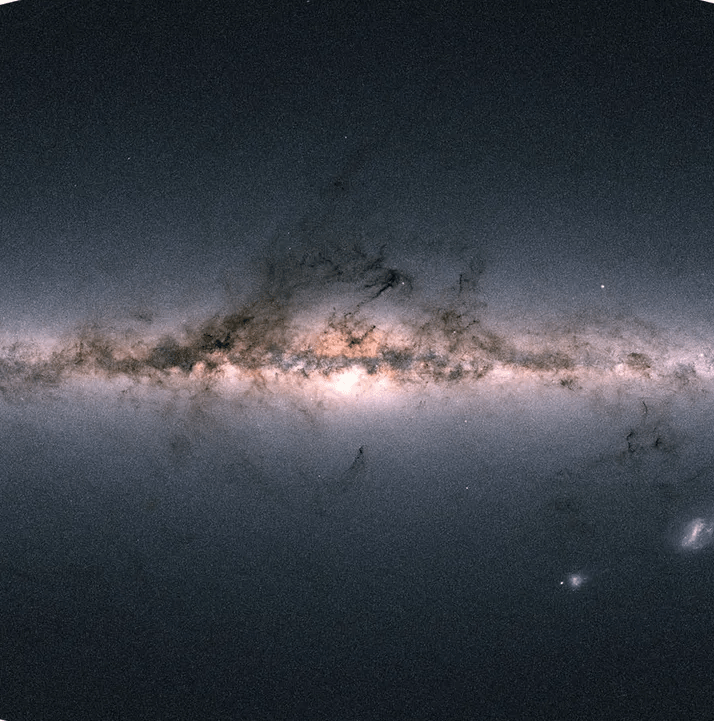
Mapping the Milky Way
- Structure and evolution
- Stellar properties
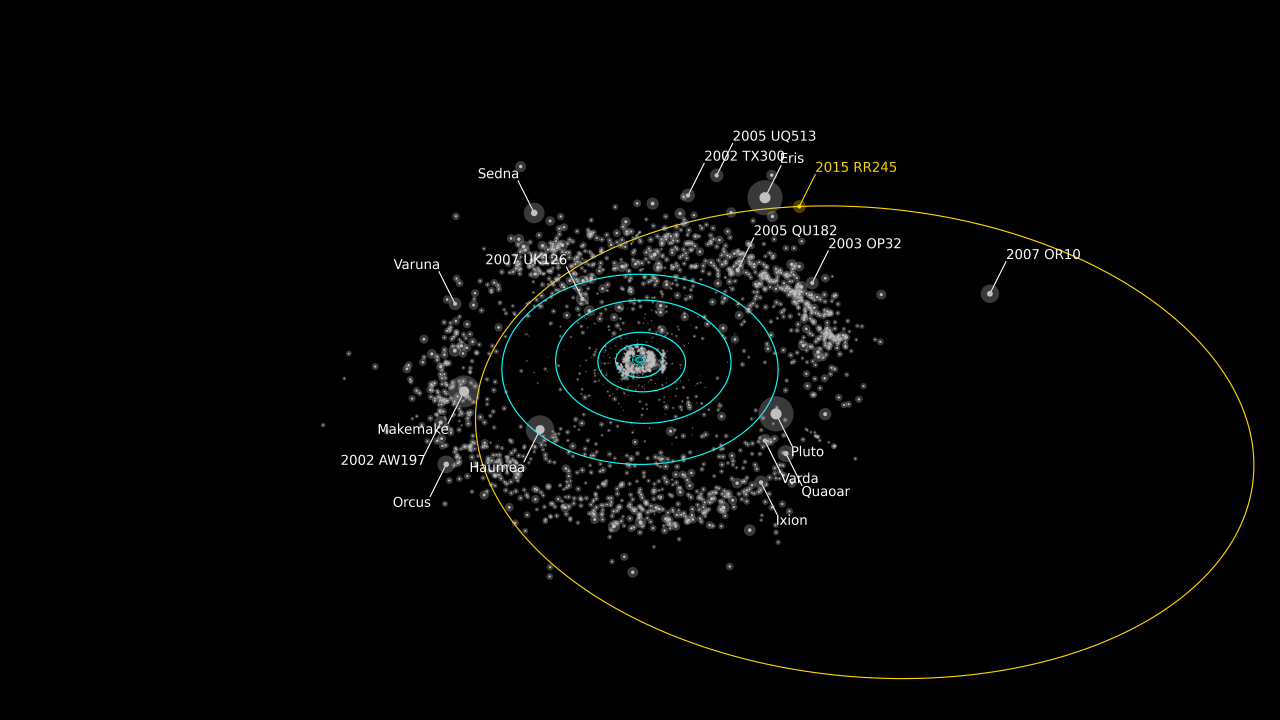
Solar System science
- Comets & asteroids
- Small body census
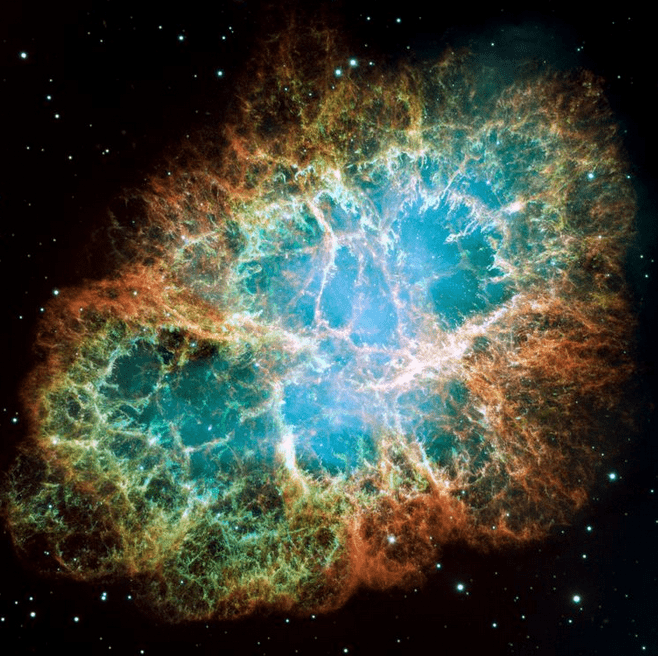
Transient sky
- Supernovae, variable stars
- Rare events (kilonovae, TDE)
- New classes of transients
JRJC 2024 - Cosmology session 25 november 2024
LSST survey: clusters
See talk from Nathan Amouroux
- Cluster = group of galaxies bounded by gravity
-
Cluster science:
- Abundance = Number as a function of redshift and mass (ΛCDM constraints)
- Cluster structure and history (DM constraints)
- Cluster clustering
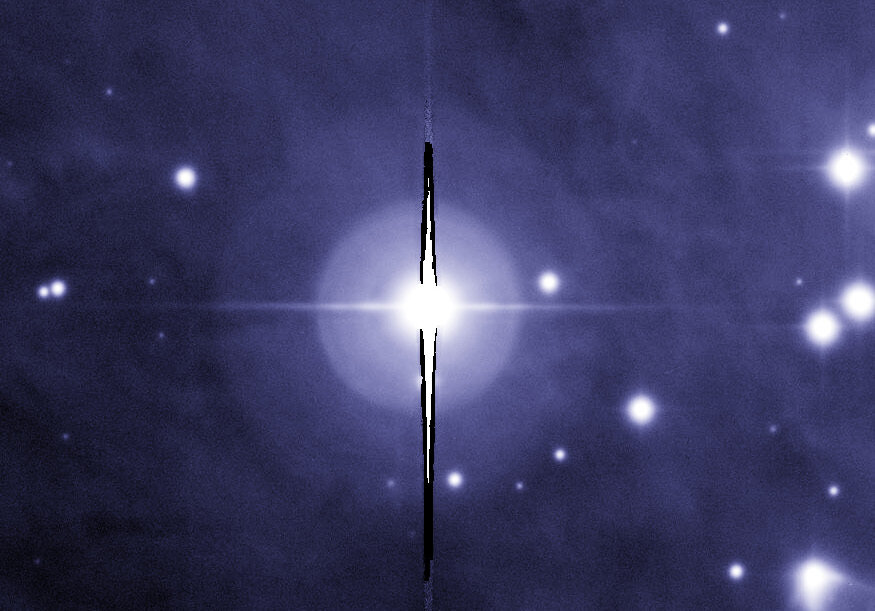
- Bright object saturates on LSST camera and masking them can impact cluster science
ACCEL² simulation
Conclusion
- Still a lot of questioning concerning the "not-so-standard" model of Cosmology
- Current cosmological experiments (CMB, SNIa, galaxy surveys...) help tightening constraints and provide feedback to theory
- Improvement of analysis methods is necessary as we are getting more and more data (see next talks)